What Is Word of Mouth Marketing? A Practical Guide
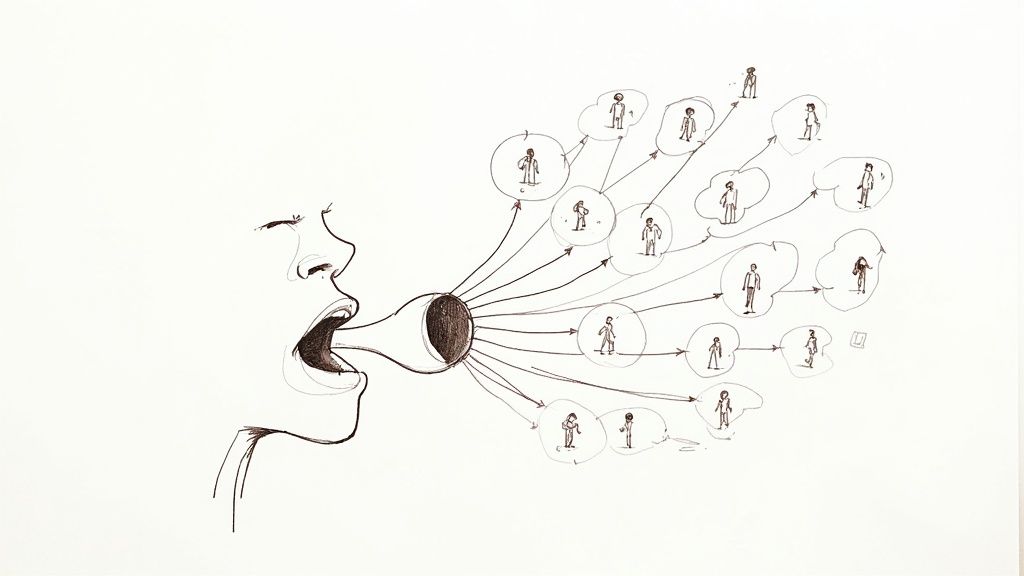
Let's be real. When did a banner ad last make you buy something? Now, when did a friend grab you and say, "You have to try this"?
That's word-of-mouth marketing. It’s the raw, powerful act of people sharing a brand they genuinely love. Forget paid ads. This is about earning authentic buzz through real conversations. It’s the fastest way to build a fiercely loyal customer base and spark growth that actually lasts.
The Power of Authentic Customer Advocacy
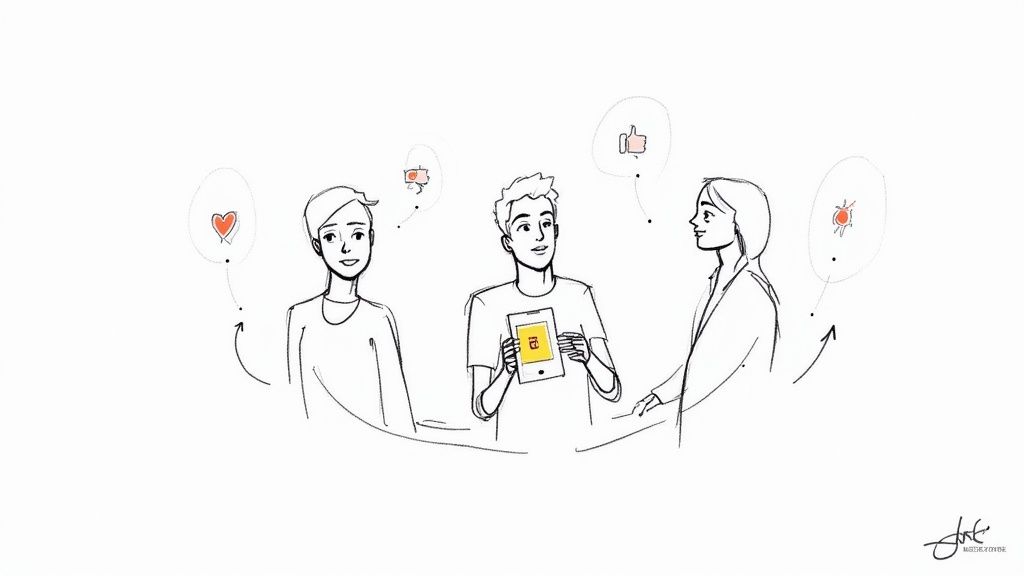
Forget flashy campaigns. The magic happens when you create an experience so good, your customers become your sales team.
They don’t just buy from you—they become advocates who vouch for you. That’s the core of word-of-mouth marketing (WOMM).
Why Peer Recommendations Win
The secret sauce? We trust people we know, not brands. A slick ad is designed to sell. A tip from a friend feels real.
The data backs this up.
A staggering 88% of people trust recommendations from friends and family over any other advertising. Only 33% trust online banner ads. That gap is massive.
When your customers are genuinely excited, they tell their stories for free. Enthusiastically. This creates an unstoppable engine for organic growth.
Building a Brand People Talk About
So, how do you get people talking? You need to be intentional about creating "talk triggers"—memorable moments that spark conversation.
Get started with these:
Exceptional Customer Service: Solve a problem so well it becomes a story.
Unique Unboxing Experiences: Turn a delivery into a share-worthy event.
Empowering a Community: Build a space where customers feel they belong. Dive deeper into community building to nail this.
Surprising and Delighting: Add unexpected perks that make people feel special.
To amplify this, understand what brand ambassadors are and how they operate. Turning happy customers into vocal champions builds a marketing foundation that’s not just cheap—it’s bulletproof.
Why bother with something that feels out of your control?
Because when customers do your marketing, the payoff is huge. A recommendation from a friend cuts through the noise of a thousand ads. This isn't about a quick sale—it’s about building a rock-solid foundation of trust and credibility.
A referred customer shows up with a positive bias. They're already primed to like you, which is a massive head start. That connection builds fierce brand loyalty that paid ads can't buy, leading to better retention and a much higher lifetime value.
Lowering Costs While Raising Value
A strong word-of-mouth strategy slashes your customer acquisition cost (CAC). Instead of burning cash on ads, your best customers bring qualified leads straight to your door. For free.
It's a proven fact: Customers acquired through referrals have a 37% higher retention rate. They also provide 16% more lifetime value than customers from other channels. They don’t just buy once; they stay longer, spend more, and keep the cycle going.
This creates a powerful, self-sustaining growth loop. Your best customers find more people just like them. It's like cloning your ideal customer without spending a dollar on targeting.
Building an Unbeatable Competitive Edge
Ultimately, word-of-mouth marketing is a competitive advantage money can't buy.
Anyone can copy your product or outspend you on ads. But they can't replicate the genuine enthusiasm of your customer base. That authentic advocacy creates a protective moat around your business.
You build a community of supporters who not only buy from you but defend and promote you. That's what turns a business into a beloved brand. It makes your marketing more efficient and your business far more resilient.
Mapping the Modern Word of Mouth Landscape
Word-of-mouth used to be backyard fence chats. Today, those conversations have exploded across countless digital spaces.
The key isn't to interrupt these conversations but to become a welcome part of them. And that means knowing where your audience talks.
The modern map isn't just big platforms. The most powerful conversations happen in private, niche communities: Discord servers, closed Facebook groups, WhatsApp chats, and Substack newsletters. In fact, 40.9% of consumers now use these groups to find and share brand recommendations.
This infographic breaks down exactly why word-of-mouth is such a powerhouse, connecting the dots from trust to loyalty and straight through to business growth.
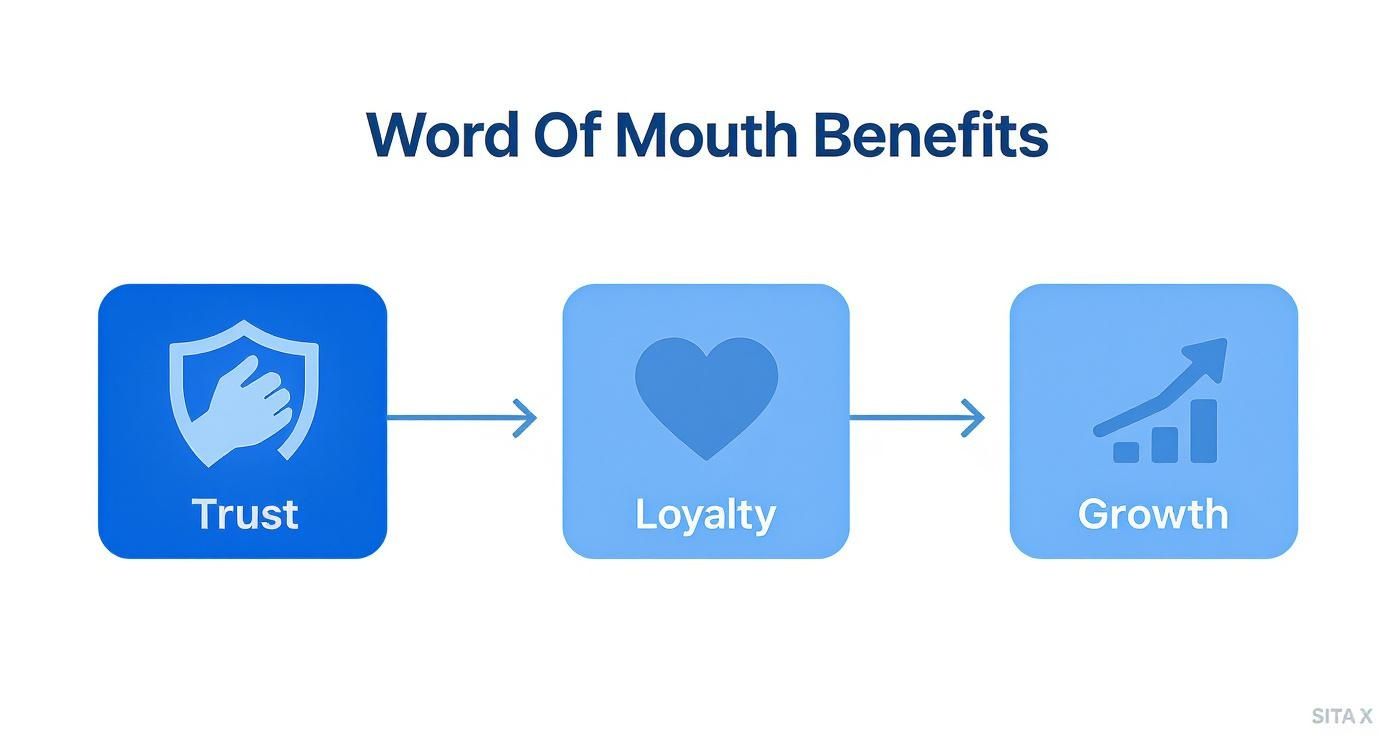
As you can see, it's a flywheel. When people trust a recommendation, they become loyal. That loyalty then fuels more recommendations, becoming a direct engine for sustainable growth.
Navigating Key Digital Channels
Getting a handle on the main channels is your first step. Each space has its own culture and rules. You can't just barge in and broadcast; you have to listen, add value, and earn your place.
Here are the three arenas where modern word-of-mouth comes to life.
User-Generated Content (UGC): This is the holy grail. TikTok unboxing videos, Instagram posts of your product in the wild, detailed YouTube reviews. It works because it's real. Spark UGC with clever hashtag campaigns or by creating products so cool people want to share them. Nailing the strategies for making content go viral can unlock massive potential here.
Niche Online Communities: These are the digital campfires where your most passionate customers gather—subreddits, Discord servers, and private Facebook groups. These are hotspots for trusted advice. The secret is participation, not promotion. Win by answering questions, sharing expertise, and becoming part of the community fabric long before you ever drop a link.
The magic happens when a community member—not a brand rep—recommends your product to solve a problem. That peer-to-peer endorsement is the ultimate win.
Online Reviews and Ratings: This is non-negotiable. Platforms like G2, Trustpilot, and Google Maps are the new front lines of social proof. A stream of positive reviews can influence countless buying decisions. The best approach? Make it dead simple for happy customers to leave feedback.
To help you focus your efforts, here’s a quick breakdown of how these channels stack up.
Modern Word of Mouth Channels Comparison
Channel | Primary Use Case | Audience Type | Brand's Strategic Role |
|---|---|---|---|
User-Generated Content | Visual storytelling, authentic product showcases, and social proof. | Generally younger, highly engaged social media users (e.g., TikTok, Instagram). | Inspirer: Create share-worthy products/experiences and run campaigns to encourage content creation. |
Niche Online Communities | Deep discussions, problem-solving, and building long-term trust. | Passionate enthusiasts, hobbyists, and professionals seeking expert advice. | Contributor: Offer genuine expertise, answer questions, and build relationships without selling. |
Online Reviews & Ratings | Building credibility and influencing final purchase decisions. | Research-driven buyers actively comparing options and seeking validation. | Facilitator: Proactively request reviews from happy customers and respond to feedback transparently. |
Choose the channels that fit your brand, then show up authentically, ready to add real value.
Learning From Brands That Mastered Word of Mouth
Theory is great, but action is better. Some brands don't just get lucky; they build systems that turn happy customers into a marketing engine. Let's peek at their playbooks.
These companies prove WOMM isn't just for consumer goods—it's a growth engine that works for tech, beauty, and everything in between.
Dropbox: The Referral Powerhouse
In its early days, Dropbox had a huge problem: paid ads were too expensive. So instead of burning cash, they built a legendary referral program.
The idea was brilliant. Refer a friend, and you both get extra storage space for free. This created a powerful, two-sided incentive that felt like a win-win, not a cheap sales pitch.
The core lesson is mutual value. Dropbox didn't just reward the sharer; they rewarded the recipient, too. This simple tweak turned a marketing "ask" into a generous gift.
The program was so effective it helped Dropbox grow by 3900% in just 15 months. It’s a masterclass in building a self-fueling growth loop right into the product. Check out other powerful viral marketing campaign examples to see more.
Glossier: Building a Community-First Empire
Glossier didn't just sell makeup; it started a movement. The brand began as a beauty blog, giving founder Emily Weiss a direct line to what real women wanted. This community-first mindset became the brand's foundation.
Instead of talking down to customers, Glossier let them be the experts. They celebrated user-generated content, turning everyday people into their main models. Even their packaging was designed to be photogenic, practically begging to be shared on Instagram.
The key takeaways from Glossier:
Listen first, sell later: The brand was built on real feedback, ensuring every product solved a real problem.
Make your customers the heroes: By featuring real users, Glossier made its community feel seen, creating a deep sense of belonging.
Design for sharing: Every touchpoint, from the pink bubble wrap pouches to the products themselves, was made with social media in mind.
Glossier's cult-like following wasn't an accident. It was the direct result of a strategy to build a brand people felt a part of.
Turning Service into a Story
Finally, some brands master word of mouth through something almost too simple: incredible customer service. Think of Zappos. They built their reputation on it, creating legendary stories of support agents going above and beyond—stories customers couldn't help but share.
These brands identify a core "talk trigger"—a memorable, shareable part of their business. For Zappos, it was world-class service. By consistently creating remarkable experiences, they gave customers an endless supply of positive stories to tell.
Building Your Action-Ready WOMM Playbook
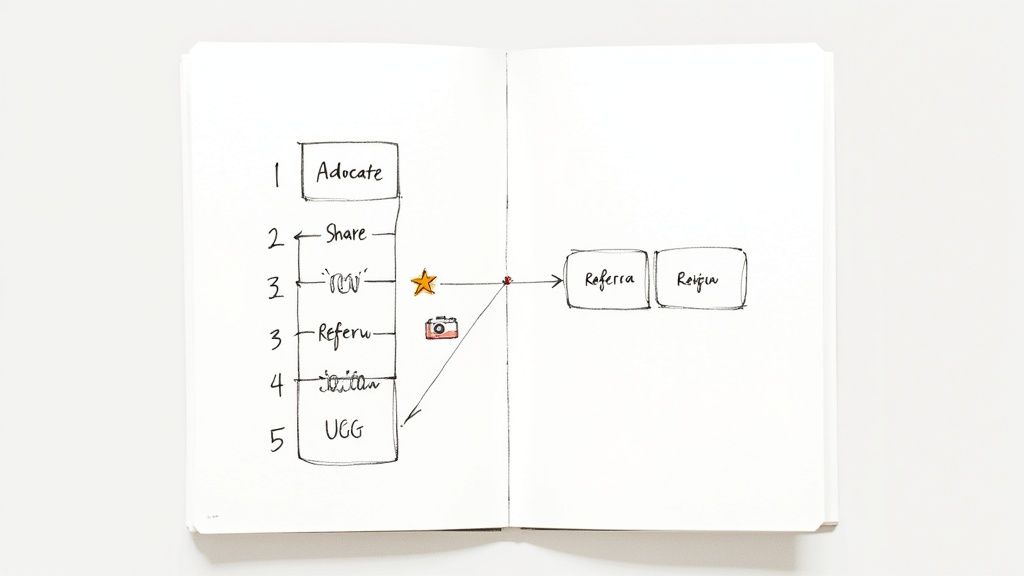
Alright, let's turn theory into action. A powerful word-of-mouth engine doesn't just happen. It’s built, piece by piece, with a smart playbook that turns happy customers into a volunteer marketing army.
This isn’t about hoping for buzz; it’s about systematically creating it. Let’s build a strategy that gets people talking.
Find and Supercharge Your Biggest Fans
First, know who your advocates are. These are the customers who not only love what you do but are also natural sharers. They're your hidden marketing assets.
Look for these signals:
High Engagement: Who’s always interacting with your content?
Repeat Purchases: Who keeps coming back for more?
Positive Feedback: Who’s leaving glowing reviews or sending unsolicited praise?
Once you find them, make them feel like insiders. Give them exclusive access, a direct line to your team, or special recognition. When your best customers feel valued, they shout your name from the rooftops.
Engineer Experiences Worth Talking About
People don't share "meh" experiences. Your playbook needs to create "talk triggers"—memorable moments begging to be shared.
This could be a slick unboxing experience or customer support that goes so far beyond the script it becomes a story. The goal is to create a moment that makes a customer think, "Wow, I have to tell someone about this."
A great word-of-mouth strategy is built on remarkable experiences. If your product is just "good enough," you'll never give people a compelling story to share.
Build a Referral Program People Actually Want to Use
Organic buzz is great, but a structured referral program can pour gasoline on the fire. The trick is to make it dead simple and a win-win for everyone.
Your referral program should be:
Easy to Find: Don't bury it in a menu. Make it obvious.
Simple to Share: Offer one-click sharing for email, social, and messaging apps.
Mutually Rewarding: Give something to both the sharer and their friend. Remember Dropbox? That’s the move.
This flips the script from a selfish "ask" into a generous "gift," making users far more likely to participate.
Actively Champion User-Generated Content
Nothing builds trust like seeing real people love your product. User-generated content (UGC) is social proof that your brand delivers on its promises.
The numbers don't lie. A staggering 85% of social media users trust UGC more than content from a brand. Encourage it. Run hashtag campaigns, feature customer photos on your site, or create a community space for sharing.
The more you celebrate your users, the more they'll create on your behalf. For more on the impact of UGC on trust from invespcro.com, it's worth a read.
How to Measure the Impact of Your WOMM Efforts
If you can’t measure it, you can’t improve it.
While word-of-mouth marketing can feel abstract, its impact is surprisingly measurable. Hoping for the best isn't a strategy. Tracking your efforts is what turns a lucky break into repeatable growth.
Proving ROI starts with knowing what to look for. Zero in on a few key indicators that tell you if your strategy is actually working. The right data turns your WOMM from a mystery into a predictable growth engine.
Key Metrics to Monitor
Track both quantitative and qualitative data. This gives you hard numbers to prove value and the stories to understand why people are talking.
Keep these metrics on your radar:
Net Promoter Score (NPS): A simple survey asking, "How likely are you to recommend us?" gives you a solid number on customer loyalty.
Referral Conversion Rate: This is your bottom line. Track how many people come from referrals and how many of them actually become customers.
Social Media Mentions and Sentiment: Use social listening tools to monitor who is talking about your brand and how. A spike in positive mentions after a campaign is a strong signal you're on the right track.
Tracking these moves you beyond guesswork and into data-backed decisions.
Attributing Sales to Word of Mouth
Connecting a sale back to a casual chat is tough, but not impossible. Get smarter with your analytics.
Use unique referral codes, custom landing pages, and simple post-purchase surveys asking, "How did you hear about us?" to connect the dots.
Don't let perfect be the enemy of good. Even directional data is far better than tracking nothing. Small insights can lead to major strategic shifts.
Understanding the customer journey is critical. For a deeper dive, learning what is attribution modeling provides a powerful framework for connecting WOMM activities to actual revenue.
Ultimately, measuring word-of-mouth is about looking for signals. Are you seeing more direct traffic? Are referral codes being used more frequently? These indicators prove your efforts are paying off, turning happy customers into your most powerful acquisition channel.
At Viral Marketing Lab, we provide bootstrapped founders with the tools, templates, and actionable playbooks needed to generate measurable growth without breaking the bank. Explore our resources to build your own growth engine.