10 Viral Marketing Examples (And How to Steal Their Secrets)
Viral marketing isn't luck; it's engineered. Forget hoping for a one-hit-wonder. The goal is to build campaigns with sharing baked into their DNA. This isn't just a list of campaigns you've already heard of. We're dissecting the anatomy of what makes an example of viral marketing genuinely contagious, from Red Bull's insane space jump to Dollar Shave Club's disruptive humor.
Forget surface-level summaries. We're diving deep into the why. Each case study breaks down the exact tactics, psychological triggers, and growth loops that turned these campaigns into global phenomena. You'll get the playbook behind the strategies that built massive audiences and generated explosive buzz—often on a shoestring budget.
This is a tactical guide for founders and marketers. For each powerful example of viral marketing, you'll get:
The Core Strategy: The big idea and audience insight.
The Viral Engine: The specific mechanics that fueled the fire.
Actionable Takeaways: How to replicate their success, step-by-step.
Forget vague theories. This is about replicable frameworks you can apply now. Learn to leverage emotion, humor, social currency, and product-led growth to create campaigns your audience doesn't just see—they spread. Let's get to work.
1. Red Bull Stratos - The Ultimate Example of Viral Marketing in Extreme Stunts
Red Bull Stratos wasn't a campaign; it was a global event. On October 14, 2012, Felix Baumgartner jumped from a helium balloon 24 miles above Earth. This is a landmark example of viral marketing because it wasn't advertising—it was a cultural moment.
Red Bull didn't sell a drink; it funded a scientific mission to push human limits. The YouTube live stream shattered records with over 8 million concurrent viewers. The event dominated social media and news cycles, forever linking Red Bull with peak performance and breaking boundaries.
The Viral Engine
Stratos tapped into raw human emotion: awe, suspense, and the thrill of the unknown. It was a real-life superhero moment.
Content as Spectacle: Red Bull created an event so compelling you couldn't look away. It was a high-stakes, live drama, not a 30-second ad.
Authenticity Over Branding: The logo was present but secondary. The focus was on the mission and Baumgartner's courage. This built brand love without a hard sell.
Multi-Platform Domination: They used YouTube for the live stream, Twitter for real-time updates, and Facebook for community, creating a complete digital takeover.
Strategic Insight: Go viral by creating something so valuable and shareable that the marketing feels like a secondary benefit, not the primary goal.
Actionable Takeaways for Startups
No space-jump budget? No problem. The principles are what matter.
Create an "Event," Not Just Content: Don't just publish a blog post. Host a live-streamed debate, a 24-hour coding challenge, or an industry-first virtual summit. Make it an occasion.
Align with a Bigger Mission: Connect your brand to a value that's bigger than your product. If you're a productivity app, your mission is helping people achieve their dreams, not just selling software.
Find the Human Story: Red Bull told a story of human bravery. What's the human story behind your startup? Make that the focus to forge an emotional connection that drives sharing.
2. Old Spice - The Man Your Man Could Smell Like
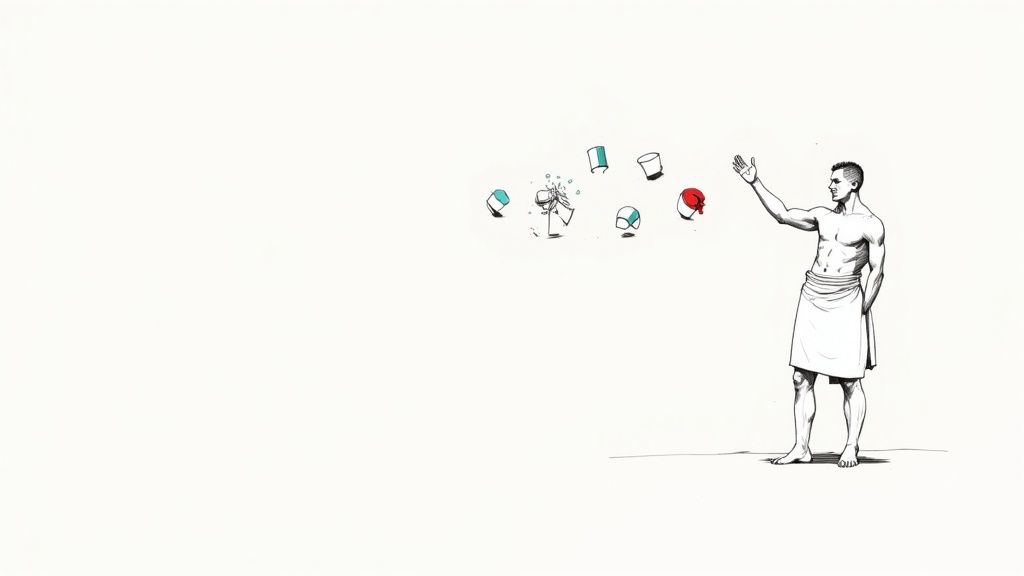
Old Spice’s 2010 campaign is a textbook example of viral marketing that single-handedly revived a dying brand. The ad, featuring Isaiah Mustafa’s witty, single-take monologue, was a masterpiece of surreal charm designed for the internet.
It wasn’t just an ad; it was a conversation starter. The campaign brilliantly blended TV spots with a pioneering social media response campaign, targeting not just men, but the women who often buy grooming products for them. Its unique humor and meme-worthy lines ("I'm on a horse") created a cultural phenomenon.
The Viral Engine
The campaign’s success was rooted in its brilliant execution of a two-way conversation with its audience. It didn’t just broadcast; it engaged.
Content as Conversation: The killer move was the "Response Campaign." Mustafa, in character, recorded nearly 200 short, personalized YouTube videos responding directly to fans on Twitter and Facebook.
Humor and Relatability: The ad's bizarre humor was highly shareable. It was funny, unexpected, and cleverly acknowledged its target audience ("Hello, ladies"), creating an inside joke everyone wanted to join.
Character Consistency: The "Old Spice Man" became a beloved persona. Maintaining this character across all platforms built a consistent and entertaining brand personality.
Strategic Insight: Virality thrives on personality. Create a memorable character and use it to engage directly with your audience. You'll turn passive viewers into active brand advocates.
Actionable Takeaways for Startups
You don't need a Hollywood budget. This is about engagement and creativity.
Create a Brand Persona: Define a distinct personality for your brand. Is it witty, helpful, or inspirational? Use this persona consistently everywhere, from emails to social media replies.
Launch a "Response" Campaign: Identify your most engaged followers and create personalized content for them—a quick video shout-out, a custom graphic, or a detailed reply. This personal touch generates massive loyalty.
Bridge Your Content Channels: Don’t let your content live in a silo. Use a blog post to fuel a Twitter thread, turn a customer question from that thread into a short video, and embed that video back into the blog. Create an ecosystem. Discover new ways on how to create engaging content.
3. Dove Real Beauty Sketches - Emotional Brand Storytelling
Dove's "Real Beauty Sketches" wasn't an ad; it was a powerful social experiment. The 2013 video featured a forensic artist drawing women twice: once based on their own self-critical descriptions and again from a stranger’s perspective. This is a masterclass example of viral marketing because it tapped into a universal insecurity and sparked an intensely emotional response.
Instead of highlighting product features, Dove focused on its mission to redefine beauty. The video became one of the most-watched ads in YouTube's history, not because it was an ad, but because it was a must-see piece of content that made people reflect on their own self-perception.

The Viral Engine
The campaign's success was rooted in its ability to generate deep emotional resonance and a powerful, shareable message: "You are more beautiful than you think."
Emotional Resonance: The contrast between the two sketches created a powerful, relatable "aha" moment. It bypassed logic and connected directly with viewers' feelings about self-worth.
A Story, Not a Sale: The product was almost invisible. The campaign focused on the human story, making the message feel authentic and selfless. Explore this strategy in our guide to what is brand storytelling.
Shareable Insight: The video’s core idea was simple enough to be summarized in a sentence, yet profound enough to warrant discussion. This made it incredibly easy for people to share with a note like, "This made me think."
Strategic Insight: Viral content runs on emotion. Uncover a universal human truth and present it through compelling storytelling. You'll create something people feel a deep, personal need to share.
Actionable Takeaways for Startups
You don’t need a massive agency budget to tell an emotional story.
Find Your "Human Truth": What common struggle, frustration, or aspiration do your customers face that relates to your mission? Uncover that core insight and build your content around it.
Lead with Empathy, Not Features: Frame your marketing around your audience's emotional journey. Show them you understand their problem on a human level before you offer your product as the solution.
Create Content That Serves: Ask yourself: does this content help, inspire, or make my audience feel understood? If your content provides genuine emotional value, sharing is a natural byproduct.
4. Taco Bell's Super Bowl Social Media "Hack"
Taco Bell's 2013 Super Bowl campaign was a masterclass in digital guerrilla marketing. While their "Viva Young" commercial aired on TV, the brand simultaneously "hacked" Twitter by engaging directly with users who mentioned their competitors. This is a prime example of viral marketing because it combined real-time agility with a deep understanding of its young, digitally-native audience.
Taco Bell’s social media team responded to tweets about Pizza Hut and McDonald's with witty, personalized messages. They didn't hijack accounts; they hijacked the conversation, injecting their brand's irreverent voice into competitor-centric discussions. This transformed a passive ad viewing into an interactive, buzz-worthy event.
The Viral Engine
The genius was its perfect blend of boldness, brand personality, and timing. It felt spontaneous and authentic, even though it was a well-orchestrated plan.
Conversation Hijacking: Taco Bell inserted itself into relevant, real-time conversations, turning competitor mentions into opportunities for brand exposure.
Authentic Brand Voice: The responses weren't corporate or robotic. They were witty, playful, and perfectly aligned with Taco Bell's "Live Más" persona, making them highly shareable.
Leveraging a Captive Audience: During the Super Bowl, millions are second-screening on their phones. Taco Bell met its audience exactly where they were, at a moment of peak attention.
Strategic Insight: The most powerful viral strategy isn't always creating something new. Sometimes it's about cleverly inserting your brand into an existing, high-volume conversation.
Actionable Takeaways for Startups
You don't need a Super Bowl budget to replicate this strategy.
Set Up "Competitor Alerts": Use social listening tools to monitor mentions of your competitors. When a user expresses a pain point, jump in with a helpful, non-salesy response that showcases your value.
Define Your "Response" Persona: Don't just respond; respond with personality. Are you witty, helpful, or quirky? A consistent, memorable voice makes your interactions more likely to be shared.
Target Niche Events: You can't own the Super Bowl, but you can own the conversation during a niche industry conference, a popular webinar, or a relevant Twitter Space. Identify these moments and plan your engagement.
5. Airbnb - Belong Anywhere Campaign
Airbnb shifted from a lodging platform to a global community with its "Belong Anywhere" campaign. Launched in 2015, this initiative reframed travel not as visiting a place, but as living there. This powerful example of viral marketing was built on the human desire for connection and acceptance, using real stories to build an emotional, shareable narrative.
The campaign featured content from real hosts and guests, celebrating diversity and unique local experiences. It later evolved into the "We Accept" campaign, directly addressing travel discrimination and reinforcing the brand's values. By aligning its marketing with a powerful social message, Airbnb created a movement people wanted to join.
The Viral Engine
The success of "Belong Anywhere" came from its focus on community and values over features. It tapped into a cultural conversation about identity and inclusion.
Values-Driven Storytelling: The campaign wasn’t about selling rooms; it was about selling a worldview of openness and acceptance. This mission-driven approach resonated deeply.
User-Generated Authenticity: By featuring real people and their stories, the campaign felt genuine and relatable. This authenticity made the content highly shareable and trustworthy.
Cultural Relevance: The campaign directly engaged with timely social issues, particularly with the "We Accept" initiative, making Airbnb a relevant voice in a larger cultural dialogue.
Strategic Insight: Build a brand around a core human value. You'll create a tribe of advocates who share your message because it reflects their own beliefs.
Actionable Takeaways for Startups
You don't need a global footprint to build a community around shared values.
Define Your "Why": What does your company stand for beyond its product? Articulate a clear mission and a set of values. This is the foundation of your storytelling.
Amplify Customer Stories: Your customers are your best storytellers. Create platforms for them to share their experiences—testimonials, case studies, or social media features. Make them the heroes of your brand narrative.
Take a Stand (Authentically): If you address a social issue, ensure it aligns with your company's actions and culture. Authenticity is crucial; audiences spot performative gestures instantly. Your values must be real, inside and out.
6. Dollar Shave Club - Disruptive Humor and Authenticity
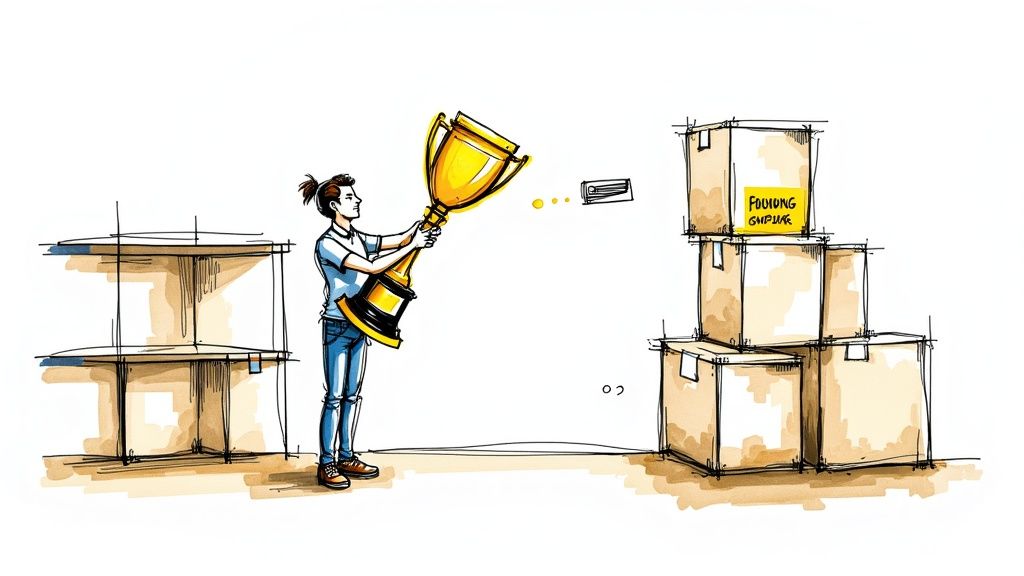
Dollar Shave Club's launch video wasn't just an ad; it was a declaration of war on the overpriced razor industry. The video, starring founder Michael Dubin, became a legendary example of viral marketing by proving that a brilliant script and raw authenticity could build a brand overnight on a shoestring budget.
The video, which cost a reported $4,500, exploded on YouTube in 2012, driving 12,000 new subscribers in its first 48 hours. Dubin's deadpan, warehouse-wandering monologue was a perfect blend of humor, a crystal-clear value prop ("Our blades are f**king great"), and a relatable anti-establishment attitude. It was marketing that didn't feel like marketing.
The Viral Engine
The campaign's genius was its disruptive simplicity and founder-led personality, which created an instant connection with a disillusioned audience.
Founder as the Face: Michael Dubin wasn't a hired actor; he was the guy with the idea. This authenticity made the message far more credible and memorable than a polished corporate ad.
Humor as a Weapon: The video used wit to attack industry giants, positioning Dollar Shave Club as the clever underdog you wanted to root for.
Insanely Simple Value Prop: The message was impossible to misunderstand: stop overpaying for razors and get quality blades for "a buck a month."
Strategic Insight: A founder's authentic personality, combined with a bold, humorous, and clear message, can be a startup's most powerful marketing weapon.
Actionable Takeaways for Startups
You don't need a huge budget to make a massive impact. This playbook is built for lean, bold startups.
Put Your Founder Front and Center: If your founder has a compelling personality, don't hide them. Use them in videos, on social media, and in emails to build a human connection.
Punch Up with Humor: Identify a common frustration in your industry and attack it with humor. Being funny and relatable can instantly differentiate you from boring, established competitors.
Focus on "Good Enough" Production: The video's low-fi, authentic feel was part of its charm. Focus on a killer script and a clear message, not Hollywood-level production value. Learn more about how to create content that connects on viralmarketinglab.com.
7. Samsung Galaxy - Comparing Products with Humor
Samsung's "The Next Big Thing is Already Here" campaign was a masterclass in comparative advertising that turned competitor loyalty into a viral engine. The ads created humorous, relatable scenarios where Galaxy users enjoyed superior features while Apple fans waited in line, oblivious to the tech they were missing. This campaign is a prime example of viral marketing because it tapped into the existing Apple vs. Android rivalry and used humor to make its point sharable.
The ads highlighted tangible product advantages—larger screens, NFC sharing, multitasking—framing the Galaxy as the innovative choice and the iPhone as the lagging incumbent. This sparked endless online debates and parodies, amplifying the campaign's reach far beyond paid media.
The Viral Engine
The campaign’s success was rooted in its clever use of social dynamics and product differentiation. It armed its customers with talking points.
Relatable Scenarios: The long lines for new iPhones were a real phenomenon. By setting their ads in this context, Samsung created a scene every tech enthusiast recognized.
Humor Over Aggression: The ads poked fun at the "blind faith" of Apple fans rather than aggressively attacking the brand. The witty tone made the content more palatable and shareable.
Feature-Driven Storytelling: Each joke was built around a specific, demonstrable feature advantage. This educated viewers on Samsung's benefits while entertaining them.
Strategic Insight: Viral comparative marketing frames the choice not just as product-vs-product, but as an identity choice: are you an informed early adopter or a follower of the crowd?
Actionable Takeaways for Startups
You don't need a Super Bowl budget to leverage a comparative strategy. Be smart, targeted, and authentic.
Identify a "David vs. Goliath" Angle: Pinpoint a specific, undeniable advantage your product has over the market leader. Frame your entire story around this single, powerful difference.
Use Humor and Empathy: Instead of attacking your competitor's users, show empathy for their "pain points" and present your product as the clever solution they've been missing.
Arm Your Fans with Ammunition: Create shareable content (memes, short videos, infographics) that clearly and humorously illustrates your key advantage. This turns your users into brand evangelists.
8. KFC - Tweet-Based Product Launch
KFC turned a simple product decision into a massive public spectacle. In their 2017 #CrispyVsFlop campaign, KFC South Africa asked Twitter users to vote on which new chicken recipe would make it to their menu. This is a brilliant example of viral marketing because it transformed passive consumers into active participants in the brand's story.
Instead of just announcing a new product, KFC gamified the launch. The campaign tapped into the inherent human desire to have a say and be part of a community decision. By letting the audience directly influence the outcome, they generated enormous organic buzz and a sense of shared ownership over the final product.
The Viral Mechanics
The genius of this campaign was its simplicity and direct engagement. It handed the keys to the kingdom to the customers.
Gamified Participation: The simple, binary choice of #CrispyVsFlop created a low-friction way for anyone to get involved. It felt like a game, not a marketing survey.
User-Generated Promotion: Every vote was a public tweet, turning each participant into a brand advocate. Users weren't just voting; they were broadcasting their preference and the KFC brand to their entire network.
Authentic Community Building: The campaign created a genuine conversation. It wasn't about KFC pushing a message; it was about the community debating and deciding together, which builds far stronger loyalty.
Strategic Insight: Involving your audience in a meaningful business decision creates a powerful sense of ownership. It shows you trust their opinion, which is a rare and valuable currency.
Actionable Takeaways for Startups
You can leverage this co-creation model to build buzz and a loyal following without KFC's budget.
Let Users Influence Your Roadmap: Use a Twitter poll or a simple landing page to let your community vote on the next feature for your SaaS tool. Frame it as "You decide what we build next!"
Gamify a Design Choice: Launching a new product? Create two potential logo designs or color schemes. Pit them against each other on social media and let your followers pick the winner.
Build Publicly: Share the results of the vote immediately and transparently. Post follow-up content showing your team implementing the winning choice. This closes the loop and proves you're listening.
9. Netflix - Binge-Release Strategy and Cultural Moments
Netflix didn't just change how we watch TV; it weaponized the binge-release model for marketing. Releasing an entire season at once transforms a show's premiere into a weekend-long cultural phenomenon. This strategy is a powerful example of viral marketing because it concentrates audience conversation into a short, intense period, creating an unmissable "fear of missing out" (FOMO).
Shows like Stranger Things became global events because everyone was experiencing them simultaneously. This created a fertile ground for memes, fan theories, and spoilers, dominating social media for days. Netflix's role shifted from a content distributor to a curator of cultural moments, where marketing is driven by the audience's urgent need to join the conversation.
The Viral Mechanics
The genius of the binge model is that it manufactures urgency around on-demand content, turning passive viewers into active participants in a shared cultural experience.
Concentrated Conversation: By dropping all episodes at once, Netflix ensures social media conversations peak over a single weekend, amplifying reach and making the show feel like a must-watch event.
User-Generated Hype: The model encourages immediate reactions, fan theories, and meme creation. The audience effectively becomes the marketing team, generating massive organic buzz.
FOMO as a Driver: The fear of spoilers and being left out of the conversation compels people to watch immediately, creating a powerful network effect that draws in more viewers.
Strategic Insight: The most effective viral strategy isn't always the content, but the way you release it. Engineering a shared, urgent experience creates a powerful pull that traditional marketing can't replicate.
Actionable Takeaways for Startups
You don't need a Hollywood budget to leverage the principles of a concentrated "event" release.
"Binge-Release" Your Content: Instead of trickling out a blog series, release an entire multi-part "ultimate guide" or a full video course at once. Frame it as a definitive, binge-worthy resource.
Manufacture an "Opening Weekend": When launching a new feature, create a limited-time launch event. Offer special bonuses, host live Q&As, and concentrate all promotional efforts into a 48-72 hour window to maximize buzz.
Fuel the Conversation: Before your launch, seed conversation starters or create shareable templates related to the problem your product solves. Give your audience the tools to talk. Understanding how to retweet effectively for viral spread can turn that chatter into a marketing engine.
10. Warby Parker - Try-at-Home and Social Responsibility
Warby Parker didn’t just sell glasses; they reinvented the customer experience and tied it to a social mission. By offering a "Home Try-On" program where customers could test five frames for free, they removed the biggest barrier to buying eyewear online. This user-centric model is a premier example of viral marketing because it fused product innovation with a story people wanted to share.
They amplified this effect with their "Buy a Pair, Give a Pair" program. This wasn't a charitable afterthought; it was woven into the brand's DNA. Customers weren't just buying glasses; they were participating in a movement. This combination of risk-free trial and social good created a powerful, organic word-of-mouth engine.
The Viral Mechanics
Warby Parker's genius was making the customer the hero of two stories: their own (finding the perfect glasses) and a larger one (helping someone in need).
Frictionless Experience: The Home Try-On program was so novel and customer-friendly that it became a talking point. People unboxed their kits on social media and asked friends for opinions.
Built-in Social Proof: The program naturally encouraged customers to share photos of themselves trying on frames, turning a solo purchase decision into a social event.
Mission-Driven Identity: The "Buy a Pair, Give a Pair" model gave customers an emotional reason to choose Warby Parker and an inspiring story to tell their friends, creating brand evangelists.
Strategic Insight: Virality can be engineered by solving a major customer pain point in an inherently shareable way and aligning the purchase with a higher purpose.
Actionable Takeaways for Startups
You don't need to sell eyewear to apply these principles.
Create a "No-Brainer" Trial: How can you remove all friction from your customer's first experience? Offer a risk-free trial, a free pilot program, or a money-back guarantee so good it becomes a story in itself.
Embed Mission into Your Model: Don't just donate a percentage of profits. Integrate your social mission directly into your product. This makes your impact tangible and your story more authentic.
Engineer Sharing Moments: Design your customer journey with built-in moments for sharing, like an unboxing experience or achieving a key milestone with your product.
Comparison of 10 Viral Marketing Campaigns
Campaign | 🔄 Implementation Complexity | ⚡ Resource Requirements | 📊 Expected Outcomes | Ideal Use Cases | ⭐ Key Advantages / 💡 Tips |
|---|---|---|---|---|---|
Red Bull Stratos - Extreme Stunt Marketing | Very high — multi-year planning, regulatory & safety hurdles | Massive budget, technical experts, global logistics | Global earned media; huge reach and brand association | Brand awareness stunts, positioning as adventurous/innovative | Spectacular shareability; build narrative & partner experts 💡 |
Old Spice - The Man Your Man Could Smell Like | Moderate — creative production + real-time social responses | Low–medium production cost; agile creative team | Viral cultural relevance; strong shareability; sales uplift | Brand revitalization; targeting younger demographics | Highly memeable and cost-efficient; inspire remixing 💡 |
Dove Real Beauty Sketches - Emotional Brand Storytelling | High — sensitive storytelling, documentary format | High production cost; research and agency collaboration | Deep emotional engagement; long-term conversation; awards | Social-impact messaging; trust and brand purpose building | Authentic emotional resonance; align closely with mission 💡 |
Taco Bell - Taco Twitter Hack | Moderate–high — real-time digital technical & legal risk | Medium cost; digital/engineering team; legal oversight | Strong earned media and social buzz; cultural talking points | Event-triggered stunts; competitive, attention-grabbing moments | Bold, conversation-driving creativity; verify platform rules 💡 |
Airbnb - Belong Anywhere Campaign | High — global coordination and consistent storytelling | High content production; regional teams; long-term investment | Emotional loyalty; PR and cultural relevance across markets | Global brand building; inclusion and social-responsibility narratives | Authentic user stories build trust; avoid performative signals 💡 |
Dollar Shave Club - Disruptive Humor and Authenticity | Low — simple shoot, direct talent-driven delivery | Very low production cost; founder/creative-led team | Rapid viral reach; fast subscriber growth; category disruption | Startup launches; challenger brands seeking quick traction | Founder authenticity + clear value prop; keep tone consistent 💡 |
Samsung Galaxy - Comparing Products with Humor | Moderate — coordinated creative & legal review | Medium–high ad spend; product marketing alignment | High earned media; clear product differentiation | Competitive positioning against dominant rivals | Use humor tied to real advantages; avoid over-aggression 💡 |
KFC - Tweet-Based Product Launch | Low — social mechanics and fast operational execution | Low cost; social team and back-end readiness | Massive engagement and consumer insight; community ownership | Product testing, engagement during major events | Simple binary voting works best; guard against manipulation 💡 |
Netflix - Binge-Release Strategy and Cultural Moments | High — synchronized global release and teaser strategy | Very high content investment; marketing + data teams | Synchronized fan communities; strong cultural moments | Serialized entertainment launches; building zeitgeist shows | Build mystery & encourage speculation; coordinate timing carefully 💡 |
Warby Parker - Try-at-Home and Social Responsibility | Moderate — logistics-heavy DTC model with CSR elements | Significant fulfillment/logistics; customer support | High referrals; strong loyalty; social-impact PR | Retail disruption; mission-driven product launches | Reduce purchase friction; communicate impact transparently 💡 |
Your Turn: Go Make Something Go Viral
We've dissected a decade of viral marketing genius, from Red Bull's space jump to Dollar Shave Club's brutal honesty. Each example of viral marketing here wasn't a fluke; it was a masterclass in human psychology and precise execution. These are not just success stories; they are strategic blueprints.
The common thread isn't a massive budget. It's a deep understanding of a core human driver: the awe inspired by the impossible (Red Bull), the need for authentic connection (Dove), or the joy of being in on a joke (Old Spice). These brands didn't just sell a product; they sold a feeling, an identity, or a shared moment.
From Blueprint to Build: Core Viral Principles
To distill these campaigns into actionable wisdom, here are the non-negotiable principles for crafting your own viral engine.
Emotion is Non-Negotiable: Laughter, inspiration, surprise, or even anger—your content must make people feel something. Apathy is the enemy of sharing. Dove's campaign went viral because it tapped into a universal insecurity and offered a moment of shared empowerment.
Participation is the Goal: Virality is not a spectator sport. The best campaigns invite the audience to become part of the story. Warby Parker’s try-on program turned customers into Instagram evangelists. Airbnb's campaign made users the heroes. Ask: how can your audience co-create this moment with you?
Simplicity Scales: Complexity kills speed. The easier your message is to understand and share, the faster it will travel. Dollar Shave Club’s pitch was brutally simple: "Our blades are f***ing great."
Authenticity Builds Trust: Audiences have a finely tuned BS detector. The brands that win embrace their unique voice. Dollar Shave Club’s scrappy video felt real and resonated with a generation tired of polished corporate perfection.
Your Action Plan for Virality
Inspiration without action is worthless. It's time to stop analyzing and start building. Here’s a lean playbook to get started today.
Identify Your Core Emotion: What single feeling do you want to own? Confidence? Rebellion? Joy? Start there. Every creative decision should serve this core emotion.
Define the "Share Trigger": Why would someone actually share your content? To look smart? To make a friend laugh? To support a cause they believe in? Pinpoint this trigger and build your campaign around it.
Craft Your Minimum Viable Content (MVC): Don't aim for a Super Bowl ad. What is the smallest, simplest piece of content (a tweet, a short video, a meme) that can test your core emotional hypothesis? Create it, ship it, and measure the response.
Now that you have the strategic frameworks, it's time to master the craft. A comprehensive guide on how to make viral videos that get views is an essential next step. It provides the tactical skills to turn your concept into a tangible asset people will actually share.
The path to virality is not a straight line. It’s a process of bold experimentation, rapid learning, and a relentless focus on providing genuine value. The next great viral campaign is waiting to be made. Go make it yours.
Ready to move beyond theory and start building your own viral engine with proven frameworks and tools? The Viral Marketing Lab provides a complete system with plug-and-play templates, strategic playbooks, and case studies to help you engineer virality, not just hope for it. Transform your marketing from an expense into a self-perpetuating growth machine at Viral Marketing Lab.