8 Insights on the Best Time to Post on Social Media (2025)
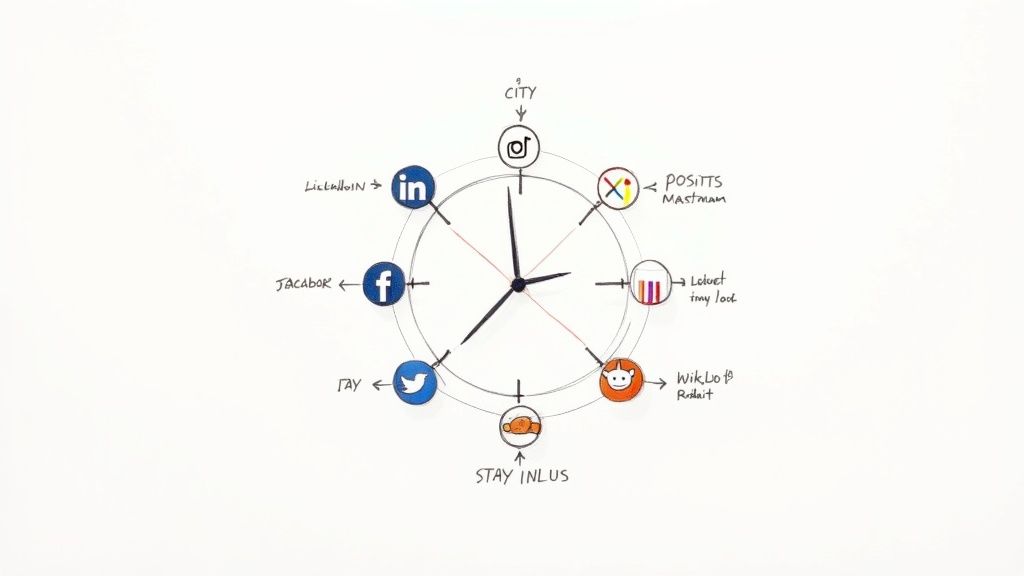
You've crafted the perfect message, but hitting 'publish' at the wrong moment is like shouting into an empty room. Your content deserves an audience. Timing is the unsung hero of social media engagement. Generic advice won't cut it. The real question isn't just what you post, but when.
The best time to post on social media isn’t a myth—it’s a strategic advantage. It puts your content directly in front of the right people when they're ready to engage, comment, and convert. For lean startups and solo entrepreneurs, every post must count. Wasting great content on a dead-zone time slot is an expensive mistake you can't afford.
We're cutting through the noise with punchy, platform-specific data and actionable insights for 2025. Forget vague theories and outdated benchmarks. This is your blueprint to mastering the clock, maximizing reach, and turning your social media efforts into measurable growth. We will cover:
Platform-by-Platform Peak Windows: Specific, data-backed time slots for Instagram, LinkedIn, Facebook, X (formerly Twitter), TikTok, and more.
Actionable Frameworks: Simple A/B testing methods to pinpoint your unique audience's most active hours.
Ready-to-Use Resources: A copyable posting schedule and recommendations for the best scheduling tools for bootstrapped teams.
Let's dive into the peak engagement windows for every major platform and turn your timing into a true competitive edge.
1. Instagram Peak Hours (11 AM - 1 PM and 7 PM - 9 PM)
Instagram's algorithm rewards recency and engagement. Your post's timing is critical. The best time to post on social media, especially a visual platform like Instagram, is when your audience is ready to interact. Industry-wide data from Hootsuite and Buffer consistently points to two key windows: the midday break and the post-work wind-down.
These hours aren't random; they map to user behavior. The 11 AM to 1 PM window catches users scrolling on their lunch break. The 7 PM to 9 PM slot finds them relaxing at home, actively browsing feeds and engaging with content that entertains or inspires.
Real-World Application and Results
Niches leverage these windows to maximize impact. A B2C fashion brand might post new arrivals at 11 AM to catch lunchtime shoppers. A fitness influencer often finds more success posting a workout summary at 7 PM when their audience wants motivation for the next day. Luxury brands often see the highest engagement rates by focusing on the Tuesday through Thursday at 1 PM sweet spot.
Actionable Implementation Tips
Move beyond generic advice and personalize your approach.
Test and Validate: Don't take benchmarks as gospel. Dedicate 2-4 weeks to A/B testing post times. Post similar content at 11 AM, 1 PM, 7 PM, and 9 PM on different days. See what drives the most likes, comments, and shares for your audience.
Use Native Analytics: Dive into your Instagram Insights. Go to "Total Followers" and scroll to the "Most Active Times" section. This heat map shows when your followers are online—your most accurate data. For more, explore this resource on more specific guidance on the best time to post on Instagram.
Schedule Ahead: Use a scheduling tool to post 15-30 minutes before your peak hour. This gives the algorithm time to index and distribute your post, ensuring it hits the feed as user activity surges.
Diversify with Stories: Use Instagram Stories to maintain a presence all day without cluttering your feed. Post behind-the-scenes content during off-peak hours to stay top-of-mind. For inspiration, explore examples of minimalistic Instagram posts.
2. LinkedIn Professional Hours (Tuesday-Thursday, 8 AM - 10 AM and 12 PM - 1 PM)
LinkedIn is a B2B powerhouse where timing follows the workday. The best time to post on social media for a business audience is when they’re in a career mindset. Data from HubSpot and Sprout Social shows activity surges mid-week during the 9-to-5 schedule.

These peak hours are logical. 8 AM to 10 AM catches users as they start their workday, scanning their feed for industry news. 12 PM to 1 PM targets the lunch break, a prime time for networking and consuming thought leadership. Wednesday and Thursday consistently deliver the highest engagement.
Real-World Application and Results
B2B sectors use these windows strategically. Tech companies find that posting between 8 AM and 9 AM on Tuesdays and Wednesdays generates the most qualified leads. Consulting firms report that thought leadership articles posted during the 12 PM to 1 PM lunch window spark higher-quality conversations. HR and recruiting content can see 50% more shares when posted at 8 AM mid-week.
Actionable Implementation Tips
Tailor your strategy to the B2B rhythm.
Schedule for Precision: Post your content five minutes before the hour (e.g., 7:55 AM). Your post will be fresh in the feed as users begin their morning scroll, giving you a competitive edge.
Focus on Mid-Week: Prioritize your most important content for Tuesday, Wednesday, and Thursday. Use Mondays for planning and Fridays for lighter, community-focused content, as engagement dips towards the weekend.
Leverage LinkedIn Analytics: Go to your company page's analytics tab. The "Content" tab shows which posts resonated most. Correlate high-performing posts with their publish times to find your unique sweet spot.
Consider Industry Nuances: Don't treat all B2B audiences the same. Financial services might see an earlier peak (7:30 AM), while tech often engages later. Test variations based on your target profession's habits.
3. Facebook Optimal Times (1 PM - 4 PM and 8 PM - 10 PM Weekdays)
Facebook's algorithm prioritizes immediate interaction. To find the best time to post on social media for this massive user base, align with habits that span generations. Data from Facebook, Buffer, and Later identifies two key windows: the afternoon slump and the prime-time evening scroll.
These slots tie directly to daily routines. 1 PM to 4 PM captures users taking a mental break from work or school. 8 PM to 10 PM finds them relaxing on the couch, ready to consume longer content like videos and engage in deeper conversations.
Real-World Application and Results
Different content thrives in these windows. News organizations often see a 35% lift in shares by posting articles between 1 PM and 3 PM. Entertainment pages achieve peak engagement from 8 PM to 9 PM with viral videos and lighthearted content. Local businesses frequently report their best performance on Thursday afternoons, capitalizing on users making weekend plans. Video content consistently sees up to 40% more views when posted around 1 PM.
Actionable Implementation Tips
Your Facebook strategy needs to be precise and data-driven.
Prioritize Thursday: While you should post consistently, save your most important content for Thursday. Test posts in both the afternoon and evening slots to see which drives more reach and engagement.
Segment by Demographics: Use your Facebook Page Insights to understand your audience's age. Younger demographics may be more active later in the evening, while older audiences often engage earlier. Tailor your schedule accordingly.
Leverage Native Scheduling: Use Facebook's built-in scheduler to queue posts for optimal times. This ensures consistency without requiring you to be online, helping you maintain a steady presence during peak windows.
Monitor and Adapt: Your Page Insights are your single source of truth. Regularly review the "When Your Fans Are Online" data under the "Posts" tab. Look for unique engagement patterns and adjust your schedule based on your data, not just industry benchmarks.
4. Twitter/X Peak Engagement (8 AM - 10 AM, 5 PM - 7 PM, and 9 PM - 11 PM)
Twitter/X operates at a breakneck pace. Its real-time nature makes timing exceptionally crucial. The best time to post on social media here isn't one window, but a series of opportunities. Data from Hootsuite and Twitter highlights three key periods: the morning commute, the post-work decompress, and the late-night scroll.
These peaks are driven by the platform's role as a news source. 8 AM to 10 AM catches users on top of overnight headlines. 5 PM to 7 PM hits as people wind down their workday. 9 PM to 11 PM is when users are relaxed and ready for deeper conversations.
Real-World Application and Results
Different sectors use these windows to maximize reach. News outlets often see up to 60% higher engagement by dropping stories between 8 AM and 10 AM. Tech companies and SaaS startups find their highest retweet rates by sharing updates around 5:30 PM as their audience logs off.
B2C brands capitalize on the 9 PM to 11 PM window when users are receptive to viral content. Journalists report their best engagement comes from actively replying and initiating conversations during this later window, building rapport when the platform is highly conversational.
Actionable Implementation Tips
Leverage Twitter/X's dynamic timeline with a high-frequency strategy.
Post Multiple Times Daily: Posting 3-5 times a day on Twitter/X is standard. Schedule content for the morning, evening, and late-night windows to capture different audience segments.
Focus on Weekdays: Engagement is heavily concentrated from Monday to Thursday. Data shows a significant drop-off on Fridays and weekends. Prioritize your most important content for mid-week.
Boost with Immediate Replies: As soon as you post, spend 10-15 minutes replying to relevant tweets. This signals to the algorithm that you're an active user, which can give your own tweet an immediate visibility boost.
Use Trending Hashtags Strategically: Monitor the "Trends" tab during your target posting windows. Incorporating a relevant trending hashtag can dramatically expand your reach. For more advanced strategies, explore ways to dominate Twitter with powerful engagement techniques.
5. TikTok Prime Hours (6 AM - 10 AM and 6 PM - 11 PM)
TikTok's "For You Page" algorithm is a powerful discovery engine that heavily favors fresh content. Finding the best time to post on social media here means tapping into the daily routines of its young, engaged audience. This creates two high-impact windows: the morning "wake-up and scroll" and the evening "unwind and binge".

These prime hours are tied to user behavior. 6 AM to 10 AM captures users scrolling immediately upon waking up. The expansive 6 PM to 11 PM slot aligns with post-school or post-work relaxation, when users are primed for entertainment. Posting during these times increases your chance of hitting the FYP as activity surges.
Real-World Application and Results
Creators see massive success by targeting these windows. A comedy account can go viral by posting a short skit at 7 AM. Dance creators can achieve 10x their average engagement by posting a new routine between 7 PM and 9 PM when users are most likely to participate in trends.
Educational content performs exceptionally well between 6 PM and 7 PM. Accounts targeting teens and college students find their sweet spot is later, from 8 PM to 10 PM, when this demographic is most active.
Actionable Implementation Tips
To maximize your reach on TikTok, a precise, data-backed approach is essential.
Analyze Your Audience Data: Check your native analytics. Switch to a Pro or Business account, then go to "Creator tools" > "Analytics" > "Followers". The "Follower activity" tab shows the specific hours and days your audience is most active. This is your most critical data point.
Post During Pre-Peak Moments: Schedule content to go live 15-20 minutes before your identified peak hour. This gives the algorithm time to process and push your video into feeds just as user activity builds.
Optimize the First 3 Seconds: TikTok's algorithm weighs initial watch time heavily. Your first three seconds must be captivating. Fail here, and even the perfect posting time won't save your video.
Leverage Weekends: Unlike professional platforms, TikTok usage often spikes on Saturdays and Sundays. Do not neglect these days. Test posting times throughout the weekend to find when your audience is most engaged.
6. YouTube Optimal Upload Times (Varied by Content Type: 2 PM - 4 PM and 7 PM - 9 PM)
YouTube's algorithm prioritizes watch time over publish time. However, a strategic upload schedule still provides the initial momentum needed to get recommended. The key is aligning your upload with your audience's viewing habits.
Data from TubeBuddy and VidIQ highlights two primary windows: the afternoon learning slot and the evening entertainment block. 2 PM to 4 PM captures viewers seeking educational content. The later 7 PM to 9 PM slot is prime time for entertainment, gaming, and vlogs as viewers settle in for the evening.
Real-World Application and Results
Content niche dictates your target window. Tech review channels often see higher engagement posting between 2 PM and 3 PM. Gaming creators achieve peak viewers by premiering content around 7 PM or 8 PM. Educational channels find sustained watch time from uploads in the 2 PM to 4 PM window, while vloggers report higher audience retention by uploading around 4 PM on weekdays.
Actionable Implementation Tips
Focus on building audience habits and maximizing initial engagement.
Analyze Your Audience Data: Go to YouTube Studio Analytics. Under the "Audience" tab, find the "When your viewers are on YouTube" report. This graph is your most valuable asset, showing the precise hours your subscribers are active.
Train Your Audience: Consistency is more critical than frequency. Choose a specific day and time based on your analytics and stick to it. This trains subscribers to expect new content, creating an engaged initial audience for every upload.
Optimize the First 48 Hours: The algorithm heavily weighs the first two days. Uploading 2-3 hours before peak activity allows YouTube to index your video, preparing it for a wider push when viewership surges. For more guidance, consider this guide on the best time to post on YouTube.
Use Premieres Strategically: Schedule your video as a Premiere to create a live event. This concentrates your most dedicated viewers, generating a massive burst of simultaneous views, chat engagement, and watch time that sends a powerful positive signal to the algorithm.
7. Pinterest Optimal Posting Times (3 AM - 6 AM, 8 PM - 11 PM, and 2 PM - 3 PM)
Pinterest functions like a visual search engine, giving your content a long lifespan. The initial posting time still impacts its early velocity and ranking. The best time to post on social media platforms like Pinterest requires understanding its unique user base, which engages in planning and discovery at unconventional hours.
Data reveals several key windows. 8 PM to 11 PM is prime time for planners and dreamers saving ideas for future projects. 3 AM to 6 AM captures international audiences and early risers, while the mid-afternoon 2 PM to 3 PM block catches users looking for quick inspiration, like dinner recipes.
Real-World Application and Results
Different content thrives in these time slots. Recipe bloggers find that posting around 2 PM leads to a surge in saves as users plan evening meals. Wedding planners and fashion influencers see maximum engagement by scheduling Pins for the 8 PM to 10 PM window. DIY and craft accounts can leverage the early 3 AM to 6 AM hours to get their content in front of a global audience or early-morning hobbyists.
Actionable Implementation Tips
Master Pinterest's timing with a strategy that optimizes for initial discovery and long-term value.
Embrace Unconventional Hours: Don't shy away from late-night or early-morning slots. Use a scheduler to post between 3 AM and 6 AM to capture international users and those with non-traditional schedules.
Target the Planners: The 8 PM to 11 PM window is your golden opportunity. Schedule your most important, high-value content during this period to align with peak user intent.
Recycle and Repin: Create multiple unique Pin images and descriptions for a single piece of content. Schedule these different Pins to be posted across various peak times over several days or weeks to maximize reach.
Prioritize SEO Over Immediacy: Since Pins are evergreen, focus on keyword-rich descriptions, relevant hashtags, and high-quality visuals. A Pin's discoverability months from now is more critical than its performance in the first hour.
Analyze Your Audience: Use Pinterest Analytics. Navigate to "Analytics" > "Audience Insights" to understand your specific demographic's behavior and adjust your posting schedule accordingly.
8. YouTube Shorts and Short-Form Video Sweet Spot (2 PM - 4 PM and 6 PM - 10 PM)
The YouTube Shorts algorithm, built to compete with TikTok, favors recent uploads during peak consumption windows. The best time to post on social media for short-form video is when audiences seek quick, snackable content. Your publish time is a critical lever for initial velocity and viral potential.
Unlike traditional YouTube videos, Shorts thrive on immediate engagement. The 2 PM to 4 PM window captures the afternoon slump crowd, while the 6 PM to 10 PM block targets users unwinding at home. Posting during these times gives your content the best chance to be picked up and distributed widely.
Real-World Application and Results
Creators are using these windows to maximize reach. Comedy creators frequently see view counts over 100k when they post between 3 PM and 4 PM. Quick tutorial or "how-to" Shorts find peak engagement around 2 PM on weekdays. Entertainment and music-focused Shorts often achieve viral status when posted in the 7 PM to 8 PM prime time slot.
Actionable Implementation Tips
Your Shorts timing strategy must be precise and consistent.
Focus on Peak Days: Concentrate your posting efforts from Tuesday through Thursday for the highest potential engagement. These are the days when users are most active.
Hook in 3 Frames: The first one to three seconds of your Short are crucial. Design a visually compelling opener to stop the scroll and signal high retention to the algorithm.
Leverage Trending Audio: Incorporate trending sounds as they emerge. The algorithm often prioritizes content using popular audio, boosting its discoverability.
Maintain High Frequency: Post 1-2 Shorts daily within your identified peak windows. This consistency signals to YouTube that you are an active creator, leading to more favorable treatment from the algorithm.
Analyze Your Niche: Study top-performing Shorts in your category. Note what times the most successful creators are posting to identify nuanced timing patterns that work for your audience.
Optimal Post Times: 8-Platform Comparison
Platform | 🔄 Implementation Complexity | ⚡ Resource Requirements | ⭐ Expected Outcomes | 📊 Key Advantages | 💡 Ideal Use Cases |
|---|---|---|---|---|---|
Instagram Peak Hours (11 AM–1 PM, 7 PM–9 PM) | 🔄 Medium — scheduling + creative cadence | ⚡ Medium — regular feed, Reels, stories; editing tools | ⭐⭐⭐⭐ High initial visibility & engagement when timed | 📊 Algorithm boost in first hour; strong visual reach | 💡 Fashion, lifestyle, influencers, product launches |
LinkedIn Professional Hours (Tue–Thu, 8–10 AM, 12–1 PM) | 🔄 Low–Medium — focused timing, copy-driven | ⚡ Low — fewer posts; high-quality long-form content | ⭐⭐⭐ High-quality B2B engagement and lead potential | 📊 Access to decision-makers; reliable weekday pattern | 💡 B2B content, thought leadership, hiring, case studies |
Facebook Optimal Times (1–4 PM, 8–10 PM weekdays) | 🔄 Low — flexible windows, varied formats | ⚡ Medium — mix of images, video, community mgmt | ⭐⭐⭐ Moderate reach; audience-dependent due to algo | 📊 Broad demographics; groups and local reach | 💡 Local businesses, community pages, news, videos |
Twitter/X Peak Engagement (8–10 AM, 5–7 PM, 9–11 PM) | 🔄 Medium–High — real-time posting & monitoring | ⚡ High — frequent posts, rapid replies, trend tracking | ⭐⭐⭐ Variable — strong for timely/news content | 📊 Real-time virality and conversation amplification | 💡 News, commentary, PR, rapid customer engagement |
TikTok Prime Hours (6–10 AM, 6–11 PM) | 🔄 Medium–High — trend-driven creative process | ⚡ High — frequent short videos, strong editing/sound use | ⭐⭐⭐⭐ Very high viral reach potential if timed & trendy | 📊 Algorithmic discoverability; youthful, engaged audience | 💡 Entertainment, dance, comedy, short educational clips |
YouTube Optimal Upload Times (2–4 PM, 7–9 PM) | 🔄 High — longer production and editing cycles | ⚡ High — scripted filming, thumbnails, consistent schedule | ⭐⭐⭐⭐ Strong long-term growth via watch time & retention | 📊 Long content lifespan; recommendation-driven growth | 💡 Tutorials, reviews, vlogs, in-depth educational content |
Pinterest Optimal Posting Times (3–6 AM, 2–3 PM, 8–11 PM) | 🔄 Low — planning + SEO/keyword focus | ⚡ Low–Medium — pinnable creatives, descriptions, scheduling | ⭐⭐⭐ Sustained referral traffic and high intent saves | 📊 Content longevity; low competition off-peak | 💡 DIY, recipes, fashion, wedding planning, evergreen ideas |
YouTube Shorts / Short-Form (2–4 PM, 6–10 PM) | 🔄 Medium — short-form optimization + trends | ⚡ Medium — frequent short edits, vertical format | ⭐⭐⭐⭐ High discoverability; quick subscriber growth | 📊 Leverages YouTube ecosystem; cross-promotes long-form | 💡 Short tutorials, comedy, music clips, channel promos |
From Insight to Action: Your Go-Forward Posting Playbook
We've covered a lot of ground. You now have a set of data-backed starting blocks for every major social platform. But the core takeaway is this: The "best time to post on social media" isn't a universal secret; it's a personalized metric you uncover.
The platform-specific windows we've detailed are your hypothesis, not your conclusion. They are your launchpad. Your mission is to zero in on the unique behavior of your specific audience—the people who will champion your brand and buy your product. The magic happens when you move from general advice to a specific, data-driven strategy.
Your Three-Step Action Plan: From Theory to ROI
Capitalizing on the best times to post isn't about luck; it’s about a repeatable, data-informed workflow. Here is your go-forward playbook.
Establish Your Baseline (Weeks 1-2): Don't overthink it. Take the recommended time slots from this article and implement them now. Use a scheduling tool to build your first two weeks of content. The goal is simple: gather initial data. Post consistently across platforms at these peak hours to see what your initial traction looks like.
Hypothesize and Test (Weeks 3-4): Now, get curious. Look at your analytics. Did your 9 AM LinkedIn post outperform the 1 PM one? Form a new hypothesis. For example: "Our audience seems most active on Twitter/X before work, so we'll test posts at 7 AM instead of 9 AM." Dedicate the next two weeks to A/B testing these new time slots against your baseline.
Analyze and Refine (Ongoing): This is where you build your edge. At the end of your first month, you'll have a clear picture of what works for you. Your analytics are a direct conversation with your audience, telling you exactly when they're most receptive. Double down on your winning time slots. Revisit this testing cycle quarterly to adapt to changing algorithms and audience habits.
Key Insight: Mastering your social media timing isn't just about getting more likes. It's about maximizing the ROI on every piece of content you create. A well-timed post is the difference between a lead-generating asset and a digital dud.
Ultimately, finding the best time to post on social media is about building a system. Be a scientist, not a psychic. By methodically testing, measuring, and refining your approach, you move beyond guesswork and start making strategic decisions that fuel your growth. You turn social media from a content chore into a predictable engine for traffic, leads, and community.
Ready to execute this playbook without the design overhead? Viral Marketing Lab provides an entire library of ready-to-use social media banners, content frameworks, and carousel templates specifically designed for lean startups like yours. Stop wasting hours in Canva and start spending that time analyzing your results by visiting Viral Marketing Lab to access your complete content toolkit.