A Guide On How To Use LinkedIn For Business Growth

Stop thinking of LinkedIn as a digital resume. It’s your 24/7 sales machine, your lead magnet, and your brand's command center. Get this wrong, and every other tactic you try will fall flat.
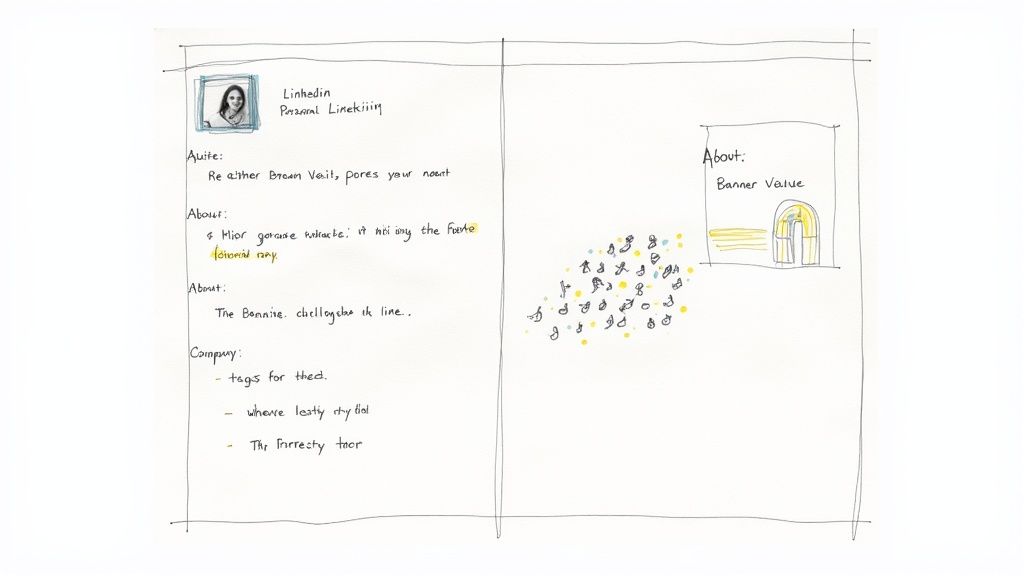
This isn’t about filling in blanks. It’s about building a magnetic presence that pulls your ideal clients to you.
Your Personal Profile is Where the Magic Happens
People don't buy from logos. They buy from people. Your personal profile is where that trust begins. It needs to scream, "I get your problem, and I can solve it."
First up: your headshot. It's the digital handshake. A blurry vacation photo won't cut it. For a fast, pro upgrade, check out AI-generated LinkedIn headshots.
Next, your headline. "CEO at [Company Name]" is a wasted opportunity. Flip it into a value bomb that speaks directly to your customer.
Weak Headline: Founder at SaaS Co.
Strong Headline: Helping B2B Founders Scale MRR with Automated Outreach | AI & Growth Marketing
See the difference? One is a title. The other is a solution.
Your Company Page is Your Digital Headquarters
Your Company Page is your brand's home base. It legitimizes your business and acts as a central hub for content and community.
That banner image? Prime real estate. Don't waste it. Use it to broadcast your value prop or promote your latest lead magnet. If you're stuck, grab our ready-to-use LinkedIn banner template.
The "About" section is next. Don't just list what you do—tell a story. Hook them by describing their pain points first.
Your LinkedIn 'About' section should read less like a corporate brochure and more like the answer to your customer's biggest problem. Lead with empathy, then hit them with your solution.
This is also the perfect place to weave in keywords your prospects are actually searching for, like "project management software for remote teams." This simple SEO move makes a massive difference in discoverability.
To ensure you've covered all bases, here’s a quick checklist comparing optimization points for your profile and company page.
Profile And Page Optimization Checklist
Element | Personal Profile Action | Company Page Action |
|---|---|---|
Profile Photo | Use a professional, high-res headshot. | Use a clean, recognizable logo. |
Headline / Tagline | Turn it into a value proposition. | Clearly state what your company does. |
Banner Image | Showcase personality or social proof. | Promote a lead magnet or value prop. |
About Section | Tell your story, focusing on how you help. | Detail customer pain points and your solution. |
Keywords | Weave them into your headline and experience. | Integrate them naturally in the about section. |
Call to Action | Add a link to your calendar or website. | Pin a post with a clear CTA to the top of the feed. |
Featured Section | Highlight top posts, case studies, or links. | (Not applicable, use Pinned Post instead) |
Nailing this checklist is non-negotiable. A fully optimized presence is your ticket to the game.
Why This Matters More Than Ever
Building a solid foundation on LinkedIn isn't a "nice-to-have." It's essential. The platform’s growth is explosive. Back in 2019, LinkedIn had 644 million users. By January 2025, that number hit over 1.15 billion members—nearly doubling in six years.
This isn't just a crowd; it's a massive, professional audience actively searching for solutions. When your profile is dialed in, you ensure that when they search, they find you. This is the first step to turning LinkedIn into a growth engine.
Developing A Content Strategy That Actually Converts
Posting on LinkedIn without a plan is like throwing darts in the dark. You might hit the board, but you'll never nail the bullseye. A winning strategy isn't about random content; it's a deliberate system for building authority and pulling in leads.
Forget the hard sell. The best approach is built on generosity. This is where the ‘Give, Give, Give, Ask’ model shines. Deliver massive value three times before you even think about asking for a demo or a call. This simple shift builds trust and positions you as an expert, not just another salesperson.
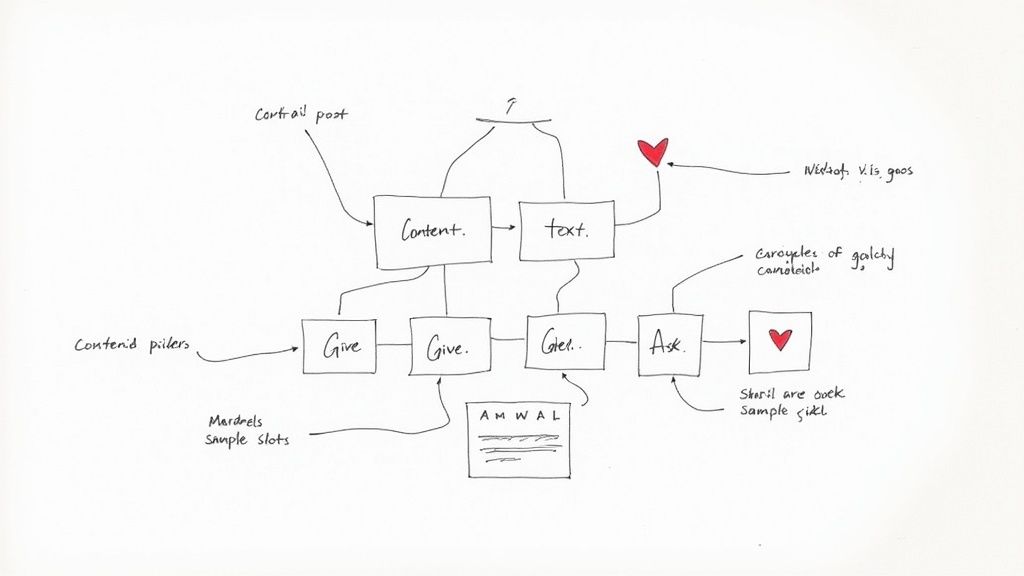
When you do this right, you stop being noise and become a signal. People follow you for your insights, making them far more receptive when you finally have an offer.
Pinpoint Your Core Content Pillars
Your content needs a solid foundation. Without one, you'll confuse your audience. Content pillars are the 2-4 core topics you know inside and out—and they must solve your ideal customer's biggest headaches.
If your company helps SaaS founders improve user onboarding, your pillars might be:
User Psychology: The cognitive biases that drive user behavior.
Onboarding UX/UI: Design patterns that slash user friction.
Product-Led Growth: Strategies for using the product itself to drive acquisition.
Every post must tie back to a pillar. That consistency hammers home your expertise and attracts the right people—your future customers.
Choosing The Right Content Formats
Once your pillars are locked in, decide how you'll deliver your message. Sticking to one format is a recipe for boredom. Variety keeps people engaged.
Different formats are tools for different jobs.
Text-Only Posts: Perfect for telling stories, sharing strong opinions, or asking questions. They feel personal and spark conversations. Keep paragraphs short and use emojis.
Image Posts: Got data or a compelling screenshot? Use an image. Visuals grab attention—posts with images get around double the comment rate.
Carousels (PDFs): Absolute powerhouses for education. Break down a complex topic into 5-10 digestible slides. They scream "expert" and get shared like crazy.
Video: Nothing builds connection faster. Short-form videos are perfect for dropping quick tips. People buy from people, and video shows the real person behind the brand.
You don't need to master every format. Pick two that play to your strengths and commit. Great writer? Lean into text and carousels. Comfortable on camera? Make video your priority.
Building A Simple Content Calendar
Consistency separates the pros from the amateurs. A content calendar is your secret weapon, killing the daily panic of "What do I post today?" A simple spreadsheet is all you need.
Start by planning one week at a time. Map your pillars to different days and mix up the formats. If you hit a creative wall, check out some trendy LinkedIn templates for inspiration to get a spark.
Here’s what a simple weekly schedule could look like:
Day | Content Pillar | Format | Post Idea |
|---|---|---|---|
Monday | User Psychology | Text-Only Post | "The #1 psychological bias killing your user retention (and how to fix it)." |
Tuesday | Product-Led Growth | Carousel | "5 PLG tactics you can implement in under an hour." |
Wednesday | Onboarding UX/UI | Image Post | A screenshot of a "best-in-class" onboarding flow with annotations. |
Thursday | User Psychology | Video | Quick video tip: "How to use the 'Aha!' moment to boost sign-ups." |
Friday | Product-Led Growth | Text-Only Post | Ask a question: "What's the most underrated PLG tool you use?" |
This simple structure gives you a repeatable workflow. You're no longer winging it; you're executing a real strategy. This is how you turn LinkedIn into a reliable growth engine.
Ditch the Spam: Smart Outreach That Actually Works
Great content and a polished profile are table stakes. They're passive. To fire up the engine, you must shift from broadcasting to starting conversations. This is where you turn LinkedIn into an active growth machine.
Forget the cringey, automated spam in your own inbox. We're talking about smart, authentic networking that turns cold connections into warm leads.
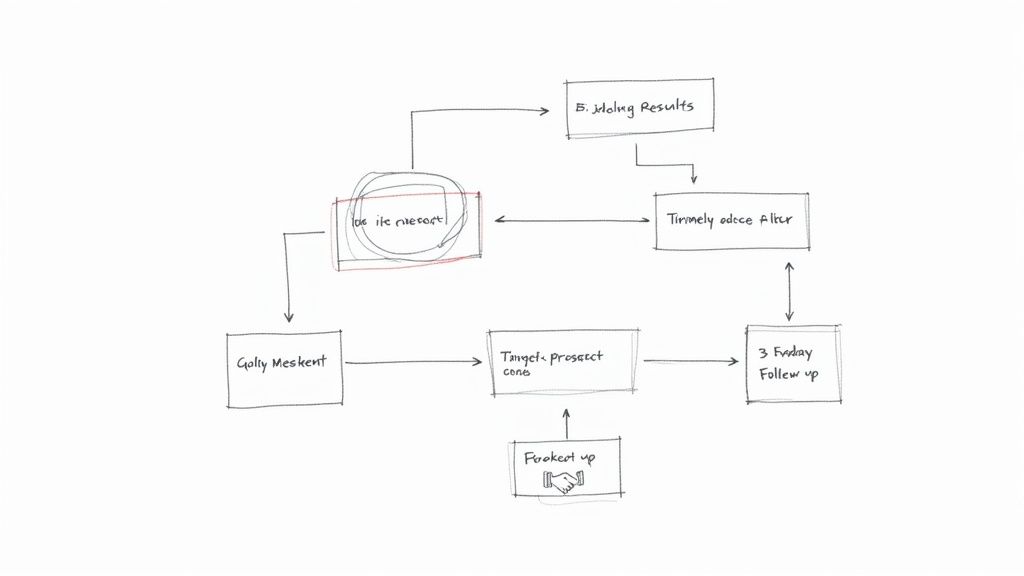
This isn't about blasting a generic pitch. It’s a surgical approach focused on building real rapport. It feels less like selling and more like high-value networking.
Build Your Hit List of Ideal Prospects
The golden rule of outreach: know exactly who you're talking to. LinkedIn's search filters are your secret weapon. You don't even need a premium account.
Go beyond job titles. Get specific.
Industry: Don't target "Technology." Target "Computer Software" or "FinTech."
Geography: Is your service local? Filter by city or region.
Company Size: A solution for a 10-person startup differs from one for a 500-person enterprise.
Keywords: Use Boolean searches like
"marketing manager" AND "SaaS" NOT "intern"to zero in.
The goal is a list so targeted that personalizing each message feels natural. A list of 50 perfect-fit prospects is infinitely more valuable than a generic list of 5,000.
The quality of your outreach is directly tied to the quality of your list. Don't rush this. Meticulous targeting separates strategic social selling from spam.
With this list, you have a focused group highly likely to care about the problem you solve. This precision is your foundation.
The Connection Request That Doesn’t Sound Salesy
Your connection request is your first impression. The default message is a ticket to being ignored. Your mission: spark curiosity, not trigger their sales defense shields.
Make it about them, not you. Here are three frameworks that work:
The Common Ground: Find something you share—a mutual connection, a group, or a comment they left.
The Value-First: Reference their content or a recent company win. A genuine, specific compliment works wonders.
The Direct Question: Ask a thoughtful, non-salesy question related to their role or industry.
Here’s The Common Ground in action:
"Hi [Name], I saw your insightful comment on [Influencer]'s post about product-led growth. Your point about user friction really resonated. Would love to connect with fellow thinkers in the SaaS space."
No pitch. Just a human-to-human request based on shared interest. This approach dramatically increases your acceptance rate.
The Follow-Up Sequence That Builds Real Rapport
Getting the connection accepted is just the start. Now you need a follow-up strategy that builds rapport without being annoying.
Here's a simple, killer three-message sequence:
Message 1 (The Thank You & Give): Within 24 hours, send a thank-you note. But don't pitch. Offer something valuable with zero strings attached—a helpful article, a tool, or a relevant intro.
Message 2 (The Gentle Nudge): After 3-5 days, check in by referencing a recent post of theirs. Ask an intelligent question about it. This proves you're paying attention.
Message 3 (The Soft Ask): A week later, if you have some rapport, make your move. Acknowledge a potential challenge and briefly hint at your solution. Frame the ask around exploration: "Would you be open to a brief chat next week to see if there might be a fit?"
This methodical approach respects their inbox and builds trust. You're proving your value before you ever ask for a meeting. This is the heart of using LinkedIn for business.
Data shows LinkedIn generates about 80% of B2B high-quality leads from social media. To see how dominant the platform is, discover more insights about LinkedIn's marketing power. This is where the deals get done.
Put Your Organic Growth Into Overdrive
You don't need a huge ad budget to make a massive impact. This is the scrappy founder's playbook for punching above your weight without touching your credit card.
Forget just posting your own content and hoping for the best. The real magic happens when you strategically engage with other people's content.
Become The Smartest Voice In The Comments
One well-crafted comment on a post from an industry leader can send more high-quality traffic your way than ten of your own posts. Seriously.
You're tapping into their audience and putting your expertise on display for a crowd that's already paying attention.
This isn't about dropping a "Great post!" and running. The goal is to add real value.
Ask a smart question that pushes the conversation forward.
Offer a different angle or a real-world example.
Respectfully challenge an idea with a solid point.
Do this consistently, and people will notice. They'll click your profile to see who you are. If your profile is sharp, that curiosity turns into a lead.
Tap Into The Power Of LinkedIn Groups
Don't sleep on LinkedIn Groups. They're concentrated pools of your ideal customers. Participating in relevant groups is a direct line to building credibility.
Think of LinkedIn Groups as your industry's niche conferences, running 24/7. Your job is to show up, add to the discussion, and become a trusted face.
Resist the urge to drop links to your blog. Instead, answer questions, share what you've learned, and engage in debates. You'll position yourself as a helpful expert, not a spammy promoter. When you do share something, people will actually listen.
Turn Your Team Into A Content Amplifier
Your most powerful marketing asset is your own team. Every employee has a unique network. Getting them to share company content—known as employee advocacy—can explode your reach.
A post shared by an employee feels more authentic and trustworthy than a standard company update.
This is a core part of modern marketing. For a deeper dive, our guide on powerful content distribution strategies lays out a detailed roadmap. But the main idea is simple: make it dead simple for your team to share.
Here’s a quick action plan:
Set up a hub: Create a dedicated Slack channel or send an email when a key post goes live.
Give them a swipe file: Provide 2-3 pre-written intros they can copy and tweak. This removes friction.
Encourage personality: Ask them to add their own two cents to the share.
Show some love: Publicly thank employees who share and highlight the impact.
This doesn't just boost visibility; it builds a stronger company culture.
These organic tactics are all about building real connections and establishing authority. It's a long game, but it pays off in trust, credibility, and growth.
In fact, LinkedIn reported that as of 2025, about 122 million people got job interviews through the platform, and 35.5 million were hired by those connections. To see how powerful these connections are, learn more about LinkedIn’s powerful hiring statistics. It’s proof that meaningful engagement creates real-world results.
Measuring Success With Repeatable Workflows
"What gets measured gets improved." It's a cliché for a reason. If you’re not tracking your efforts, you’re just guessing.
To make LinkedIn work, you need to cut through the analytical noise and build a repeatable workflow. This is how you turn LinkedIn from a time-suck into a predictable lead machine. It’s about working smarter, not harder.
Metrics That Actually Matter For Growth
LinkedIn throws a ton of data at you. Most of it is noise. Ignore the vanity metrics and zero in on the numbers that signal real business momentum.
Focus on these key performance indicators (KPIs):
Profile Views: A direct pulse check on your visibility. A steady climb means your content is catching the right eyes.
Search Appearances: This tells you how often you’re popping up in searches and the exact keywords people are using to find you.
Post Engagement Rate: Don't obsess over likes. Your true engagement rate (likes + comments + shares / followers) shows what's hitting home. If a post blows up, make more like it.
Connection Request Acceptance Rate: The ultimate report card for your outreach. A high rate—over 30%—means your targeting and messaging are sharp.
These metrics give you a clean dashboard. They tell you what's working so you can double down, and what's falling flat so you can pivot.
Building Your Weekly LinkedIn Workflow
Consistency is the secret sauce. A structured workflow saves you from burnout and ensures you’re hitting the most important tasks every week. Forget aimless scrolling; a focused plan is far more powerful.
To prove your success, get a handle on measuring your return on marketing investment (ROMI). This connects your LinkedIn activity to real business outcomes.
The goal isn't to live on LinkedIn. It's to create a simple, repeatable system that generates predictable results in minimal time. A focused 30 minutes a day is more effective than a random three-hour session once a week.
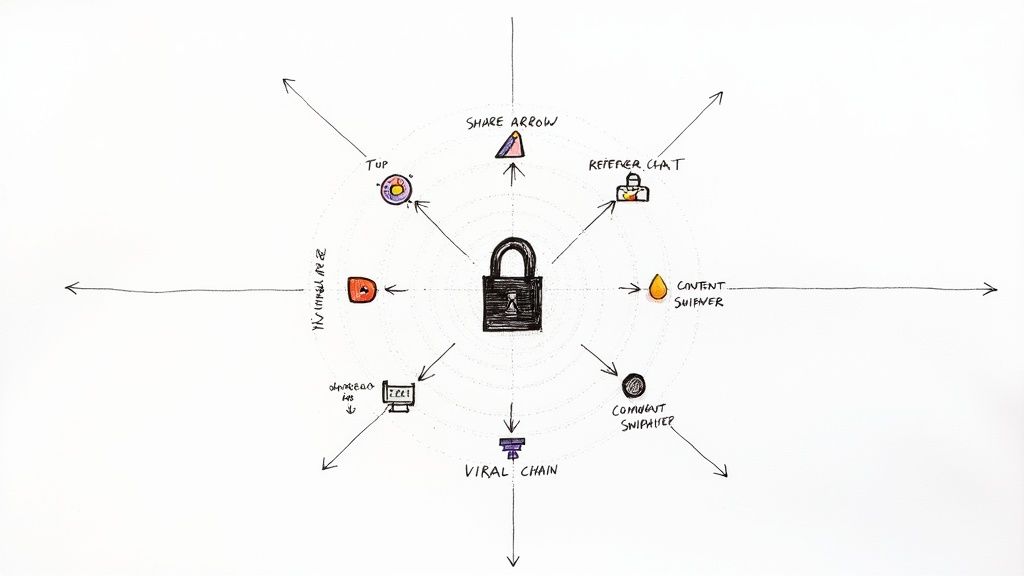
This infographic breaks down a simple process for consistent organic growth, built around commenting, networking, and advocacy.
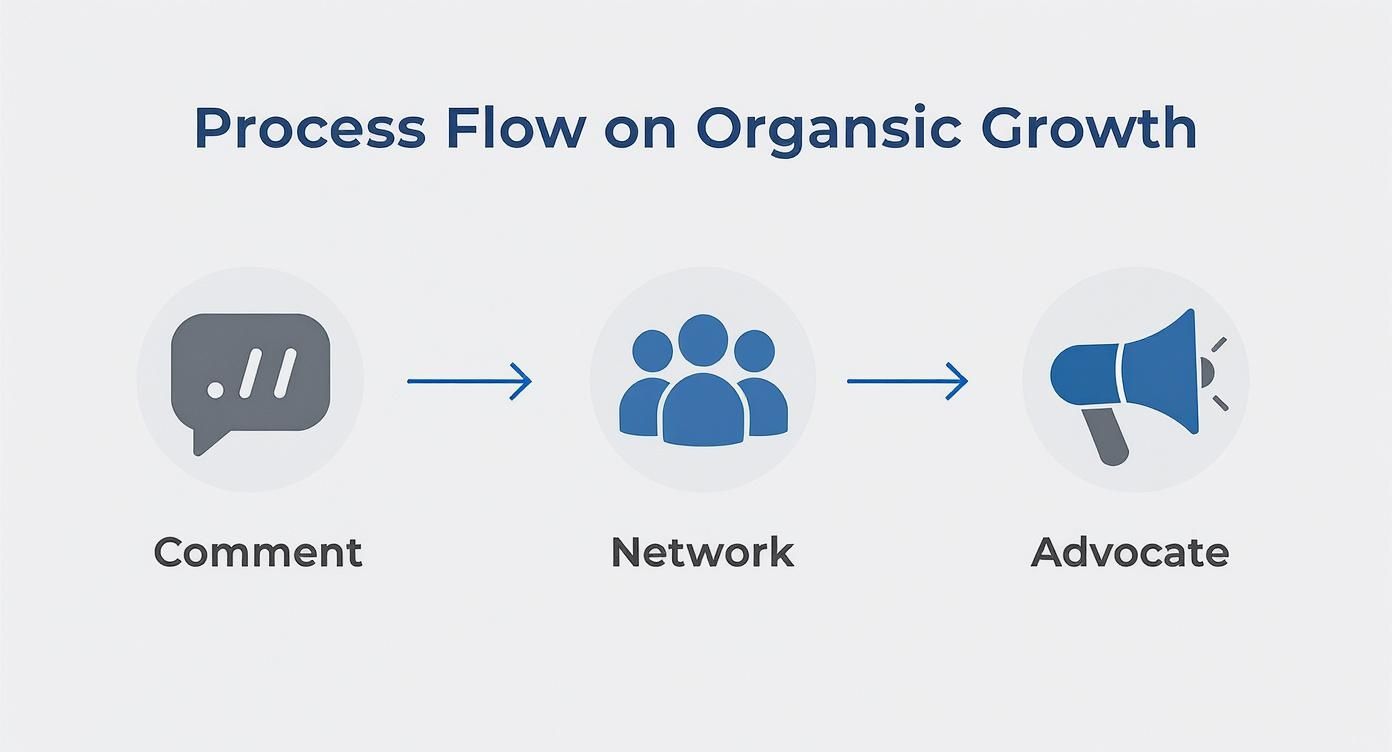
As you can see, strategic engagement (commenting) is the spark that lets you expand your network and get others to advocate for your brand.
Your Simple LinkedIn Action Plan
Here’s a practical checklist you can steal. This structure covers engagement, content, and outreach without overwhelming you.
Daily Actions (15-20 Minutes)
Engage First: Spend 10 minutes dropping 3-5 insightful comments on posts from industry leaders and ideal prospects. This is your single biggest lever for organic growth.
Check Your Inbox: Reply to all new messages and connection requests. Keep conversations moving.
Review Notifications: Thank people who share your content and engage with comments on your own posts.
Weekly Actions (1-2 Hours)
Content Creation: Schedule your posts for the week. Batch-creating content is a game-changer.
Targeted Outreach: Send 10-15 personalized connection requests to prospects from your hit list.
Review Analytics: Spend 15 minutes on your key metrics. What worked? What flopped? Tweak your plan for next week.
This disciplined approach transforms your LinkedIn activity from random acts into a structured, goal-oriented process. It ensures every action contributes directly to growing your business.
Got Questions? Here Are Some Straight Answers
Jumping into LinkedIn can bring up a lot of questions. You need clear, no-fluff answers. Here are the most common things founders ask.
How Much Time Should I Actually Spend On LinkedIn Each Day?
Forget needing to live on the platform for hours. Consistency beats intensity. A focused 20-30 minutes every day will get you way further than a random three-hour binge once a week.
Here’s a simple breakdown:
10 minutes: Jump into the comments. Leave thoughtful replies on posts from industry leaders or potential customers.
10 minutes: Check your inbox. Reply to messages and keep conversations moving.
5-10 minutes: Send a few new, personal, and targeted connection requests.
That’s it. This quick routine keeps you visible and builds momentum without taking over your day.
What's The Real Difference Between A Personal Profile And A Company Page?
It boils down to this: people connect with people, but they follow brands. Your profile and page are two different tools that must work together.
Your Personal Profile is for networking and social selling. It's your personal brand, the place to share insights and reach out one-on-one. This is how you build trust.
Your Company Page is your business's official home base. It’s for company-wide announcements, case studies, and building a brand community. It's also where you'll run paid ad campaigns.
The winning move is to make them work in sync. Your team builds authority on their personal profiles, which drives credibility and followers back to your main Company Page. Each one makes the other stronger.
Can I Really Get Leads On LinkedIn Without Paying For Ads?
Absolutely. You should master the organic game first. For a bootstrapped business, organic lead generation is one of LinkedIn’s superpowers.
You can build a solid sales pipeline for free by nailing three things:
Create content that solves real problems.
Engage strategically in the comments of other people’s posts.
Send personalized, non-spammy connection requests to a well-researched prospect list.
LinkedIn Ads can pour gas on the fire later, but a strong organic strategy is non-negotiable. It's powerful on its own and makes every dollar you eventually spend on ads work harder. Get the free stuff right first.
Ready to stop guessing and start growing? At Viral Marketing Lab, we provide bootstrapped founders with the exact playbooks, templates, and tools needed to drive predictable growth without a huge budget. Get the resources you need to scale your startup.