10 Guerrilla Marketing Tactics for Startups in 2025
In a world drowning in ads, the boldest brands win by breaking the rules. Traditional marketing costs a fortune. Guerrilla marketing runs on creativity, surprise, and wit. For startups, this isn't just an alternative—it's your unfair advantage. It’s the art of making an unforgettable impression on a shoestring budget, turning sidewalks and city walls into your next viral campaign.
This guide is pure action. We're diving into 10 proven guerrilla marketing tactics that demand attention, ignite conversation, and build cult followings without draining your bank. Forget theory. Each tactic is a battle-tested playbook for lean teams and ambitious founders. You get everything you need to execute.
You'll get:
Step-by-step execution checklists: A clear roadmap from idea to launch.
Cost and time estimates: Realistic planning for bootstrapped ops.
Real-world examples: Quick case studies showing how others crushed it.
Risks and legal warnings: How to play with fire without getting burned.
Key metrics to track: Proof that your unconventional campaign worked.
This isn't a list of ideas; it's a tactical manual for making a massive impact with minimal spend. Get ready to master the guerrilla marketing tactics that will put your startup on the map.
1. Street Art and Murals
Transform a blank wall into an unmissable brand statement. Street art isn't an ad; it's a gift to the city. This guerrilla marketing tactic embeds your brand into the urban landscape, creating an authentic connection that people want to photograph and share. It’s public art that secretly works for you.
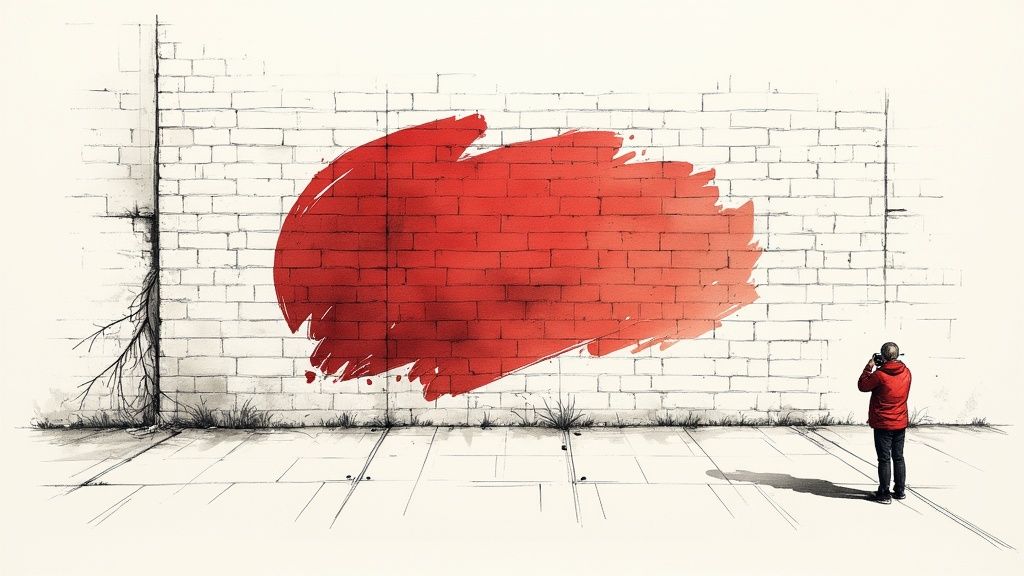
Perfect for startups aiming for deep local impact. A killer mural becomes a landmark, a photo op, and a conversation starter, generating buzz that digital ads can't buy.
How to Execute
Scout & Permit: Find a high-traffic wall. Get permission. This is the most important step. Contact the property owner and the city. No excuses.
Find Your Artist: Partner with a local artist whose style matches your brand's vibe. It adds authenticity and scores you points with the community.
Design for Shares: Create a design that's art first, brand second. Weave in a unique hashtag or a QR code to bridge the physical-digital gap.
Document & Promote: Film a time-lapse of the creation. Blast it on social media. Run a contest for the best photo taken with the mural to ignite user-generated content.
Key Insight: The goal isn't a giant logo. It's to create art so cool people feel compelled to share it. Your brand is the artist's signature, not the whole painting.
Mini Case Study: Spotify
Spotify’s outdoor campaigns are masters of this. They use hyper-local listening data to create witty, art-style billboards that speak directly to specific neighborhoods. The result? A global brand that feels like it belongs to the local community.
Costs, Risks, and Metrics
Estimated Cost: $2,000 - $15,000+. Depends on artist fees, wall rental, and permits.
Time Commitment: 2-6 weeks for planning, permits, and painting.
Potential Risks: Vandalism, public backlash if it's too corporate, or legal trouble if you skip the permits.
Metrics to Track: Social media mentions, hashtag usage, user-generated photos, QR code scans, and local press hits.
This tactic makes a lasting physical mark in a digital world. For more budget-friendly ideas, check out these low-cost advertisement strategies.
2. Ambient Advertising
Turn the ordinary into the unforgettable. Ambient advertising puts your message on everyday objects in the last place people expect it. Park benches, bus handles, coffee sleeves—they're all your canvas. You catch consumers off guard, creating a brand interaction that feels like a discovery, not an ad.
This is how startups with tiny budgets create massive buzz. A clever ambient ad doesn't just get seen; it gets photographed, shared, and talked about, turning a cheap placement into a viral hit.
How to Execute
Spot Your Touchpoints: Where does your audience go? What do they touch? Brainstorm a list of unexpected locations: elevator floors, crosswalks, staircases.
Create a Contextual Concept: The idea must be clever and instantly connect to its environment. Aim for the "aha!" moment that makes people smile.
Get Permission (Or Don't): The safe route is getting permission. The guerrilla route is asking for forgiveness later. Know the risks. Test your idea on a small scale first to make sure people get it.
Launch & Document: Place your ads. Have a photographer ready to capture them in action. Seed these images on social media and challenge people to find them.
Key Insight: The power is in the surprise. You're hacking the consumer's reality with a message they never saw coming.
Mini Case Study: IBM
IBM’s "Smart Ideas for Smarter Cities" campaign was genius. They created ambient ads that were also useful. A billboard became a rain shelter. A bench became a ramp. Each one subtly communicated IBM's message of creating smart solutions while providing real value to the community.
Costs, Risks, and Metrics
Estimated Cost: $500 - $10,000. It all depends on the complexity and location.
Time Commitment: 2-5 weeks for concept, production, and placement.
Potential Risks: Being ignored, misunderstood, or removed instantly if placed without permission. Backlash if it's seen as an annoying intrusion.
Metrics to Track: Social media shares, user-generated photos, hashtag tracking, local press, and spikes in brand mentions.
3. Flash Mobs
Inject a blast of choreographed chaos into a public space. A flash mob is a planned performance that looks like a spontaneous eruption of energy. A group appears, performs an epic routine, and vanishes, leaving a stunned crowd and dozens of smartphone cameras in their wake. It's a spectacle designed to go viral.
For startups, a flash mob is a weapon of mass awareness. The trick is to make the entertainment so good that the brand message feels like a cool footnote, creating a positive vibe that’s infectious and organic.
How to Execute
Concept & Choreography: Your idea must match your brand's energy. Hire pros. A slick, polished performance is non-negotiable.
Lock Down Location & Logistics: Pick a high-traffic spot—a train station, a mall. Get the permits. Don't let your big moment get shut down by security. Plan how your crew gets in and out unseen.
Film Everything: This is a video shoot. Hire a multi-camera crew to capture the performance and, more importantly, the crowd's shocked reactions. This footage is your real prize.
Amplify Instantly: Edit the video fast. Push it everywhere. Use relevant hashtags and tag local media. Create a pre-event teaser campaign to build suspense.
Key Insight: The live event is temporary. The video is forever. Invest as much in filming and promotion as you do in the performance itself.
Mini Case Study: T-Mobile
T-Mobile’s "Life's for Sharing" campaign is the gold standard. Their flash mob at Liverpool Street Station became an iconic viral video. Hundreds of dancers took over the station, creating a moment of pure joy that has earned tens of millions of views. It perfectly captured their brand identity without a single sales pitch.
Costs, Risks, and Metrics
Estimated Cost: $5,000 - $25,000+. Depends on performer count, choreography, permits, and video quality.
Time Commitment: 3-8 weeks for planning, rehearsals, and permits.
Potential Risks: Public safety issues, getting shut down, a sloppy performance that makes your brand look bad, or being seen as a cheesy corporate stunt.
Metrics to Track: Video views and shares, social media sentiment, hashtag usage, website traffic spikes, and media impressions.
Turn a moment of public surprise into a lasting digital asset. For more inspiration, explore these viral marketing examples to copy.
4. Experiential Pop-Up Events
Build a temporary world for your brand and invite people inside. A pop-up isn't a store; it's an immersive experience. This tactic lets consumers touch, feel, and live your brand story for a short time, creating a memorable, hands-on connection that passive advertising can't match.
This is a power move for launching a product or connecting a digital brand to the physical world. A great pop-up creates urgency (FOMO), drives foot traffic, and transforms visitors into a volunteer army of social media content creators.
How to Execute
Define Your Mission: What's the goal? Leads? Product trials? Brand hype? Build an immersive concept that directly serves that one objective.
Location is Everything: Find a high-traffic spot where your target audience hangs out. A vacant storefront, a shipping container, a booth at a festival—be creative.
Design for Instagram: Make every square inch a photo op. Use unique design, interactive displays, and clear branding. Build specific photo moments and hashtag prompts into the experience.
Manufacture FOMO: Announce the pop-up with a strict time limit. "This weekend only." Collaborate with local influencers to build hype before the doors even open. Collect emails at the door for follow-up.
Key Insight: A pop-up is a content factory. The experience must be so unique that every visitor feels an urgent need to pull out their phone and share it.
Mini Case Study: Glossier
Glossier wrote the playbook on pop-ups. They created hyper-photogenic, themed showrooms that were designed for social media. Each one was unique, driving insane foot traffic and turning customers into evangelists who generated a tidal wave of user-generated content, cementing Glossier's cult status.
Costs, Risks, and Metrics
Estimated Cost: $3,000 - $25,000+. Depends on rent, duration, build-out, and staffing.
Time Commitment: 4-10 weeks for planning, sourcing, building, and promotion.
Potential Risks: Low turnout, high costs with poor ROI, or logistical nightmares like tech failures.
Metrics to Track: Foot traffic, leads collected, social media reach, hashtag usage, user-generated content, and direct sales.
To learn more about creating immersive brand experiences, read this guide on What Is Experiential Marketing?
5. Stunt Marketing and Publicity Stunts
Execute a bold, spectacular, or bizarre event engineered to hijack the news cycle. Stunts are the high-risk, high-reward special forces of guerrilla marketing. The goal is to create a moment so shocking, funny, or awe-inspiring that the media has to cover it and the public can't stop talking about it.
This tactic is for startups ready to go big. A well-executed stunt can generate media value that dwarfs its cost, creating an unforgettable brand story that goes viral globally.
How to Execute
Develop a Brand-Aligned Concept: Your stunt must make sense for your brand. A wild stunt from a boring brand feels fake. It has to be an authentic expression of your company's DNA.
Plan Like a Military Operation: Safety first, always. Plan every single detail. Get insurance. Hire professionals. Have backup plans for your backup plans.
Prep the Media: Give key journalists a heads-up. Create a press kit with killer photos, video, and a compelling story angle that makes it easy for them to publish. If you want maximum visual impact, consider incorporating spectacular special effects to guarantee attention.
Document & Amplify: Film the stunt from every angle. Live-stream it. Push the content out immediately on all channels to capitalize on the buzz.
Key Insight: A stunt isn't just an event; it's a story you are creating for the media. Craft a narrative so compelling they have no choice but to run with it.
Mini Case Study: Red Bull
Red Bull's "Stratos" project is the pinnacle of stunt marketing. They had Felix Baumgartner jump from the edge of space. It perfectly embodied their "gives you wings" slogan and ethos of pushing human limits. The stunt dominated global media for weeks and cemented Red Bull as the ultimate adventure brand.
Costs, Risks, and Metrics
Estimated Cost: $10,000 - $1,000,000+. This can get expensive, fast.
Time Commitment: 3-12 months for planning, legal clearance, and execution.
Potential Risks: Physical danger, massive PR failure if it goes wrong, legal nightmares, and total financial loss. This is not for the faint of heart.
Metrics to Track: Media mentions, social media engagement, brand sentiment analysis, website traffic spikes, and sales lift.
6. Guerrilla Projections and Projection Mapping
Turn the city into your personal movie screen. Guerrilla projections use high-powered projectors to blast images and videos onto the sides of buildings, often without permission. It’s a stunning, high-impact tactic that stops people in their tracks and creates a spectacle that feels both futuristic and forbidden.
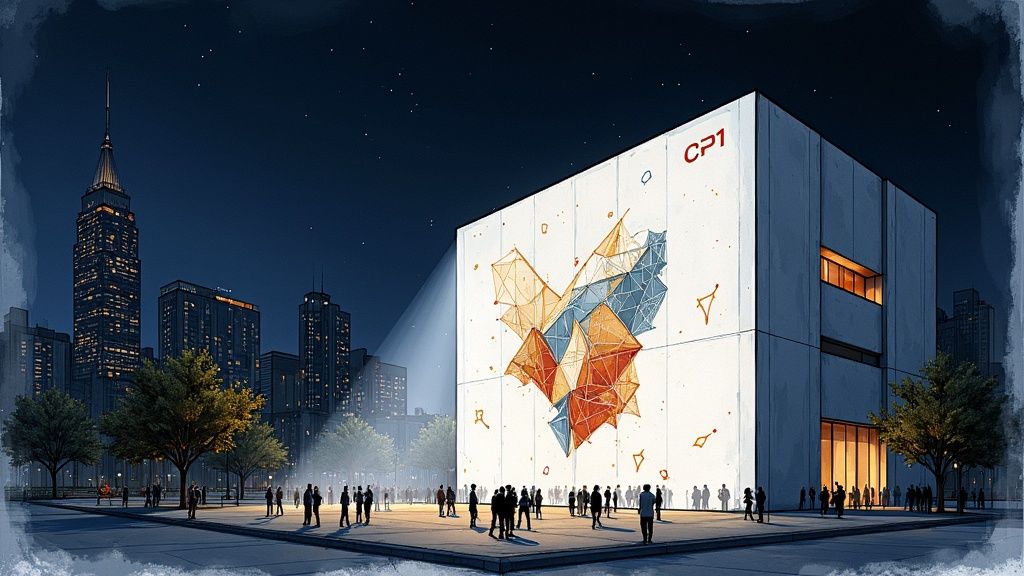
Perfect for tech startups or major product launches. By transforming a familiar landmark into an unexpected light show, you create a moment so visually arresting that everyone nearby will film it and share it instantly.
How to Execute
Get the Gear & Find a Spot: Rent a high-lumen projector. Scout locations with big, flat, light-colored walls and heavy foot traffic. Find a secure spot to project from.
Handle the Law: This is often a legal gray area. Getting permits is the safe way. Going without is the guerrilla way, but be prepared for fines and a quick shutdown. Know your local laws.
Create Killer Content: Design bold, simple visuals that are easy to understand from a distance. Animation and projection mapping (fitting the visuals to the building's architecture) will blow people's minds.
Launch & Document: Time your projection for maximum impact—after sunset during a big event. Have a pro photo and video team ready to capture the magic.
Key Insight: The fleeting nature of a projection creates a "you had to be there" urgency. That feeling is what drives people to share the content digitally.
Mini Case Study: Xbox
To launch "Halo Infinite," Xbox turned London landmarks into scenes from the game. They projected Master Chief onto buildings, creating a cinematic, city-wide spectacle. It captivated onlookers and generated a storm of user-generated content and media coverage, amplifying the launch beyond traditional ads.
Costs, Risks, and Metrics
Estimated Cost: $5,000 - $50,000+. Driven by projector rental, content creation, and potential permit fees or fines.
Time Commitment: 3-8 weeks for creative, logistics, and setup.
Potential Risks: Tech failure, bad weather, or legal trouble, including trespassing charges and heavy fines if you get caught.
Metrics to Track: Social media engagement, hashtag usage, press mentions, brand sentiment, and website traffic spikes.
7. Undercover/Mysterious Brand Seeding
Let people discover your product like it's a secret. Undercover seeding means getting your product into the hands of key influencers without any branding. You create a mystery that sparks genuine curiosity and conversation. People feel like they’ve found something cool on their own, not that they're being marketed to.
This is a powerful strategy for innovative products where early adopter approval is everything. You build credibility from the inside out, letting the product prove its own value before you slap a logo on it.
How to Execute
Identify True Influencers: Find the real trendsetters in your niche, not just the people with a million followers. You want respected voices.
Create the "Discovery": Send them the product in a cool, mysterious way. A "leaked" prototype. An unbranded sample for "feedback." Make them feel like they're in on a secret.
Let It Happen Organically: Don't ask for a review. A great product will get people talking on its own. The goal is for them to share their "discovery" because they genuinely think it's awesome.
Plan the Big Reveal: Once the buzz is building, unveil your brand. A coordinated announcement or website launch that connects all the dots and cashes in on the hype.
Key Insight: This tactic runs on authenticity. It’s not about tricking people. It’s about having a product so good that it can generate its own hype.
Mini Case Study: Liquid Death
Before they were famous, Liquid Death left unbranded cans of water at punk shows and skate parks. The edgy, anti-corporate vibe resonated with the subculture. People were intrigued, creating word-of-mouth buzz long before the official brand launch. It was the perfect setup for their rebellious identity.
Costs, Risks, and Metrics
Estimated Cost: $500 - $5,000. Mostly for product samples and shipping.
Time Commitment: 4-8 weeks for research, outreach, seeding, and monitoring.
Potential Risks: It could fall flat and generate zero interest. Or the reveal could feel deceptive if handled poorly. Know the FTC disclosure rules for when you formalize any partnerships.
Metrics to Track: Unbranded social media mentions, forum chatter, word-of-mouth sentiment, and inbound traffic after the official reveal.
8. Subvertising and Detournement
Hijack existing ads to deliver your own message. Subvertising is the provocative art of altering public signage or advertisements to create a new, often critical, statement. You use the visibility and budget of a major brand against them, creating a powerful commentary that cuts through the noise.
This high-risk tactic is for brands with a rebellious streak or a strong social mission. By twisting a familiar message, you can instantly ignite a conversation, challenge the status quo, and generate massive media attention.
How to Execute
Pick Your Target: Find a prominent ad or brand that represents an idea you want to challenge. A competitor's billboard is a prime target.
Craft Your Counter-Message: Create a clever, sharp, and visually striking alteration that flips the original meaning. Irony is your weapon.
Plan Your Attack: This is where it gets real. You can create a digital mock-up for safe sharing, or you can do it for real (and risk legal heat). If you go physical, plan a swift and discreet execution.
Document & Unleash: The physical act is fleeting; the digital photo is forever. Document the altered ad perfectly. Blast the images on social media and pitch the story to blogs that love this kind of disruption.
Key Insight: Subvertising is parasitic marketing. You're feeding off the millions someone else spent on media placement to deliver your message for pocket change.
Mini Case Study: Adbusters
Adbusters are the masters of this game. Their "Joe Chemo" campaign was a brutal parody of the "Joe Camel" cigarette ads. They depicted the cool cartoon camel as a cancer patient, creating a shocking and unforgettable anti-smoking message that virally exposed the tobacco industry's marketing tactics.
Costs, Risks, and Metrics
Estimated Cost: $50 - $1,000 for materials. Legal fees could be your biggest expense if you get caught.
Time Commitment: 1-3 weeks for planning and execution.
Potential Risks: Huge legal trouble. Vandalism, trespassing, copyright infringement. This is the riskiest tactic on the list. Public backlash is also possible.
Metrics to Track: Social media shares and sentiment. Earned media value from press coverage. Spikes in website traffic.
9. Sidewalk/Ground Level Advertising and 3D Installations
Turn the ground people walk on into a work of art. This guerrilla marketing tactic uses the pavement as a canvas for eye-catching 2D or 3D art that stops pedestrians in their tracks. By placing an unexpected, interactive illusion at their feet, you create an immersive experience that people can't ignore.
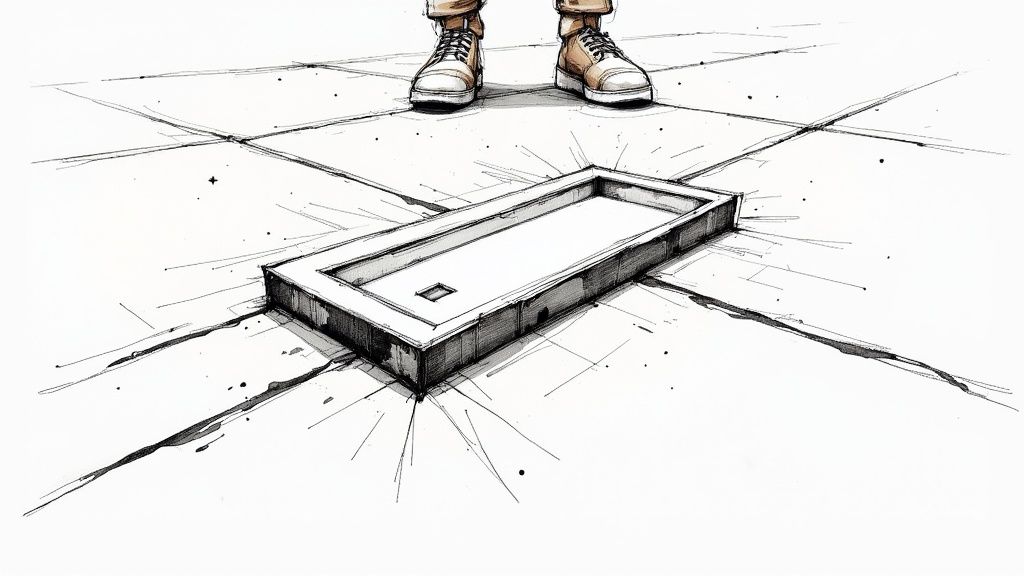
This is a killer tactic for product launches or events. It generates instant, localized buzz and creates a perfect photo opportunity. A clever 3D chalk drawing turns pedestrians into participants and their social media feeds into your free advertising channel.
How to Execute
Get Permits. Seriously: Find a high-foot-traffic area. Contact the city and get the necessary permits. This is the absolute first step. Don't risk having your art washed away in an hour.
Hire a Pro Artist: Collaborate with a street artist who specializes in 3D or anamorphic illusions. Their skill is what makes the magic happen.
Design for Interaction: Create art that people can pose with. It should invite them to stand in a certain spot to complete the picture. Include a clear hashtag or QR code.
Document & Amplify: Film a time-lapse of the creation. Capture photos and videos of the public interacting with it. Run a contest for the best user photo to encourage sharing.
Key Insight: It’s all about the illusion and the interaction. The goal is to create a temporary landmark that people feel an urgent need to experience and share.
Mini Case Study: Jaguar
To launch their E-Pace SUV, Jaguar commissioned a massive 3D pavement artwork in a London train station. The art depicted the car leaping from the ground in a jaw-dropping illusion. Commuters stopped, stared, and took photos, generating a flood of social media buzz and linking Jaguar with creativity and innovation.
Costs, Risks, and Metrics
Estimated Cost: $1,500 - $10,000+. Depends on the artist, materials, and permits.
Time Commitment: 1-4 weeks for planning, permits, and execution.
Potential Risks: Bad weather can destroy your masterpiece. Authorities might remove it if you don't have permits. It could create a public safety hazard if it blocks a walkway.
Metrics to Track: Foot traffic engagement, social shares and hashtag usage, user-generated photos, press mentions, and QR code scans.
10. Influencer and Celebrity Surprise Encounters
Manufacture a moment of spontaneous magic. This guerrilla tactic involves orchestrating an "unexpected" appearance by a celebrity or major influencer in a public place. Instead of a scripted ad, the public witnesses what feels like an authentic, exciting event, linking that positive energy directly to your brand.
This is a power play for lifestyle or entertainment brands looking to generate a tidal wave of immediate social buzz. A well-planned surprise turns an ordinary day into a viral content machine, fueled by the user-generated photos and videos of stunned onlookers.
How to Execute
Pick the Right Partner: Choose an influencer whose audience and values are a perfect match for your brand. Authenticity is everything. If it feels forced, it will fail.
Stage the "Spontaneous" Moment: Find a high-traffic public location. Create a believable reason for the influencer to be there, doing something cool related to your brand.
Plan the Logistics: Brief the influencer on key messages, but let them be natural. Plan for security and crowd control. Have a hidden camera crew ready to capture everything.
Amplify the Aftermath: Tease the event beforehand without giving it away. Once it's over, edit and release the video content immediately. Encourage everyone who was there to share their own footage using a campaign hashtag.
Key Insight: The magic is in the perceived spontaneity. The less it looks like an ad, the more genuine the reactions, and the more organic the shares.
Mini Case Study: Red Bull
Red Bull are masters of this. They constantly have their sponsored athletes "show up" in unexpected places—a pro skateboarder at a local skate park, a stunt pilot at an airshow. These encounters feel less like marketing and more like authentic, awesome moments, generating incredible organic social media lift.
Costs, Risks, and Metrics
Estimated Cost: $5,000 - $50,000+. Highly dependent on the influencer's fee, production, and security.
Time Commitment: 3-8 weeks for negotiation, planning, and content production.
Potential Risks: Can come off as fake if executed poorly. Crowd control can become an issue. The influencer might not deliver the performance you hoped for.
Metrics to Track: Social media mentions and reach, hashtag usage, video views and shares, user-generated content, and media pickups.
This tactic uses star power to create unforgettable moments. To maximize your partnership, dive into these strategies for influencer marketing for small business.
10-Point Guerrilla Marketing Tactics Comparison
Technique | 🔄 Complexity & Process | ⚡ Resources & Speed | ⭐📊 Expected Outcomes | 💡 Ideal Use Cases | Key Advantages |
|---|---|---|---|---|---|
Street Art and Murals | Medium — artist coordination, permits; weather-dependent | Low–Moderate cost; moderate lead time | ⭐⭐⭐ 📊 High local visibility & social shares; ROI hard to quantify | Urban brands targeting younger, creative demographics | High visual impact; organic social buzz; emotional connection |
Ambient Advertising | Low–Medium — creative concepting; occasional permits | Low cost; fast to deploy | ⭐⭐⭐ 📊 High memorability and viral potential; broad reach | Brands seeking recall, surprise-driven virality | Surprise factor; low production cost; avoids ad blindness |
Flash Mobs | High — choreography, coordination, crowd control, permits | Low–Moderate cost; intensive prep, short execution | ⭐⭐⭐ 📊 Strong viral video potential & immediate engagement; measurement tricky | Youth/entertainment audiences in high-footfall public spaces | Immediate crowd engagement; social amplification; memorable |
Experiential Pop-Up Events | High — logistics, staffing, permits, vendor ops | High cost & time; variable speed to market | ⭐⭐⭐⭐ 📊 Deep customer interaction, data collection, social shareability | Consumer brands seeking direct engagement and storytelling | Direct feedback; exclusivity/FOMO; content and data capture |
Stunt Marketing & Publicity Stunts | High — safety planning, legal, insurance, PR prep | High cost; complex execution but can produce instant reach | ⭐⭐⭐⭐📊 Massive media coverage potential; unpredictable outcomes | Brands seeking bold positioning and global awareness | Massive earned media; memorable brand statements; high reach |
Guerrilla Projections & Mapping | Medium–High — technical setup, permits, night execution | Moderate equipment cost; quick nighttime deployment | ⭐⭐⭐ 📊 Spectacular visual impact & shareability; legal risk | Tech-forward brands launching events or product reveals | Dramatic visuals; high shareability; showcases tech sophistication |
Undercover / Mysterious Brand Seeding | Medium — targeted outreach, stealthy distribution | Low–Moderate cost; slower organic rollout | ⭐⭐ 📊 Authentic buzz in niche groups; hard to track; risk if exposed | Consumer brands with devoted fan communities or product reveals | Feels organic; highly targeted; cost-effective seeding |
Subvertising & Detournement | Low–Medium execution complexity; high legal risk | Low cost; fast to deploy but legally risky | ⭐⭐⭐ 📊 High viral/earned media potential; reputational/legal exposure | Brands or activists with strong social/environmental messages | Low production cost; provokes conversation; highly shareable |
Sidewalk / 3D Ground Installations | Medium — artist skill, permits, maintenance | Low–Moderate cost; quick visual payoff but needs upkeep | ⭐⭐⭐ 📊 Strong pedestrian engagement & photo traction; limited reach | Brands targeting urban pedestrian traffic and event promotions | Stops foot traffic; highly photogenic; interactive experiences |
Influencer & Celebrity Surprise Encounters | High — talent logistics, security, scheduling | High cost; can create immediate content and reach | ⭐⭐⭐⭐ 📊 Instant credibility and amplification; may overshadow brand | Brands with budgets for talent and influencer partnerships | Credibility via endorsement; strong emotional reactions; shareable moments |
Launch Your Own Guerrilla Campaign: The Takeaway
You've just toured the arsenal of unconventional marketing. The thread connecting all these powerful guerrilla marketing tactics isn't a huge budget—it's raw creativity, calculated audacity, and strategic execution. For a startup, this is your competitive edge. Your ability to move fast, embrace wild ideas, and create genuine human connections is a superpower that lumbering corporate giants can't touch.
These tactics are your blueprints. They prove that impact comes from cleverness, not cash. Stop thinking like a marketer. Start thinking like an artist, a storyteller, a magician. What experience can you create that will stop someone dead in their tracks? What memory can you forge that will live on their social feed for weeks?
The Core Principles of Guerrilla Success
Before you launch, burn these principles into your brain:
Authenticity is Everything: The tactic must feel like a true expression of your brand. A rebellious stunt from a wellness brand is just awkward.
Surprise is Your Weapon: Guerrilla marketing wins by shattering expectations. Create a moment of wonder in a mundane world.
Calculated Risk is Mandatory: Playing it safe is playing to lose. Know the rules so you can bend them. Assess the risk, but don't let fear kill a brilliant idea.
The Audience is the Hero: The best campaigns make the public a participant, not a spectator. Invite them in, make them part of the story, and they will become your army of evangelists.
Your Actionable Next Steps
Inspiration is useless without action. Don't let this be another article you read. Start now. Start small.
Hold an Idea Session: Get your team together. Which of these ten tactics feels right? Which one aligns with your product and your customers?
Go on a Mission: Take a walk. Look at your city through a guerrilla lens. Where are the opportunities? What spaces are begging for a creative attack?
Set One Goal: What is the one metric you need to move? Awareness? Sign-ups? A single, sharp objective focuses your entire campaign.
Draft a "Micro-Plan": Outline a tiny, low-risk version of your big idea. Can you test it this weekend? This builds momentum and teaches you lessons for the main event.
Mastering these guerrilla marketing tactics is about more than buzz. It’s about building a brand that people remember, talk about, and connect with. It's your shot to prove that a great idea, executed with guts, will always beat a big budget. Your resources are limited. Your imagination isn't. Go make some noise.
Ready to turn ideas into high-impact campaigns? The Viral Marketing Lab offers battle-tested playbooks, checklists, and toolkits designed to help bootstrapped founders launch unforgettable guerrilla and viral marketing. Stop guessing and start creating. Visit Viral Marketing Lab today.