The 30 Most Powerful Corporate Brands: Global Leaders in Brand Value and Recognition
Introduction
Corporate brand power reflects market influence, financial value, customer loyalty, and cultural impact. The world's most powerful brands transcend products, shaping consumer behavior, commanding premium pricing, and weathering competitive threats through established trust and recognition.
This analysis examines the 30 most powerful corporate brands based on brand value, global recognition, customer loyalty, and market influence.
Primary Keyword: Most powerful corporate brands Secondary Keywords: Top corporate brands, biggest brands, brand value, powerful brands Keyword Clusters: Brand rankings, brand value, industry leaders, global brands
What Makes a Corporate Brand Powerful?
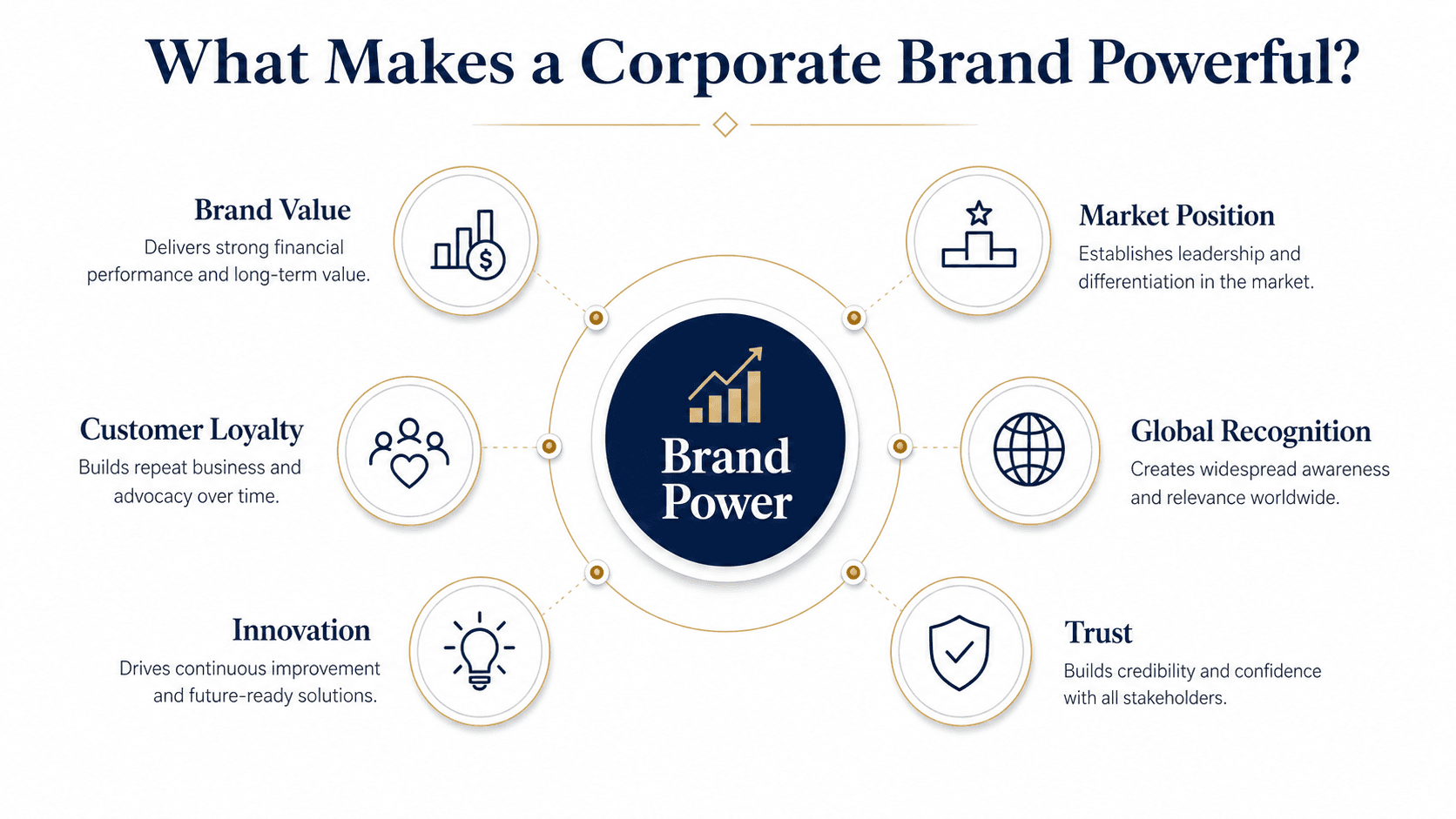
Brand Value: Financial worth of brand as intangible asset measured through methodologies like Interbrand, Brand Finance
Market Position: Leadership in category, market share, competitive advantage
Customer Loyalty: Repeat purchases, advocacy, willingness to pay premium
Global Recognition: Awareness across markets, consistent identity worldwide
Innovation: Reputation for leading industry advancement
Trust: Reliability, quality consistency, ethical reputation
Top 30 Most Powerful Corporate Brands (2026)

Technology Giants (Dominating Top Rankings)
1. Apple - $500+ billion brand value
Strengths: Innovation reputation, ecosystem lock-in, premium positioning, design excellence, customer loyalty Key Products: iPhone, Mac, iPad, services ecosystem Brand Essence: Innovation, simplicity, premium quality
2. Microsoft - $400+ billion
Strengths: Enterprise dominance, cloud leadership (Azure), productivity suite ubiquity, gaming (Xbox) Transformation: Cloud-first pivot under Satya Nadella Brand Essence: Productivity, reliability, enterprise solutions
3. Amazon - $350+ billion
Strengths: E-commerce dominance, AWS cloud leadership, Prime ecosystem, logistics excellence Expansion: Groceries, healthcare, entertainment, advertising Brand Essence: Customer obsession, convenience, selection
4. Google/Alphabet - $330+ billion
Strengths: Search dominance, advertising platform, Android ecosystem, AI leadership Products: Search, YouTube, Cloud, Android, hardware Brand Essence: Information access, innovation, free services
5. Samsung - $100+ billion
Strengths: Electronics leadership, innovation in mobile/display, vertical integration Global Reach: Consumer electronics, semiconductors, appliances Brand Essence: Innovation, technology leadership
Consumer Brands
6. Coca-Cola - $95+ billion
Strengths: Global distribution, emotional branding, consistent identity for 130+ years Challenge: Adapting to health-conscious consumers Brand Essence: Happiness, refreshment, universal appeal
7. Toyota - $70+ billion
Strengths: Reliability reputation, hybrid leadership (Prius), global manufacturing Innovation: Electric vehicle transition, hydrogen fuel cells Brand Essence: Quality, reliability, innovation
8. Mercedes-Benz - $65+ billion
Strengths: Luxury positioning, engineering heritage, status symbol Evolution: Electric vehicle line (EQ), younger targeting Brand Essence: Luxury, performance, prestige
9. McDonald's - $60+ billion
Strengths: Global footprint (40,000+ locations), consistency, convenience, local adaptation Modernization: Digital ordering, delivery, menu innovation Brand Essence: Convenience, consistency, affordability
10. Nike - $55+ billion
Financial Services
11. Visa - $50+ billion
Network effects, global payment infrastructure, digital payment leadership
12. Mastercard - $48+ billion
Payment processing, Priceless marketing platform, fintech partnerships
13. American Express - $35+ billion
Premium positioning, rewards programs, service reputation
14. JP Morgan - $32+ billion
Banking strength, wealth management, institutional credibility
Technology and Software
15. IBM - $30+ billion
Enterprise computing, hybrid cloud, AI (Watson), consulting services
16. Intel - $28+ billion
Semiconductor leadership, "Intel Inside" co-branding, data center growth
17. Cisco - $27+ billion
Networking infrastructure, enterprise solutions, cybersecurity
18. Oracle - $26+ billion
Database leadership, cloud transition, enterprise applications
19. SAP - $24+ billion
Enterprise resource planning, business process software

Consumer Technology and Services
20. Disney - $60+ billion
Entertainment empire, streaming (Disney+), theme parks, content library Strength: Intellectual property (Marvel, Star Wars, Pixar)
21. Tesla - $75+ billion
Electric vehicle leadership, innovation brand, Elon Musk association Disruption: Auto industry transformation, energy solutions
22. Netflix - $25+ billion
Streaming pioneer, original content, global expansion Challenge: Increased competition, subscriber growth
23. Meta (Facebook) - $100+ billion
Social media dominance (Facebook, Instagram, WhatsApp), metaverse investment Challenge: Privacy concerns, platform regulation
24. TikTok/ByteDance - $65+ billion
Short-form video dominance, algorithm excellence, Gen Z favorite Rapid Growth: Global expansion, creator economy
Retail and E-Commerce
25. Walmart - $45+ billion
Retail giant, omnichannel evolution, everyday low prices Strength: Scale, supply chain, e-commerce growth
26. IKEA - $22+ billion
Affordable design, unique shopping experience, flat-pack innovation Global Consistency: Standardized yet locally adapted
27. Zara/Inditex - $20+ billion
Fast fashion leadership, rapid inventory turnover, trend responsiveness
Luxury Brands
28. Louis Vuitton/LVMH - $125+ billion
Luxury conglomerate, heritage brands, artisanal quality Portfolio: Fashion, jewelry, wines, hospitality
29. Hermès - $65+ billion
Ultra-luxury positioning, scarcity strategy, craftsmanship Icon Product: Birkin bag as investment
30. Chanel - $50+ billion
Timeless luxury, private ownership, selective distribution Brand Essence: Elegance, exclusivity, French heritage
Brand Building Lessons from Top Brands
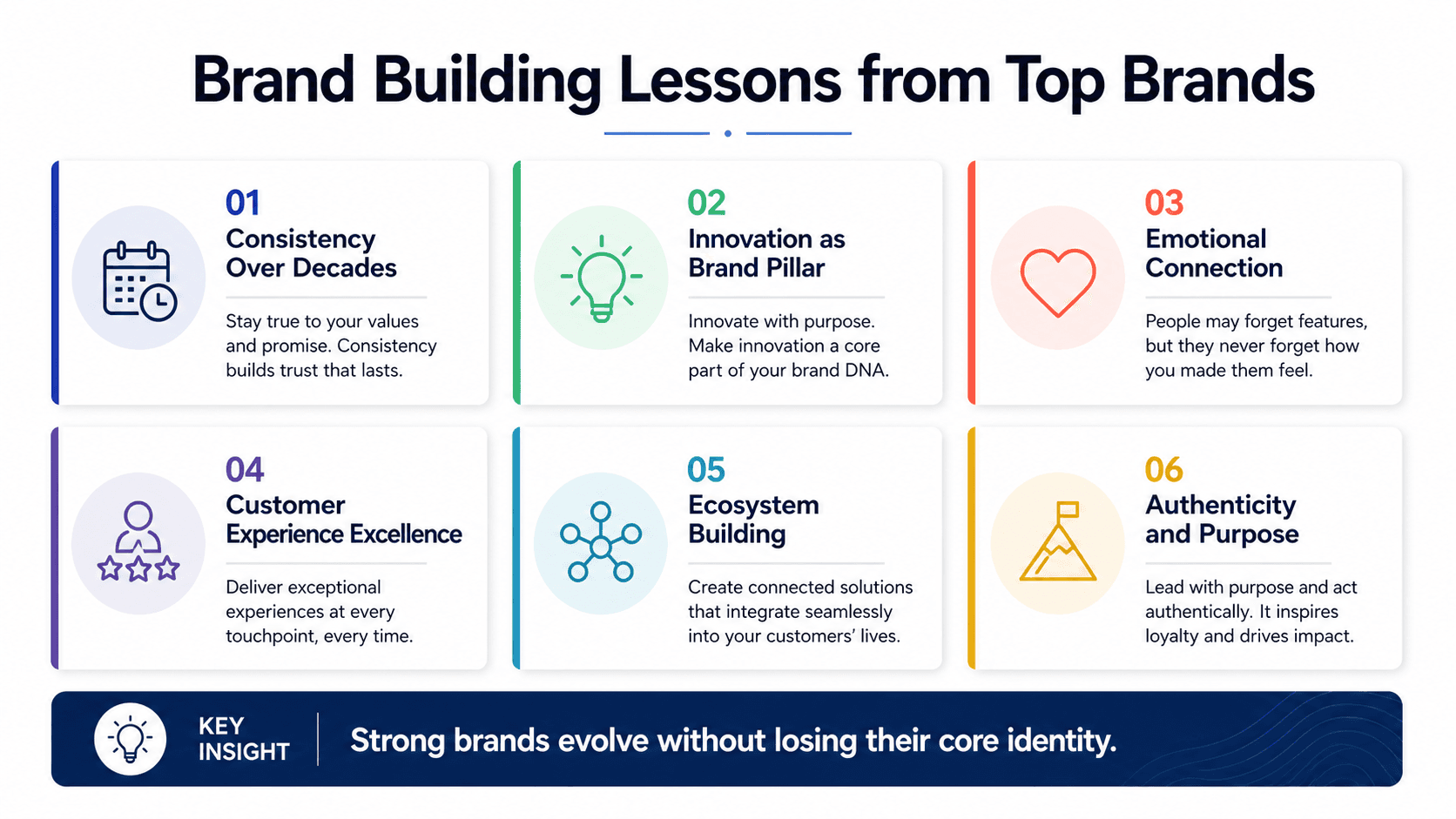
Consistency Over Decades
Coca-Cola, Nike, Mercedes maintain core identity while evolving. Consistency builds trust; evolution maintains relevance.
Innovation as Brand Pillar
Apple, Tesla, Amazon built brands on innovation reputation. Continuous advancement expected by customers.
Emotional Connection
Disney, Nike, Coca-Cola transcend functional benefits. Emotional resonance creates advocacy beyond rational choice.
Customer Experience Excellence
Amazon, Apple, American Express prioritize experience. Every touchpoint reinforces brand promise.
Ecosystem Building
Apple, Amazon, Google create ecosystems increasing switching costs while delivering genuine value.
Authenticity and Purpose
Modern leaders communicate purpose beyond profit. Nike's social stances, Microsoft's sustainability commitments resonate with values-conscious consumers.
Industry Trends Shaping Brand Power

Digital Transformation
Traditional brands (Walmart, Nike, Mercedes) invest heavily in digital capabilities competing with digital natives.
Sustainability Demands
Environmental credentials increasingly critical. Brands face scrutiny on carbon footprint, supply chain ethics, circular economy participation.
Direct-to-Consumer Models
Manufacturers bypassing retailers, controlling customer relationships, and capturing margin (Nike, Tesla, Apple).
Platform Dominance
Network effects create winner-take-most markets. Amazon, Google, Meta leverage platform advantages.
Personalization at Scale
Data and AI enable mass customization. Amazon recommendations, Netflix content, Spotify playlists demonstrate personalization value.
Brand Activism
Consumers expect brands to take positions on social issues. Authenticity criticalperceived opportunism backfires.
Regional Brand Power Variations
North America: Technology and consumer brands dominate (Apple, Amazon, Google, Coca-Cola)
Europe: Luxury brands strong (LVMH, Hermès, Chanel), automotive heritage (Mercedes, BMW)
Asia: Electronics and automotive leaders (Samsung, Toyota, Huawei), emerging digital platforms
Global vs. Regional: Some brands achieve true global consistency (Apple, Coca-Cola). Others adapt significantly by region (McDonald's menu localization)
Measuring Brand Power
Interbrand Methodology: Future earnings attributed to brand, role of brand in purchase decision, brand strength analysis
Brand Finance Approach: Royalty relief method, brand strength index, market analysis
Kantar BrandZ: Consumer perceptions, financial performance, market dynamics
Forbes Rankings: Revenue, profits, market value, brand contribution
Metrics Considered: Brand awareness, consideration, preference, loyalty, price premium, financial performance, growth trajectory
Threats to Brand Power
Disruption: Kodak, Blockbuster, Nokia examples of powerful brands disrupted by innovation
Reputation Damage: Volkswagen emissions scandal, Boeing 737 MAX crisis demonstrate rapid value destruction
Changing Preferences: Consumer shifts toward sustainability, authenticity, local challenge global brands
Platform Dependency: Brands relying on Amazon, Google, Meta face margin pressure and relationship control loss
Commoditization: Technology advancement can reduce differentiation (smartphones increasingly similar)
Frequently Asked Questions
What's the most valuable brand in the world? Apple consistently ranks #1 with $500+ billion brand value (2026). Microsoft and Amazon compete for second place. Rankings vary slightly by methodology but technology brands dominate.
How is brand value calculated? Multiple methodologies exist. Common approaches: future earnings attributed to brand, royalty relief (licensing value), brand strength analysis. Combines financial performance with consumer perception metrics.
Can powerful brands lose value quickly? Yes. Reputation crises, disruption, or changing preferences can rapidly erode value. Examples: Nokia mobile collapse, Kodak digital disruption, Wells Fargo scandal impact.
Why do technology brands dominate rankings? Technology drives modern economy. Network effects, ecosystem advantages, high margins, global scalability, and innovation leadership create massive brand value.
Are traditional brands declining? Not universally. Coca-Cola, Nike, Mercedes maintain power through evolution. However, digital-native brands (Amazon, Google, Netflix) have risen rapidly, shifting overall balance.
How long does building a powerful brand take? Decades typically for traditional brands. However, digital platforms can achieve massive scale faster (Facebook, TikTok). Sustained power still requires time proving quality, building trust, maintaining relevance.
Conclusion
The 30 most powerful corporate brands represent diverse industries but share common characteristics: consistent customer delivery, innovation commitment, emotional connection, global recognition, and financial strength. Technology brands increasingly dominate due to network effects, ecosystem advantages, and central role in modern life.
Brand power isn't static continuous evolution, innovation, and relevance maintenance are essential. Yesterday's leaders (Kodak, Nokia, Blockbuster) demonstrate that even powerful brands can fall rapidly without adaptation.
For businesses, studying these brand leaders reveals timeless principles: deliver consistent quality, innovate continuously, build emotional connections, prioritize customer experience, and maintain authentic purpose. Brand building requires patient, sustained investment but creates invaluable assets defending market position and driving premium pricing.
The brands that will dominate future decades are those mastering digital transformation, demonstrating authentic sustainability commitment, building powerful ecosystems, personalizing at scale, and maintaining trust in an increasingly skeptical world. Brand power isn't just about today's value it's about building foundations for decades of market leadership.


