The Four Ps of Marketing

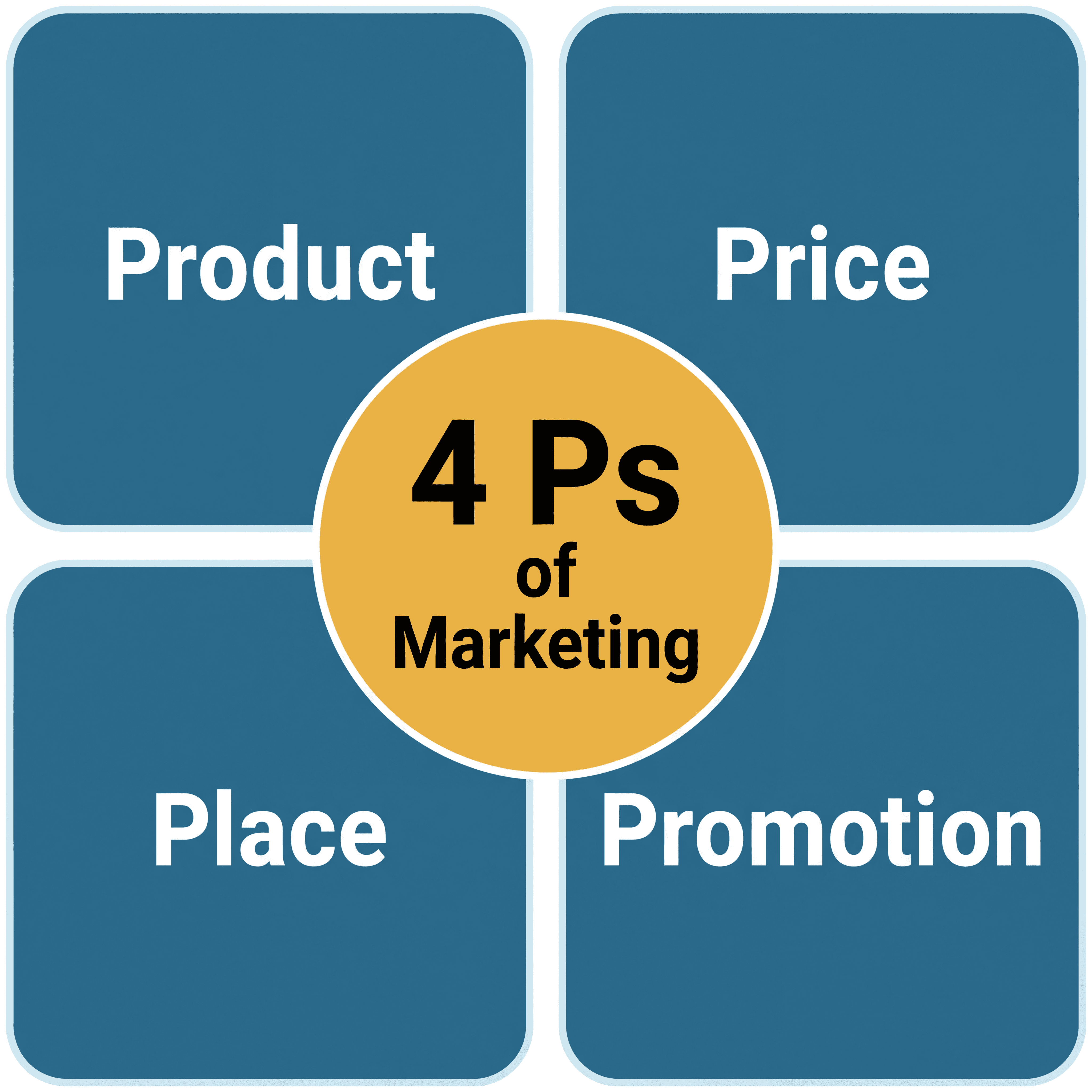
The four Ps of marketing are one of the most enduring frameworks in business. Whether you are launching a new product, entering a new market, or trying to understand why a competitor is outperforming you, the marketing mix gives you a structured way to think through the problem. The four Ps — product, price, place, and promotion — are the core levers every business uses to bring something to market and attract customers.
This guide breaks down each of the four Ps of marketing in detail, with real-world examples from brands you already know, so you can see how the framework works in practice and how to apply it to your own business or studies.
What Are the Four Ps of Marketing?
The four Ps of marketing, also called the marketing mix, were first introduced by E. Jerome McCarthy in 1960. The idea was simple: every successful marketing strategy is built around four key decisions. What are you selling? What are you charging for it? Where will customers find it? And how will you tell people about it?
These four questions map directly to the four Ps: product, price, place, and promotion. The framework became one of the most widely taught concepts in marketing because it applies across industries, business sizes, and time periods. It was relevant for a department store in 1965, and it is just as relevant for a software startup today. The four Ps do not tell you what to decide — they tell you what decisions you need to make.
Over the decades, some marketers have extended the framework to include additional Ps like people, process, and physical evidence, particularly in service industries. But the original four Ps of marketing remain the foundation. Understanding them is the starting point for building any marketing strategy.
The First P: Product

What Is Product Strategy in Marketing?
A product is whatever a business offers in exchange for money. That includes physical goods, digital products, services, subscriptions, or even experiences. In the four Ps framework, product strategy is about defining exactly what you are offering and making sure it meets a genuine customer need.
Product decisions cover more than just the thing itself. They include the design, the features, the quality, the packaging, the brand name, and the product's position in the market. Every one of these choices sends a signal to customers about what the product is and who it is for.
Real-World Example: Apple
Apple is one of the clearest examples of a company that treats product strategy as a competitive advantage. When Apple launched the iPhone in 2007, the product itself was the marketing. The hardware design, the operating system, the seamless integration with other Apple devices, and the overall user experience were all part of the product decision — not just the phone's technical specs.
Apple's product strategy focuses on a small number of carefully designed products rather than a wide catalog of options. Every detail, from the packaging to the way the screen unlocks, is part of what makes the product feel premium. That product strategy supports everything else in Apple's marketing mix — the pricing, the stores, and the advertising all follow from the product decisions made first.
Questions Product Strategy Should Answer
When thinking through the product element of your marketing mix, the key questions are: What problem does this solve for the customer? What features matter most to your target audience? How does your product differ from what competitors offer? What should the product be called, and how should it look and feel? Answering these questions clearly makes the rest of the marketing mix easier to build.
The Second P: Price

What Is Pricing Strategy in Marketing?
Pricing strategy is the process of deciding what to charge for your product or service. It sounds straightforward, but pricing is one of the most complex and consequential decisions in the marketing mix. The price you set signals value, attracts or repels certain customers, and directly determines your revenue and margins.
There are several common pricing approaches. Cost-plus pricing means adding a markup to your production costs. Competitive pricing means setting prices based on what rivals charge. Value-based pricing means charging what the customer believes the product is worth, regardless of what it costs to make. Premium pricing means deliberately pricing high to signal quality and exclusivity.
Real-World Example: McDonald's
McDonald's pricing strategy is built around accessibility and volume. The brand uses a tiered menu that includes extremely low-cost items — value meals, dollar menu options — alongside higher-margin items. This strategy brings in price-sensitive customers while also creating upsell opportunities.
The pricing also varies by geography. A Big Mac costs significantly more in Switzerland than in India, reflecting differences in local income levels, operating costs, and competitive dynamics. McDonald's uses localized pricing as part of a global marketing mix strategy, adapting price to the market while keeping the brand and product consistent.
Why Pricing Affects Perception
Price is one of the few marketing signals that customers receive before they even interact with the product. A price that is too low can make customers suspicious about quality. A price that is too high without supporting product or brand signals can simply drive people away. Getting pricing right means understanding both the economics and the psychology of your target customer.
The Third P: Place

What Is Place in Marketing?
Place in marketing refers to how and where customers can access your product. It covers the distribution channels, physical locations, logistics, and any digital platforms through which your product reaches the customer. The goal of place strategy is to make sure your product is available at the right time, in the right location, and through the right channels for your target audience.
Place decisions include whether to sell directly to customers or through intermediaries like retailers or wholesalers. They include whether to operate physical stores, sell exclusively online, or use a mix of both. They also include decisions about geographic reach — local, national, or global.
Real-World Example: Nike
Nike uses a sophisticated place strategy that has evolved significantly over the past decade. Historically, Nike relied heavily on third-party retailers like Foot Locker and department stores to distribute its products. That model gave Nike wide reach but limited control over the customer experience.
In recent years, Nike has shifted toward a direct-to-consumer model. This means selling through its own website, its app, and its own retail stores. By controlling more of the distribution, Nike controls the customer experience, captures more margin, and builds a more direct relationship with buyers. Nike has also reduced its presence in some major wholesale accounts, deliberately pulling products from certain retailers to focus on channels where it has more control.
Digital Distribution as a Place Decision
For digital products and services, place strategy often comes down to platform choices. A mobile app developer choosing between the App Store, Google Play, or a direct web-based model is making a place decision. A software company deciding between selling through resellers, its own website, or a marketplace like AWS is making a place decision. The four Ps framework applies equally in digital contexts.
The Fourth P: Promotion

What Is Promotion Strategy in Marketing?
Promotion strategy covers all the ways a business communicates with its target audience to build awareness, generate interest, and drive sales. This includes advertising, public relations, social media, content marketing, email, influencer partnerships, events, and direct sales outreach.
Promotion is often what people think of first when they hear the word marketing, but within the four Ps framework, it is just one of four interconnected decisions. Promotion that is not supported by the right product, price, and place will not perform well regardless of how creative or well-funded it is.
Real-World Example: Nike and Just Do It
Nike's Just Do It campaign, launched in 1988, is one of the most recognized promotion strategies in marketing history. The campaign did not focus on product features like cushioning or sole materials. Instead, it connected the brand to themes of personal ambition, athletic identity, and the emotional experience of pushing past your limits.
This approach worked because it aligned with Nike's product strategy and its target audience — people who see themselves as athletes, whether they compete professionally or run on weekends. The promotion reflected the brand, not just the product. Nike's promotion strategy today includes a mix of traditional advertising, high-profile athlete sponsorships, social media content, and product collaborations with designers and musicians.
The Role of Promotion in the Four Ps Framework
Promotion is the most visible part of the marketing mix because customers see it directly. But the effectiveness of promotion depends on the other three Ps being solid. If the product does not deliver on what the promotion promises, customers will not return. If the price does not match what the promotion implies about the product's value, conversion rates will suffer. If the distribution channels are not in place, promotion-driven demand has nowhere to go. The four Ps work as a system, not as separate decisions.
How Businesses Apply the Four Ps of Marketing Today
The four Ps of marketing remain a practical planning tool for businesses of every size. Startups use the framework to think through their go-to-market strategy before launch. Established companies use it to audit existing strategies when performance drops or markets shift. Marketing students use it to analyze how successful brands operate.
Applying the four Ps well means thinking about how the four decisions interact with each other. A premium pricing strategy requires a product that justifies the price, a distribution channel that reinforces exclusivity, and promotion that communicates quality. If any one of those four elements is out of alignment, the overall strategy weakens.
The framework also helps identify gaps. A company struggling with sales might have a strong product but poor place strategy — the product is not available where the target customer actually shops. Or the pricing might be right but the promotion is targeting the wrong audience. Working through each of the four Ps systematically makes it easier to spot where the problem lies.
Bringing the Four Ps Together
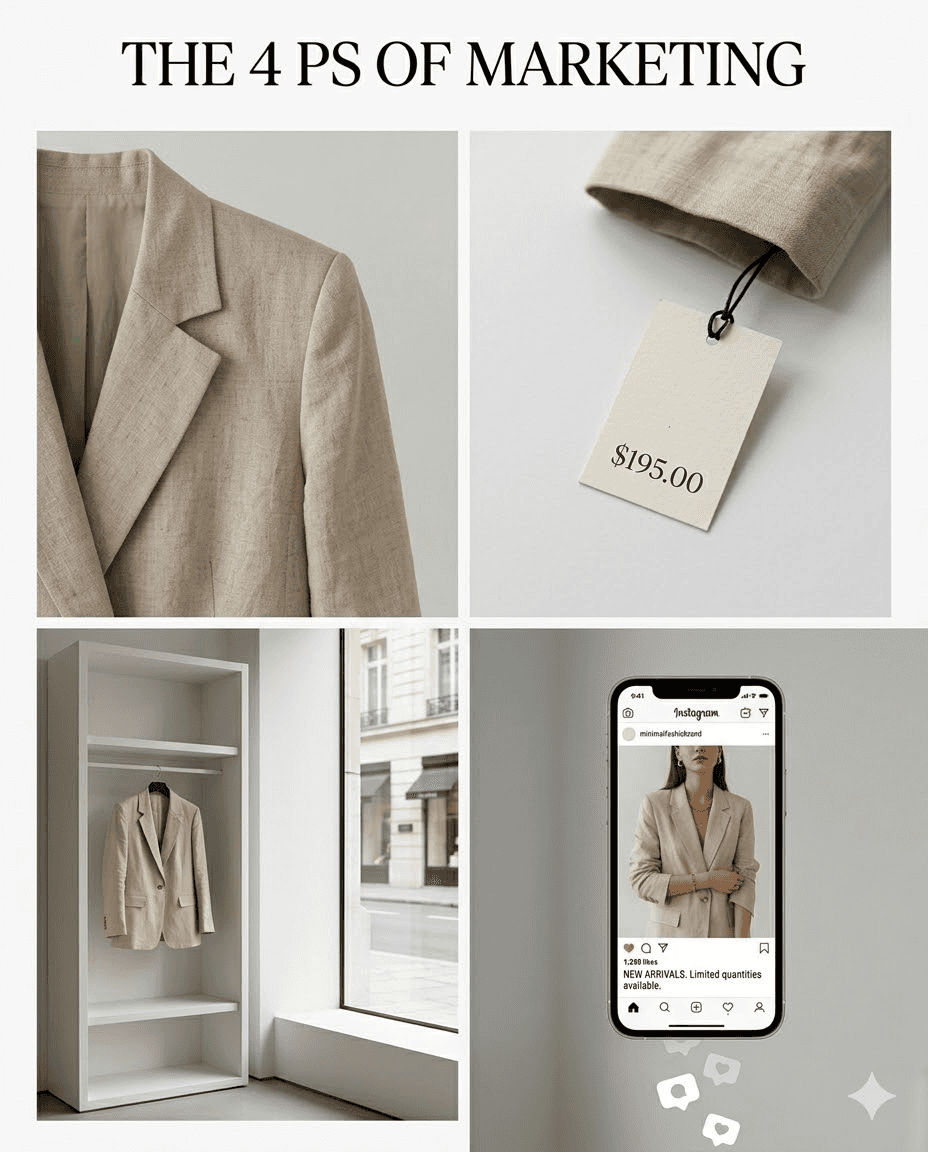
The four Ps of marketing — product, price, place, and promotion — give businesses a structured way to think about how to bring something to market and build a connection with customers. Each P is a distinct decision, but the real power of the marketing mix comes from how these four decisions support each other.
Apple builds products so thoughtfully designed that they create their own demand, then prices them at a premium that the product justifies. McDonald's offers a consistent product at accessible prices through an enormous network of locations, backed by promotions that keep the brand top of mind. Nike sells performance gear through carefully chosen channels and wraps the whole thing in promotion that speaks directly to the customer's identity.
These are not coincidences. They are the result of deliberate, coordinated decisions across all four Ps of the marketing mix. Understanding this framework is the first step toward thinking like a marketer and building strategies that actually work.


