Liquid Death Social Marketing Strategy
Liquid Death is a canned water company. That sentence alone tells you almost nothing about why it has become one of the most talked-about brands in marketing circles worldwide. The product is water — still or sparkling, in a tall aluminum can. But the brand built around that product has accumulated millions of social media followers, attracted major retail distribution, and generated the kind of organic attention that most consumer brands spend enormous budgets trying to buy.
The Liquid Death marketing strategy is a case study in what happens when a brand commits fully to an identity that is radically different from everything else in its category. This article breaks down how they did it and what other brands can learn from their approach.
Liquid Death Brand Background
Liquid Death was founded by Mike Cessario and launched in 2019. Cessario had a background in advertising and noticed something at music festivals and concerts: people who did not drink alcohol were stuck holding water bottles that signaled sobriety in a way that felt socially awkward in those environments. He imagined a water that looked and felt like a beer or a can of energy drink — something with attitude.
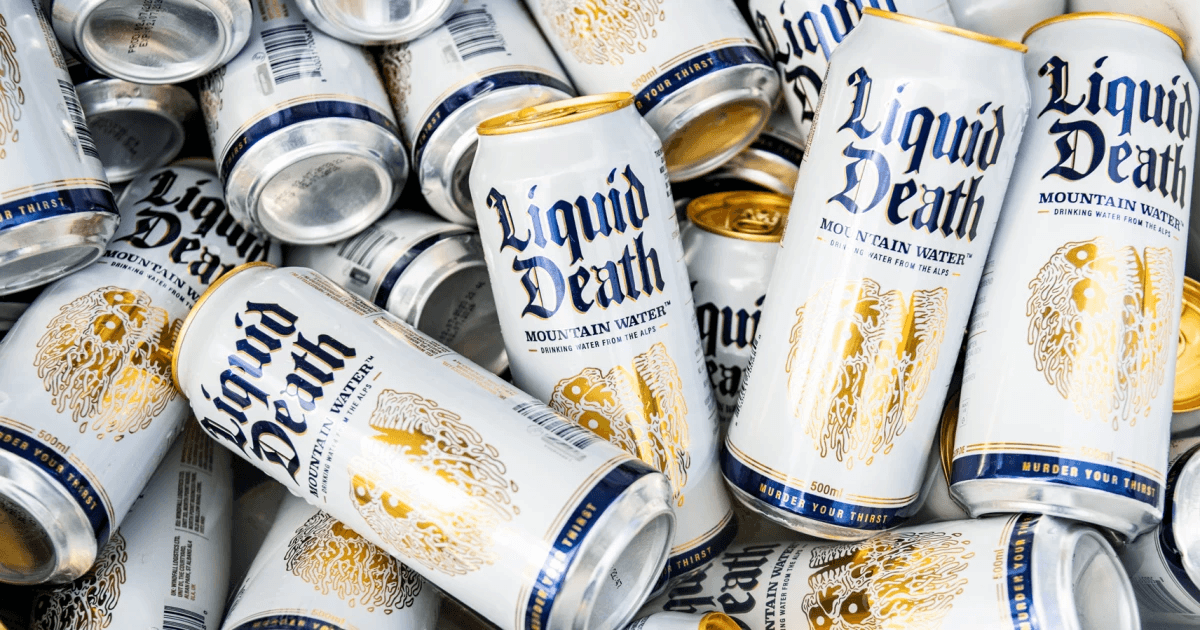
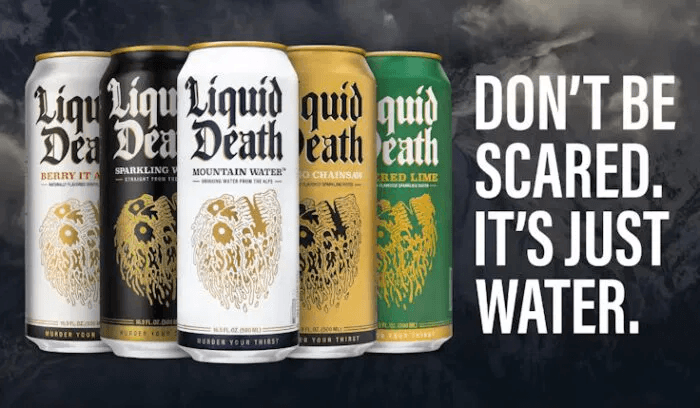
The name Liquid Death was chosen deliberately. It is extreme, slightly absurd, and completely impossible to ignore. The tagline — Murder Your Thirst — follows the same logic. Every element of the brand identity from the skull imagery to the gothic typography signals that this is not Evian. It is water, but it is dressed like a heavy metal album cover.
The brand launched with a crowdfunding-style Facebook video before the product even existed. That video got millions of views on virtually no budget. By the time the product launched, Liquid Death already had an audience. That is an important part of the Liquid Death strategy: community before commerce.
Core Brand Identity: Why It Works
Positioning in a Saturated Market
The bottled water market is enormous and deeply commoditized. Most brands compete on purity, source, taste, or environmental credentials. Premium brands like Fiji or Evian use imagery of natural landscapes and clean water sources. Sparkling water brands like LaCroix focus on lightness and lifestyle.
Liquid Death ignored all of those conventions. Instead of fighting for space in the bottled water aisle, it positioned itself as a beverage culture brand that happened to sell water. It competes for attention with energy drinks, craft beer, and soda — not with Poland Spring. That positioning shift changed everything about how the brand operates.
Authenticity Over Aspiration
Most beverage marketing sells aspiration. You drink this product and you become a version of yourself that is healthier, more adventurous, or more refined. Liquid Death's approach is the opposite. It leans into irreverence, absurdity, and self-awareness. The brand does not take itself seriously, which paradoxically makes it very hard to dismiss.
This authenticity works because it is consistent. Liquid Death does not slip into conventional marketing language when it runs a promotion or answers a customer service query. The brand voice — slightly deranged, always funny, never corporate — shows up in everything from product descriptions to email subject lines.
Liquid Death Social Media Strategy
Content That Earns Attention Rather Than Buying It
The Liquid Death social media strategy is built around content that people actually want to watch, share, and talk about. This is not accidental. The brand creates short videos, parody ads, and collaborative content that would be worth watching even if it had nothing to do with selling water.
One early example was a fake commercial for Liquid Death that ran as a parody of ultra-polished bottled water ads. It mocked the conventions of the category while presenting the brand's own absurd aesthetic. The video was shared widely because it was genuinely funny — the product was almost beside the point.
Community and Participatory Marketing
Liquid Death has built a community of fans who feel like insiders rather than customers. The brand refers to its followers as members of a kind of cult — a joke, but one that encourages a sense of belonging. Fans create user-generated content featuring the brand, share photos of Liquid Death cans in unexpected places, and participate in campaigns the brand designs around their involvement.
The brand has run initiatives like selling limited-edition merchandise, creating collectible packaging, and partnering with musicians and artists who align with its identity. These are not just product sales — they are community-building mechanisms that deepen the relationship between the brand and its audience.
Shock Content Done Right
Liquid Death regularly creates content that pushes boundaries — but it does so with enough wit that the shock feels playful rather than offensive. A campaign featuring children performing a heavy metal song about the brand. A horror film parody promoting a limited sparkling water flavor. An ad that appeared to show extreme sports athletes performing dangerous stunts while drinking Liquid Death.
The formula is: take something familiar, push it into absurdity, keep it legal, and make sure it is funny. Shock without wit just alienates people. Shock with wit gets shared. Liquid Death has found that balance consistently.
Influencer and Partnership Strategy
Rather than working with mainstream lifestyle influencers, Liquid Death gravitates toward partners who are already credible in music, extreme sports, and alternative culture. Collaborations with musicians like Weezer and with skateboarding culture gave the brand credibility in communities where corporate sponsorship is traditionally viewed with suspicion.
The brand also uses celebrity partnerships strategically. Tony Hawk — who is both a genuine legend in skateboarding and someone who does not need the money — collaborated with Liquid Death on a limited-edition board mixed with his own blood. The stunt was absurd enough to generate enormous press coverage and genuine interest from collectors.
Content Strategy Breakdown
Video First, Always
Liquid Death's most effective content is video. Short-form videos on YouTube, Instagram, and TikTok consistently outperform static content for the brand. This is partly because the brand's humor and irreverence translate better in motion a still image of a skull on a water can is interesting, but a 60-second parody ad tells you everything about what the brand is. Brands looking to follow a similar video-first approach can create video ads from a simple prompt or product link and adapt them for YouTube, Instagram, TikTok, and other platforms.
Merchandise as Marketing
Liquid Death sells merchandise that functions as both a revenue stream and marketing. A customer wearing a Liquid Death hoodie at a gym or music festival is a walking brand impression. The merchandise is designed to be genuinely desirable — not promotional giveaway quality — which means people actually wear it in public and post photos.
Platform-Native Content
The brand adapts its content to each platform rather than posting the same thing everywhere. On TikTok, Liquid Death creates content that fits the tone and format of that platform. On YouTube, it produces longer parody ads and behind-the-scenes content. On Instagram, it focuses on visual brand aesthetics and community features. This platform sensitivity is part of why the brand performs well across multiple channels rather than on just one.
Environmental Credentials as Brand Fuel
One element of the Liquid Death brand that often gets overlooked is its environmental angle. The brand uses aluminum cans rather than plastic bottles, which it argues are more sustainably recyclable. A portion of profits goes toward environmental causes. This gives the brand a genuine values layer beneath the shock humor exterior.
This matters for two reasons. First, it gives the brand something real to say beyond the jokes. Second, it resonates with its core audience — younger consumers who care about environmental impact. Liquid Death packages its environmental commitment in its own irreverent language, but the commitment itself is genuine, which makes it more credible.
What Other Brands Can Learn from Liquid Death
The Liquid Death marketing strategy is not replicable in its exact form by every brand. Not every product can or should dress itself in skull imagery and heavy metal aesthetics. But the underlying principles are transferable.
First: commit fully to an identity. Liquid Death works because it never wavers. Brands that try to be edgy sometimes and conventional other times end up being neither. Second: create content worth watching before you create content worth buying. The brand's videos are genuinely entertaining. They would get attention even without the product. Third: know your audience precisely and build for them specifically, rather than trying to appeal to everyone.
Fourth: authenticity cannot be faked. Liquid Death's punk sensibility comes from a genuine place — the founder's background in music culture and his real frustration with the beverage category. Brands that try to imitate the aesthetic without the authentic foundation tend to read as desperate. The lesson is not to copy what Liquid Death did. It is to find what your brand actually believes and build from there with the same commitment and consistency.


