50 Business Ideas for Beginner Entrepreneurs: Low-Cost, High-Potential Startups

Starting a business for the first time is one of the most exciting and overwhelming decisions a person can make. The idea that you could build something from scratch, on your own terms, that generates real income — it is both thrilling and paralyzing. The paralysis is usually caused by one thing: not knowing where to start.
The best business ideas for beginner entrepreneurs share a few characteristics. They require low upfront capital, meaning you can test the concept without betting everything on it. They leverage skills or knowledge you already have, reducing the learning curve. They can be started part-time alongside existing work. And they have a clear path to first revenue — not years away, but weeks or months.
This guide covers 50 business ideas for beginners organized by category — service businesses, creative and digital businesses, reselling and commerce, and knowledge-based businesses. Each idea includes what it involves, why it works for beginners, and what it takes to get started.
Service-Based Businesses
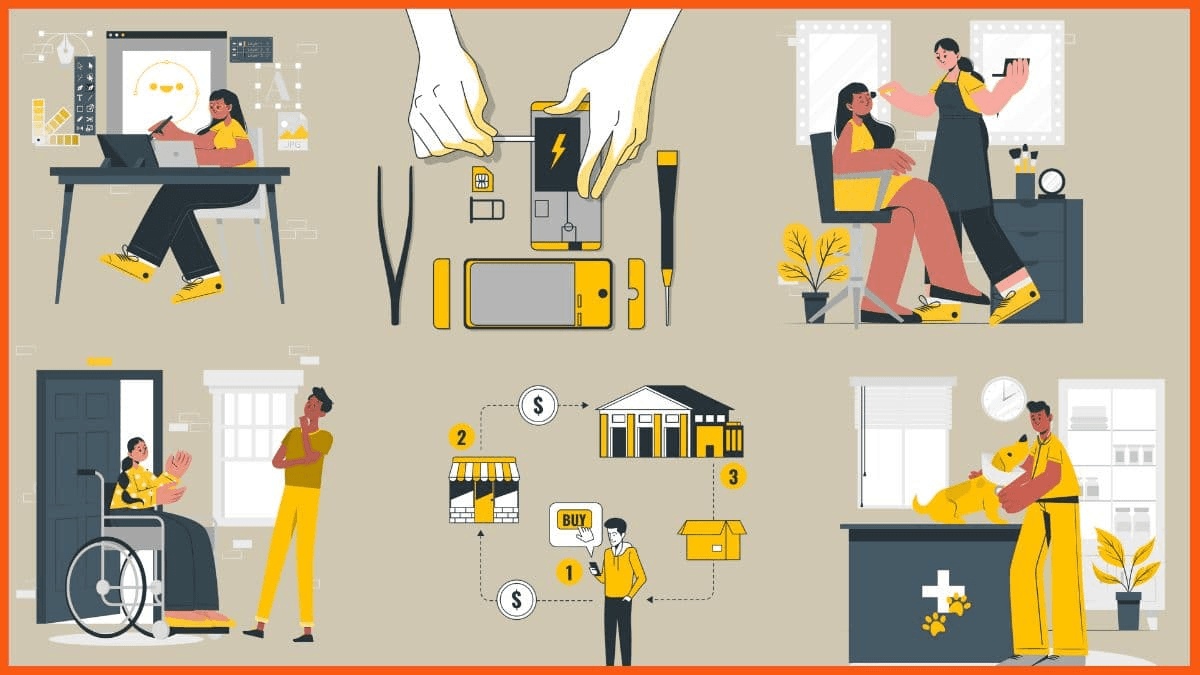
1. Freelance Writing Write articles, blog posts, website copy, or social media content for businesses. The demand for written content is enormous and constant. Getting started requires a portfolio of sample pieces, which you can create yourself before landing your first client. Platforms like Upwork, Fiverr, and LinkedIn are good starting points for finding work.
2. Social Media Management Manage Instagram, Facebook, TikTok, or LinkedIn accounts for small businesses that do not have the time or expertise to do it themselves. Most small businesses know they need to be active on social media but are not. A basic understanding of content strategy and scheduling tools is enough to start.
3. Virtual Assistant Provide administrative support remotely — managing emails, scheduling, data entry, customer communication, research, and more. The work is varied, the skills required are transferable, and the market of solopreneurs and small businesses needing help is large and growing.
4. Graphic Design Design logos, social media graphics, presentations, and marketing materials for businesses. Tools like Canva have lowered the barrier to entry significantly, and there is a large market of small businesses that need basic design work without hiring a full-time designer.
5. Web Design Build and design websites for small businesses using no-code tools like Squarespace, Wix, or Webflow. Many businesses still have no website or a terrible one. The ability to build a clean, functional site using these platforms is a genuinely sellable skill.
6. Photography Offer photography services for headshots, events, products, or real estate. The smartphone camera era has not reduced demand for professional photography — it has raised the bar for what clients expect and increased demand for photographers who can deliver above that bar.
7. Video Editing Edit videos for content creators, businesses, and individuals. Demand for video content has exploded, and many creators who produce raw footage do not have the skills or time to edit it themselves. Learning editing software like DaVinci Resolve or Adobe Premiere is an investment that pays off quickly.
8. Bookkeeping Provide basic bookkeeping services for small businesses using software like QuickBooks or Xero. Many small business owners are overwhelmed by financial record-keeping. A bookkeeping certificate course takes weeks, not years, and the ongoing demand for the service is reliable.
9. Pet Sitting and Dog Walking Offer pet care services in your neighborhood through platforms like Rover or through direct marketing to pet owners locally. Low startup costs, consistent demand, and genuinely enjoyable work make this a perennial beginner business choice.
10. Personal Training If you have fitness knowledge, offer personal training services to clients at their home, at a park, or online. The shift toward online and hybrid training has expanded the market significantly. A fitness certification is advisable and typically takes a few months to complete.
Creative and Digital Businesses

11. Etsy Shop Sell handmade goods, digital downloads, or vintage items on Etsy. The platform already has buyers actively looking for what sellers offer, reducing the need to build an audience from scratch. Digital products — printables, templates, designs — have no inventory cost and unlimited scalability.
12. Print-on-Demand Store Create designs that are printed onto products like t-shirts, mugs, phone cases, and notebooks, and sold through platforms like Redbubble, Printful, or Merch by Amazon. No inventory required — products are manufactured and shipped when ordered.
13. Blogging Build a content blog around a specific niche topic and monetize through advertising, affiliate marketing, or digital products. Blogging takes time to generate income but has low startup costs and can become a significant passive income source once established.
14. YouTube Channel Create video content around a specific topic and monetize through AdSense, sponsorships, or product sales. YouTube is a long-term play but one with significant income potential for channels that build an audience in a specific niche.
15. Podcast Launch a podcast on a topic you know well and monetize through sponsorships, listener support, or premium content. The barrier to entry is low — a decent microphone and a free hosting platform are enough to start — and the intimate nature of podcasting builds strong audience loyalty.
16. Selling Digital Products Create and sell digital products — templates, eBooks, presets, courses, spreadsheets — through your own website or platforms like Gumroad or Teachable. Once created, digital products have zero marginal cost, meaning each additional sale is almost pure profit.
17. Online Courses Package your knowledge into a structured course and sell access online. If you have expertise in any area — marketing, fitness, cooking, languages, coding, photography — there is likely a market of people who want to learn what you know.
18. Newsletter Business Build a paid or sponsored email newsletter around a specific topic. Newsletters have experienced a significant resurgence and platforms like Substack have made it easy to build an audience and charge for premium content.
19. Stock Photography Sell your photography through stock platforms like Shutterstock, Getty Images, or Adobe Stock. Income per image is small, but a large library of in-demand photos generates passive income consistently.
20. Music Production If you produce music, sell beats, samples, or royalty-free tracks through platforms like BeatStars or Bandcamp. Digital distribution has opened music production as a viable small business for independent producers.
Reselling and Commerce Businesses
21. eBay or Facebook Marketplace Reselling Buy items from thrift stores, garage sales, or clearance sections and resell them at a profit on eBay or Facebook Marketplace. The skill is in sourcing — finding undervalued items — and developing that sourcing eye takes time but no formal qualification.
22. Amazon FBA Source products and sell them through Amazon's Fulfilled by Amazon program, where Amazon handles storage, shipping, and customer service. The startup costs are higher than some other options but the potential scale is significant.
23. Dropshipping Sell products through your own online store without holding inventory. When a customer orders, you purchase the item from a supplier who ships it directly. Margins are tight but startup costs are low and the model requires no warehouse.
24. Vintage and Thrift Reselling Specialize in sourcing and reselling vintage clothing, furniture, or collectibles. The vintage market has grown significantly, particularly among younger consumers, and a well-curated reselling business can command premium prices.
25. Handmade Product Business Make and sell physical products — candles, soap, jewelry, ceramics, food items — through Etsy, at craft markets, or through your own website. The investment in materials and time is real but the income potential and personal satisfaction of making something people love is significant.
Knowledge and Consulting Businesses

26. Tutoring Tutor students in subjects you know well — academic subjects, languages, music, or test preparation. Online tutoring platforms like Tutor.com or direct marketing through local schools and community boards are effective starting points.
27. Coaching Offer coaching services in areas where you have proven experience — career coaching, life coaching, business coaching, fitness coaching, or any specific domain. Coaching is a relationship business: your reputation, results, and referrals drive growth.
28. Consulting Offer specialized advice to businesses in your area of expertise. Former corporate professionals often underestimate how valuable their specific knowledge is to smaller companies that cannot afford to hire at their level full-time.
29. SEO Consulting Help businesses rank higher in Google search results through on-page optimization, content strategy, and link building. SEO skills are learnable through free resources and paid courses, and the demand from small businesses is enormous.
30. Language Translation If you are fluent in two or more languages, offer translation services for documents, websites, and video captions. The demand for quality translation work continues to grow with global business expansion.
31. Proofreading and Editing Offer proofreading and copy-editing services for writers, businesses, and academic clients. The work requires strong language skills and attention to detail — formal qualifications are less important than demonstrable quality.
32. Tax Preparation With the right qualification, offer tax preparation services to individuals and small businesses. The income is concentrated in a few months of the year but can be significant, and the qualification requirements, while real, are achievable.
33. Event Planning Coordinate events — weddings, corporate events, birthday parties, conferences — for clients who want to outsource the logistics. People skills, organization, and the ability to manage vendor relationships are the core requirements.
34. HR Consulting Offer human resources consulting to small businesses that need HR expertise without a full-time hire. Areas include recruitment, employee handbook creation, performance management systems, and compliance.
35. Marketing Consulting Help small businesses develop and execute marketing strategies. Former marketing professionals are particularly well-positioned, but anyone who has built a successful marketing presence for their own business has transferable expertise.
Local and Neighborhood Businesses

36. Lawn Care and Landscaping Offer lawn mowing, garden maintenance, and seasonal cleanup services in your local area. Startup costs are limited to equipment — which can often be sourced second-hand initially — and the demand from homeowners is consistent.
37. Cleaning Services Offer residential or commercial cleaning services. The startup cost is essentially cleaning supplies and your time. Word of mouth in a local area can build a full client base relatively quickly.
38. Handyman Services If you are handy with tools, offer small repair and maintenance services — furniture assembly, picture hanging, minor plumbing, painting. The demand in residential neighborhoods is constant and consistent.
39. Personal Chef or Meal Prep Prepare and deliver meals for busy individuals or families who want home-cooked food without cooking it themselves. Food safety certification requirements vary by region but are generally straightforward to obtain.
40. Moving Help Offer labor for moving days — loading, unloading, furniture moving — to homeowners and renters in your area. No specialized equipment required to start, and the hourly rate for reliable moving help is strong.
41. Car Washing and Detailing Offer mobile car washing and detailing services to customers at their home or workplace. The convenience factor commands a premium, and startup costs for basic equipment are low.
42. Childcare Offer babysitting, after-school care, or holiday care services in your home or at clients' homes. Requirements vary by region but the demand in most communities significantly exceeds supply.
43. Elder Care Assistance Provide companionship, errand running, and light assistance to elderly individuals who need help with daily tasks. Demand is growing with aging populations and many families actively seek trustworthy local help.
44. Errand Running Offer to run errands — grocery shopping, prescription collection, dry cleaning pickup — for busy professionals, elderly individuals, or new parents. The service is simple but genuinely valued by people with more money than time.
45. Personal Styling Help individuals develop their personal style through wardrobe consultations and shopping trips. The work requires a genuine eye for styling and the confidence to guide clients, but no formal qualification is required to start.
Tech and Online Businesses

46. App Development If you have coding skills or are willing to learn, develop simple mobile or web apps for small businesses or as standalone products. The market for simple, well-designed apps that solve specific problems is large.
47. Chatbot Building Build customer service chatbots for businesses using no-code tools like ManyChat or Tidio. The demand from small businesses wanting to automate customer interaction is growing rapidly.
48. Website Maintenance Offer ongoing website maintenance services — updates, backups, security monitoring, content updates — to small business website owners who are not comfortable managing technical aspects themselves.
49. Data Entry Provide data entry services to businesses with large volumes of information to process. Not glamorous, but consistently in demand with very low barriers to entry and fully remote working capability.
50. Online Research Offer research services to businesses, journalists, academics, and professionals who need information gathered and synthesized efficiently. Strong research skills and the ability to present findings clearly are the main requirements.
Key Takeaways
The most important thing about starting a business as a beginner is choosing an idea and beginning — rather than spending months evaluating options without taking action. Most successful entrepreneurs will tell you that their first business was not their best one, but it taught them everything they needed to build the next one.
Start with what you already know. The fastest path to first revenue is usually through skills you have already developed, not through learning an entirely new field from scratch. Your existing expertise — in your day job, your hobbies, or your life experience — is likely more commercially valuable than you currently assume.
Test before you invest. Before spending significant time or money building out a business idea, see if you can make a single sale or land a single client with minimal infrastructure. If someone pays you for something, the idea is viable. Everything else — the website, the branding, the business registration — can follow the proof of concept.


