400+ Catchy Honey Business Name Ideas That'll Make Your Brand Stick

400+ Catchy Honey Business Name Ideas That'll Make Your Brand Stick
Your honey business name is the foundation of your brand identity the first taste potential customers get of your product before they ever open a jar. In a market where artisan honey, local apiaries, and specialty bee products are experiencing unprecedented growth, a memorable, distinctive name can mean the difference between blending into grocery store shelves and becoming the sought-after honey brand in your region.
This comprehensive guide presents over 400 carefully crafted honey business name ideas organized by style, product focus, and brand personality. You'll discover proven strategies for creating names that resonate with your target market, learn the legal considerations essential to protecting your brand, and understand how to ensure your chosen name supports long-term business growth. Whether you're launching a backyard apiary, artisan honey brand, commercial bee farm, or specialty honey product line, these insights will help you select a name that attracts customers, builds brand loyalty, and positions your business for sweet success.
400+ Honey Business Names by Category
Traditional & Classic Honey Business Names (1-50)
Golden Harvest Honey
Pure Nectar Apiaries
Sweet Valley Honey
Meadow Brook Honey Farm
Heritage Honey Company
Countryside Apiaries
Amber Gold Honey
Wildflower Honey Farms
Clover & Honey Co.
Sunset Apiaries
Morning Dew Honey
Harvest Moon Honey
Rolling Hills Apiaries
Sunshine Honey Farm
Garden Gate Honey
Honeycomb Homestead
Valley View Apiaries
Golden Meadow Honey
Springtime Honey Farm
Countryside Pure Honey
Amber Acres Apiaries
Sweet Harvest Honey
Prairie Gold Honey
Orchard Honey Company
Evergreen Apiaries
Golden Grove Honey
Blossom Trail Honey
Riverbend Apiaries
Sunflower Honey Farm
Honeysuckle Homestead
Mountain View Honey
Silver Maple Apiaries
Lakeside Honey Farm
Golden Oak Honey
Whispering Pines Apiaries
Harmony Honey Farm
Peaceful Valley Honey
Golden Dawn Apiaries
Meadowlark Honey
Wildwood Apiaries
Autumn Gold Honey
Birch & Honey Farm
Cottonwood Apiaries
Golden Fields Honey
Maple Grove Apiaries
Sweet Clover Honey
Hillside Honey Farm
Woodland Apiaries
Golden Harvest Homestead
Country Lane Honey
Artisan & Premium Honey Names (51-100)
Artisan Nectar
The Honey Atelier
Cultured Comb
Noble Nectar
Éclat Honey
Reserve Raw Honey
Heirloom Honey Co.
The Refined Hive
Prestige Apiaries
Luxe Honey Collective
The Honey Curator
Estate Harvest Honey
Premier Nectar
The Golden Standard
Artisan Amber
Signature Hive
The Honey Craftsmen
Distinguished Apiaries
Boutique Nectar
The Honeyed Palette
Crafted Comb Co.
Elevated Honey
The Artisan Bee
Refined Harvest Honey
The Honey Collective
Curated Apiaries
Golden Heritage
The Noble Hive
Premier Bee Co.
Artisan Gold Honey
The Honey Workshop
Reserve Harvest
Distinction Apiaries
The Golden Craft
Heritage Nectar
The Honeyed Touch
Prestige Harvest
Artisan Grove Honey
The Refined Bee
Cultured Harvest
Noble Harvest Honey
The Golden Artisan
Signature Nectar
Estate Honey Co.
The Honey Emporium
Premier Harvest
Artisan Fields Honey
The Elevated Hive
Distinction Nectar
The Golden Reserve
Modern & Trendy Honey Names (101-150)
Hive & Co.
The Honey Lab
Buzzworthy Honey
Nectar + Co.
The Bee Foundry
Urban Nectar
Hive Society
The Golden Thread
Bee Collective
Nectar Studio
The Honey House
Hive & Harvest
Modern Nectar
The Bee Project
Golden Standard Co.
Nectar Works
The Hive Edit
Bee + Bloom
Nectar Supply Co.
The Modern Hive
Honey & Co.
The Bee Bureau
Nectar Theory
Hive Craft Co.
The Golden Co.
Bee Society
Nectar & Thread
The Honey Guild
Hive + Home
Modern Bee Co.
The Nectar Co.
Honey Theory
The Bee Studio
Golden Supply Co.
Nectar & Hive
The Modern Bee
Honey Guild Co.
Bee + Co.
The Hive Co.
Nectar House
Golden Thread Co.
The Honey Bureau
Hive Standard
Bee + Harvest
Nectar Craft
The Modern Harvest
Honey + Thread
The Golden Guild
Bee Bureau Co.
Nectar Society
Playful & Whimsical Honey Names (151-200)
Bee Happy Honey
The Buzzin' Hive
Honey Bunch
Bee's Knees Nectar
Sweet Cheeks Honey
The Happy Hive
Buzzing Bee Farm
Honey Do Apiaries
Bee-lieve in Honey
Sweet Spot Honey
The Merry Hive
Honey Pot Farm
Bee Mine Honey
Sweet Buzz Apiaries
The Jolly Bee
Honey Bee Happy
Buzz & Bloom
Sweet Dreams Honey
The Cheerful Hive
Honey Bunches
Bee Joyful Apiaries
Sweet Sunshine Honey
The Smiling Bee
Honey Hugs
Bee Delightful
Sweet Melody Honey
The Dancing Bee
Honey Smiles
Bee Wonderful
Sweet Whispers Honey
The Singing Hive
Honey Giggles
Bee Charming
Sweet Serenade Honey
The Playful Hive
Honey Wishes
Bee Merry Apiaries
Sweet Symphony
The Whimsical Bee
Honey Twinkle
Bee Blissful
Sweet Harmony Honey
The Enchanted Hive
Honey Magic
Bee Bright Apiaries
Sweet Wonder Honey
The Fairy Hive
Honey Sparkle
Bee Dreamy
Sweet Fantasy Honey
Location-Based Honey Names (201-250)
[Your City] Urban Honey
[Region] Raw Honey
[State] Golden Honey
[County] Apiaries
Local Hive Honey
Hometown Honey Co.
[Neighborhood] Nectar
[Valley/River] Honey Farm
Homegrown Honey
[Mountain Range] Apiaries
Native Nectar
[Your Town] Bee Co.
Regional Harvest Honey
[Area] Local Honey
Backyard Apiaries
[District] Honey Works
Local Nectar Co.
[Your County] Harvest
Community Hive
[Region] Wildflower Honey
Neighborhood Nectar
[Your Area] Bee Farm
Locally Sourced Honey
[Your City] Honey Collective
Home Valley Apiaries
[Local Landmark] Honey
Regional Bee Co.
[Your State] Pure Honey
Local Harvest Apiaries
[Geographic Feature] Nectar
Native Bee Honey
[Your Region] Golden Harvest
Homefront Apiaries
[Local Area] Bee Works
Regional Nectar Co.
[Your County] Hive
Local Legacy Honey
[City/Town] Artisan Honey
Community Harvest
[Your Area] Raw Honey
Hometown Harvest
[Region] Heritage Honey
Local Pride Apiaries
[Your District] Bee Co.
Native Harvest Honey
[Geographic Area] Honey Farm
Regional Roots Apiaries
[Your County] Nectar
Local Tradition Honey
[Your City] Hive Co.
Nature-Inspired Honey Names (251-300)
Wildflower Whispers
Blossom & Bee
Petal Pure Honey
Nature's Nectar
Bloom & Hive
Forest Floor Honey
Garden Song Apiaries
Pollen & Petal
Meadow Mist Honey
Botanical Bee Co.
Wildgrass Honey
Flora & Fauna Apiaries
Earthen Honey
Woodland Nectar
Bloom Season Honey
Natural Grove Apiaries
Petal & Pollen
Organic Earth Honey
Willow & Honey
Botanical Harvest
Meadow Bloom Apiaries
Nature's Gold
Wild Petal Honey
Earth & Hive
Blossom Trail Apiaries
Organic Grove Honey
Flora Honey Co.
Wildflower Fields
Nature's Harvest Apiaries
Bloom & Nectar
Earthbound Honey
Woodland Blossom
Natural Nectar Co.
Petal Path Apiaries
Organic Bloom Honey
Wild Earth Hive
Botanical Blend
Nature's Pure Honey
Meadow Flora Apiaries
Blossom & Harvest
Wildflower Nectar Co.
Earth Garden Honey
Forest Bloom Apiaries
Natural Heritage Honey
Pollen & Bloom
Organic Meadow Hive
Wild Nature Nectar
Botanical Pure Honey
Earth & Bloom Apiaries
Wildflower Essence
Family & Heritage Honey Names (301-340)
[Family Name]'s Honey
Generation Honey Farm
Family Hive Apiaries
Legacy Bee Co.
Heritage Honey Farm
[Surname] Apiaries
Grandma's Golden Honey
Family Tradition Honey
Homestead Hive
[Name]'s Nectar
Ancestral Apiaries
Family Recipe Honey
Old World Honey Farm
[Family Name] Bee Co.
Traditional Hive Honey
Heritage Harvest Apiaries
Family Farm Nectar
Generations Bee Farm
[Surname]'s Sweet Honey
Homestead Heritage
Family Pride Apiaries
Legacy Harvest Honey
[Name]'s Bee Farm
Traditional Nectar Co.
Family Roots Honey
Heritage Hive Apiaries
[Surname] Harvest
Homestead Tradition
Family Gold Honey
Legacy Bee Apiaries
[Name]'s Heritage Honey
Traditional Harvest Farm
Family Legacy Nectar
Generational Hive
[Surname]'s Apiaries
Homestead Gold Honey
Family Crest Bee Co.
Heritage Roots Honey
[Name]'s Family Farm
Traditional Hive Co.
Specialty & Flavored Honey Names (341-370)
Infused Nectar Co.
Flavor Hive
Gourmet Honey Works
The Spiced Bee
Botanical Blend Honey
Flavored Gold Apiaries
The Honey Fusion
Artisan Infusions
Specialty Nectar Co.
The Honeyed Spice
Gourmet Hive
Flavor Craft Honey
The Infused Bee
Botanical Honey Co.
Specialty Harvest
The Flavored Hive
Gourmet Nectar
Artisan Blends
The Spice Hive
Infusion Honey Co.
Specialty Bee Farm
The Gourmet Bee
Flavor Harvest Honey
Botanical Nectar
The Blended Hive
Artisan Flavors
Specialty Gold Honey
The Infused Harvest
Gourmet Bee Co.
Flavor Nectar Works
Raw & Organic Honey Names (371-400)
Pure Raw Honey Co.
Organic Hive Apiaries
Unfiltered Nectar
Raw Harvest Honey
Organic Gold Bee Farm
Pure Nature Honey
Raw & Real Apiaries
Organic Nectar Co.
Unprocessed Hive
Raw Purity Honey
Organic Harvest Farm
Pure Earth Honey
Raw Tradition Apiaries
Organic Meadow Nectar
Unfiltered Gold
Raw Nature Bee Co.
Organic Pure Honey
Unprocessed Nectar
Raw Heritage Apiaries
Organic Earth Honey
Pure & Raw Hive
Organic Wildflower Co.
Unfiltered Harvest
Raw Essence Honey
Organic Tradition Farm
Pure Raw Nectar
Organic Roots Apiaries
Unprocessed Gold Honey
Raw & Organic Bee Co.
Pure Nature's Nectar
How to Choose the Perfect Honey Business Name
Selecting the ideal name for your honey business requires balancing creativity with strategic thinking. Your name must resonate with customers, reflect your brand values, and support long-term business growth. Follow this proven framework to narrow hundreds of options to the one perfect name.
Step 1: Define Your Brand Identity and Values
Before evaluating names, crystallize your honey business's core identity. Answer these foundational questions:
What type of honey business are you? (backyard apiary, commercial bee farm, specialty honey products, online honey retailer)
What makes your honey unique? (local sourcing, organic practices, rare varietals, infused flavors, raw/unfiltered)
Who is your target customer? (health-conscious consumers, gourmet food enthusiasts, local food advocates, gift shoppers)
What values define your brand? (sustainability, tradition, innovation, purity, locality)
What's your brand personality? (traditional, modern, playful, premium, earthy)
Your answers create a brand framework that guides name selection. A backyard apiary selling raw local honey to health-conscious neighbors needs a different name than a premium artisan honey company targeting gourmet retailers nationally.
For example, if your values center on tradition and family heritage, names like "Heritage Honey Farm" or "[Family Name] Apiaries" align authentically. If your brand emphasizes modern, urban beekeeping, names like "Urban Nectar" or "Hive Society" better represent your positioning.
Step 2: Consider Your Market Positioning
Your honey business name should immediately signal where you sit in the market hierarchy:
Premium/Luxury Positioning: Names should convey sophistication, quality, and exclusivity. "The Honey Atelier," "Estate Harvest Honey," or "Reserve Raw Honey" signal high-end positioning that supports premium pricing.
Local/Artisan Positioning: Names emphasizing locality, craft, and authenticity. "[Your City] Urban Honey," "Artisan Nectar," or "Hometown Honey Co." communicate small-batch, local character.
Organic/Natural Positioning: Names highlighting purity, nature, and organic practices. "Pure Raw Honey Co.," "Wildflower Essence," or "Organic Earth Honey" appeal to health-conscious consumers.
Commercial/Value Positioning: Names suggesting reliability, consistency, and accessible pricing. "Golden Harvest Honey," "Sunshine Honey Farm," or "Pure Nectar Apiaries" work for broader market appeal.
Misaligned positioning confuses customers and can undermine sales. A budget-focused honey business named "Prestige Apiaries" creates expectations your pricing can't support, leading to disappointed customers. Conversely, premium honey sold under "Budget Bee Farm" appears undervalued.
Step 3: Test for Memorability and Pronunciation
Your honey business name must be easy to remember, spell, and pronounce. The "farmers market test" helps: Imagine a customer tasting your honey at a market, loving it, then trying to find you online later that day. Can they remember and spell your name?
Names like "Sweet Valley Honey" pass this test simple words, logical spelling, easy to recall. Names like "Apiculture Aesthetics" fail too complex, difficult to spell, hard to remember.
Test pronunciation by saying your name aloud multiple times. Does it flow naturally? Can it be said quickly without stumbling? "Bee Happy Honey" rolls off the tongue. "Euphoric Euphorbia Apiaries" creates pronunciation challenges.
Ask friends unfamiliar with your business to spell your proposed name after hearing it once. If multiple people misspell it, choose something clearer. Every misspelling represents a potential customer who can't find your website or social media.
Step 4: Ensure Domain and Social Media Availability
In today's digital marketplace, your honey business name must work online. Before falling in love with a name, verify that matching domain names and social media handles are available.
Check domain availability at domain registrars (GoDaddy, Namecheap, Google Domains). Ideally, you want the .com version of your business name. If "GoldenHarvestHoney.com" is taken, consider alternatives:
Add your location: "GoldenHarvestHoneyVT.com"
Add a descriptor: "GoldenHarvestHoneyFarm.com"
Use different extensions: "GoldenHarvestHoney.co" or ".farm"
However, if too many variations are required, the name may not be ideal for digital presence. Choose something with cleaner domain availability.
Social media handles are equally important. Check availability on Instagram, Facebook, TikTok, and Pinterest platforms crucial for food businesses. Try to secure consistent handles across platforms. "TheHoneyAtelier" works better than having "HoneyAtelier" on Instagram but "TheHoneyAtelier123" on Facebook.
Step 5: Research Legal Availability
Before investing in branding, ensure your chosen name doesn't infringe on existing trademarks. Conduct a preliminary search of the USPTO (United States Patent and Trademark Office) database at uspto.gov.
Search for your exact proposed name and similar variations. Look for existing honey businesses, food products, or related industries using the same or confusingly similar names. While you can legally use a name that's trademarked in an unrelated industry (a "Golden Harvest" software company wouldn't prevent your "Golden Harvest Honey"), avoid names that create confusion within the food/agriculture sector.
Also search your state's business registry to ensure the name isn't already registered as a business entity in your state. Even if you can legally use a name from a trademark perspective, you typically can't register an LLC or corporation if another entity in your state already uses that exact name.
For valuable names with strong branding potential, consider consulting a trademark attorney before finalizing your choice. This upfront investment prevents costly rebranding later if trademark issues arise.
Step 6: Consider Long-Term Scalability
Choose a name that can grow with your business. Avoid names that limit future expansion:
Geographic Limitations: "Boston Backyard Honey" works well if you'll always operate only in Boston. But if you plan to expand regionally or nationally, the name becomes restrictive. "New England Honey Co." offers geographic identity with expansion flexibility.
Product Limitations: "Raw Wildflower Honey Only" locks you into one product type. If you later want to add flavored honey, bee products, or other varietals, the name becomes inaccurate.
Scale Limitations: "One Hive Honey" signals tiny scale that might become inaccurate and undesirable as you grow. Choose names that work whether you have 5 hives or 500.
Think five years ahead. Will this name still fit if you triple in size? Expand product lines? Enter new markets? Names with built-in flexibility prevent costly rebranding as you grow.
Naming Strategies That Work for Honey Businesses
Different naming approaches serve different strategic purposes. Understanding these strategies helps you choose the approach that best supports your business goals.
Descriptive Names
Descriptive names clearly communicate what you do: "Pure Raw Honey Co.," "Wildflower Honey Farm," "Organic Nectar Apiaries." These names offer immediate clarity customers instantly understand you sell honey.
Advantages: No explanation needed, good for SEO (people searching "organic honey" may find "Organic Earth Honey"), reduces marketing burden by communicating offering in the name itself.
Disadvantages: Can be generic and less memorable, harder to trademark, don't create emotional connection or storytelling opportunities.
Best for: Commercial honey operations, online honey retailers, businesses prioritizing discoverability over brand mystique.
Evocative Names
Evocative names create feelings, imagery, or associations without literal descriptions: "Golden Heritage," "Blossom & Bee," "The Honey Atelier." These names suggest qualities without stating them directly.
Advantages: More memorable and distinctive, easier to trademark, create emotional resonance, offer storytelling opportunities, feel more premium.
Disadvantages: Require more marketing to communicate what you do, may not rank as well in literal search queries.
Best for: Premium honey brands, artisan producers, businesses building emotional brand connections, companies with marketing budgets to build brand awareness.
Founder-Based Names
Names incorporating the founder's name or surname: "Anderson's Apiaries," "The Smith Family Honey," "Johnson's Golden Harvest." These names personalize your brand and emphasize authenticity.
Advantages: Builds personal connection, emphasizes family/heritage, creates accountability (your name = your reputation), differentiates in crowded markets.
Disadvantages: Harder to sell business later (buyers may not want someone else's name), limits if you have business partners with different names, pronunciation/spelling issues if you have an uncommon surname.
Best for: Family businesses planning multi-generational operation, small apiaries emphasizing personal relationships, heritage brands.
Location-Based Names
Names emphasizing where your honey comes from: "Vermont Raw Honey," "Sonoma Valley Apiaries," "Rocky Mountain Nectar." These names leverage geographic pride and terroir concepts.
Advantages: Appeals to local food movement, creates authenticity and traceability, helps local customers find you, differentiates in commodity markets.
Disadvantages: Limits expansion beyond named region, becomes inaccurate if you move, less effective in non-local markets.
Best for: Local honey businesses, regions with strong agricultural reputations, farmers market sellers, businesses leveraging local/regional pride.
Creative Wordplay Names
Names using puns, alliteration, or clever combinations: "Bee Happy Honey," "The Buzzin' Hive," "Honey Do Apiaries." These names are playful and memorable.
Advantages: Highly memorable, create positive associations, stand out in crowded markets, generate word-of-mouth discussion.
Disadvantages: Can feel less professional, may not age well, might not translate well if you expand internationally, could limit premium positioning.
Best for: Hobbyist beekeepers, farmers market vendors, brands targeting families or children, businesses with playful, approachable brand personalities.
Compound Names
Names combining two relevant words: "Hive & Harvest," "Bloom & Nectar," "Bee + Co." These names feel modern while clearly communicating industry.
Advantages: Modern and trendy, clear industry relevance, work well for visual branding, feel professional yet approachable.
Disadvantages: May feel dated as trends change, can be harder to secure matching domains/social handles, lots of similar patterns in market.
Best for: Modern honey brands, urban beekeepers, companies targeting millennial/Gen-Z consumers, businesses with strong visual branding.
Legal Considerations for Honey Business Names
Choosing a name is just the first step. Properly protecting and registering your name ensures you can legally operate and prevents future disputes.
Business Entity Registration
Register your business name with your state when forming your legal entity (LLC, corporation, sole proprietorship). Each state maintains a business registry ensuring no two entities share identical names within that state.
Process varies by state but generally involves:
Searching your state's business entity database to confirm name availability
Filing formation documents (Articles of Organization for LLCs) with your chosen name
Paying filing fees (typically $50-$500 depending on state)
This registration protects your name within your state and is required for legal operation, opening business bank accounts, and obtaining necessary permits.
DBA (Doing Business As) Registration
If your legal entity name differs from your customer-facing business name, file a DBA (also called "fictitious business name" or "assumed name"). For example, if your LLC is "Smith Enterprises LLC" but you operate as "Golden Harvest Honey," you'd file a DBA for "Golden Harvest Honey."
DBA registration is typically handled at the county level, though some states handle it at the state level. Requirements and fees vary by location. This registration allows you to:
Operate legally under your chosen name
Open bank accounts in your business name
Accept payments made out to your business name
Trademark Protection
While state business registration prevents others in your state from using your exact name, it doesn't protect your brand nationally or prevent similar names in other states. Trademark registration with the USPTO provides federal protection for your brand name.
Trademark benefits:
Nationwide exclusive rights to your name in your industry
Legal presumption of ownership in disputes
Ability to use ® symbol
Stronger legal standing if defending against infringement
Increased business value if you ever sell
Trademark process:
Conduct comprehensive search ensuring no conflicting marks exist
File trademark application with USPTO (online filing fees start at $250 per class)
Respond to any office actions or objections from examining attorney
Wait for publication period (where others can oppose)
Receive registration (typically 8-12 months from filing)
Consider hiring a trademark attorney for valuable brand names. While DIY filing is possible, attorney guidance helps avoid rejections and ensures proper protection.
Domain Name Registration
Register your domain name as soon as you've chosen your business name. Domain names operate on a first-come, first-served basis. Waiting even a few days risks someone else registering your desired domain.
Best practices:
Register the .com version if available (most credible extension)
Consider registering common misspellings
Register for multiple years (signals legitimacy to search engines)
Enable privacy protection to prevent spam
Use reputable registrars (GoDaddy, Namecheap, Google Domains)
Budget-friendly tip: Many registrars offer first-year discounts ($1-$10), but renewal costs are higher ($15-$20/year). Factor in long-term costs when budgeting.
Testing Your Honey Business Name
Before fully committing, test your chosen name to ensure it resonates with your target audience and supports business goals.
Customer Feedback Testing
Share your top 3-5 name options with people who fit your target customer profile. Ask:
Which name best represents high-quality honey?
Which would you trust most?
Which feels most authentic/natural/premium (depending on your positioning)?
What type of honey do you imagine each company sells?
Which would you remember most easily?
Their answers reveal whether your intended positioning translates. If you're aiming for premium positioning but testers describe your name as "basic" or "budget," there's a disconnect.
Visual Branding Test
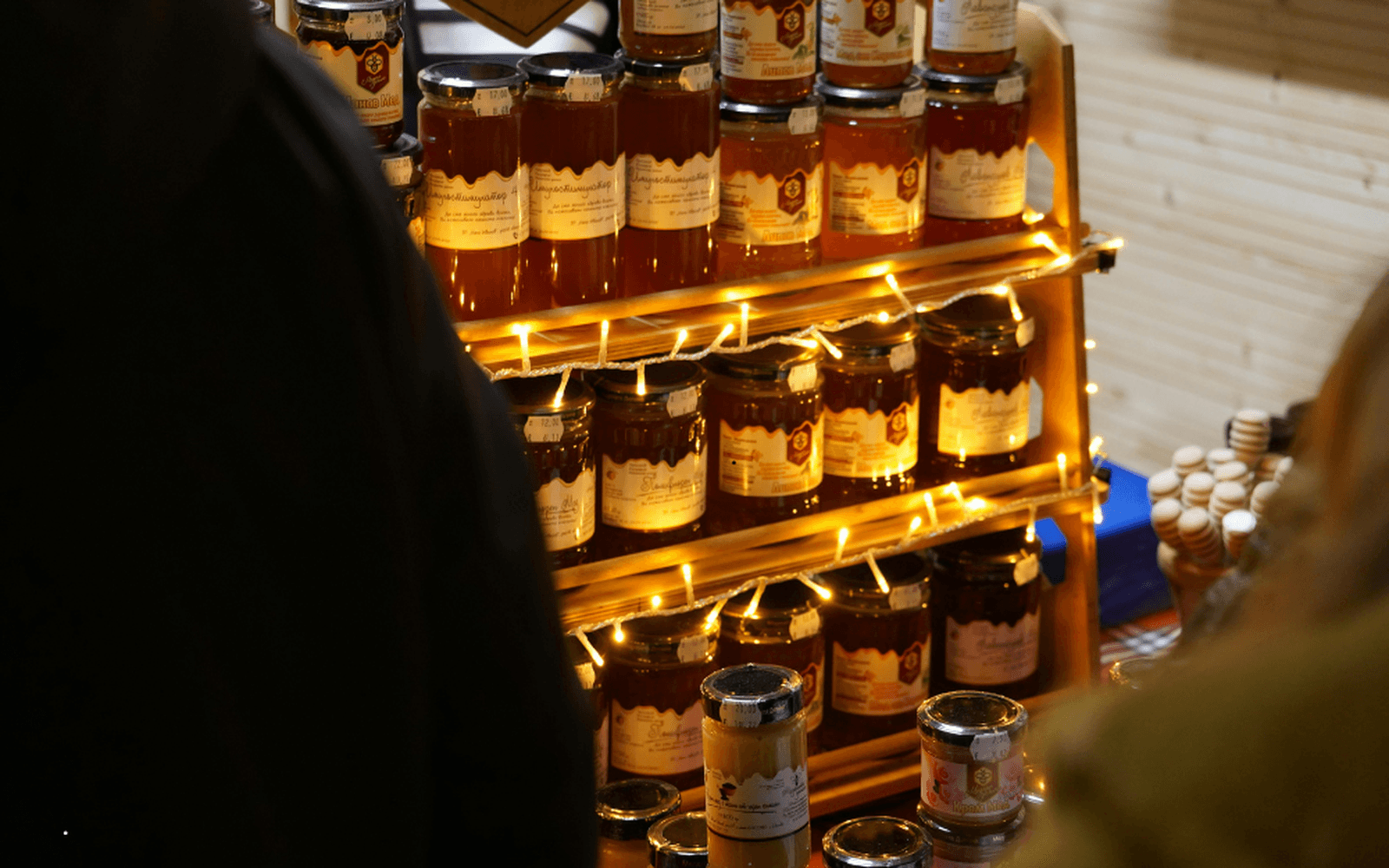
Work with a designer (or use DIY tools like Canva) to create mockup labels featuring your name options. See how each name looks on actual packaging. Some names that sound great work poorly visually too long for labels, awkward letterspacing, don't complement visual design.
Create mockups for:
Honey jar labels
Business cards
Farmers market signage
Social media profile images
The name that works best across all applications often emerges as the clear winner.
Domain and SEO Test
Type each name option into Google and analyze results. Are there similar businesses creating confusion? Does anything problematic appear?
Also consider SEO implications. "Wildflower Honey Farm" will rank for "wildflower honey" searches naturally, while "The Golden Thread" won't. If organic search is crucial for customer acquisition, factor this into your decision.
Gut Check Test
After all analysis, check your gut feeling. Which name excites you most? Which makes you proud to introduce your business? Which do you enjoy saying?
You'll say your business name thousands of times to customers, in marketing, on calls, in emails. Choose one you genuinely love, not just one that tests well on paper. Your enthusiasm for your name translates into authentic brand building.
Honey Business Naming Mistakes to Avoid
Even with good intentions, many new honey businesses choose names that hurt rather than help. Avoid these common pitfalls.
Being Too Similar to Established Brands
Choosing a name close to an existing well-known honey brand invites legal trouble and creates unfavorable comparisons. "Golden Harvest Honey" is fine, but "Golden Harvest Honey Co." would be problematic if there's a major "Golden Harvest" honey brand in your market.
Beyond legal issues, similarity makes you seem like a knockoff. Customers may assume you're trying to capitalize on the established brand's reputation, damaging trust before they've even tried your product.
Choosing Overly Complex Names
"Apicultural Aesthetics Artisan Honey" may sound sophisticated, but it's a mouthful that customers will struggle to remember, spell, and pronounce. Complexity becomes friction that costs you sales.
Simple, clear names outperform complex ones. "Bee + Co." beats "Beekeeper's Botanical Artisanal Provisions" for memorability and usability every time.
Limiting Future Growth
Names locked into specific products, locations, or scales become liabilities as you grow:
"One-Hive Honey" sounds quaint initially but becomes inaccurate and undesirable when you scale to 20 hives
"Backyard Bees" limits perceived professionalism as you professionalize
"Clover Honey Only" prevents product line expansion
Choose names with room to grow. You can always start small and expand, but names that lock you in force expensive rebranding later.
Ignoring Negative Meanings
Research your name thoroughly to ensure it doesn't have negative connotations, alternative meanings, or problematic associations you're unaware of.
Check:
Urban Dictionary (reveals slang meanings)
Google the name + common suffixes (company, meaning, slang)
Consider meanings in other languages if selling internationally
Think about potential nicknames or abbreviations
A seemingly innocent name might have urban slang meanings that make it unsuitable for professional business.
Forgetting About Initials
Consider what initials/acronyms your business name creates. "Fenton's Artisan Raw Honey" sounds lovely until you realize the initials spell something unfortunate.
Similarly, consider domain names. "Penthouse Honey Farm" might work as a name, but "PenthouseHoney.com" could create misleading associations.
Following Trends Too Closely
Names incorporating current trends ("Hashtag Honey," "Swipe Right Apiaries," "The Honey Blockchain") date quickly and can seem gimmicky. Trends that feel fresh today often feel dated within 5 years.
Classic, timeless names age better than trendy ones. "Heritage Honey Farm" will feel appropriate in 20 years. "Millennial Bee Co." already feels dated.
Frequently Asked Questions About Honey Business Names
How do I know if my honey business name is already trademarked?
Search the USPTO's Trademark Electronic Search System (TESS) at uspto.gov for free. Search your exact name and similar variations, focusing on Class 030 (which covers honey and related products). Look for identical or confusingly similar marks. Also search state trademark databases and Google to find common law trademarks (businesses using the name without federal registration). For thorough searches, especially with valuable brands, consult a trademark attorney who can conduct comprehensive searches and provide infringement risk assessment.
Should my honey business name include the word "honey" or "apiaries"?
Including "honey" or "apiaries" provides immediate clarity about what you sell, which helps with discoverability and requires less marketing to communicate your offering. However, it can make names feel more generic and limits creativity. If your primary sales channel is online or farmers markets where context makes your product obvious, you can use more creative names without descriptors. If you're pursuing retail distribution where your product sits among thousands of items, including "honey" helps customers quickly identify your product category. Consider your sales strategy when deciding.
Can I name my honey business after my location if I might move later?
Location-based names create challenges if you relocate. "Vermont Raw Honey" becomes problematic if you move to Oregon the name is now inaccurate, potentially even deceptive. If relocation is a possibility, choose broader geographic references that offer flexibility: "New England Honey Co." works across six states, while "Burlington Honey" locks you into one city. Alternatively, choose location-agnostic names that work anywhere: "Heritage Honey Farm" or "Golden Harvest Apiaries" function regardless of location.
How important is getting the exact .com domain for my honey business name?
The .com domain is still considered most credible and memorable, making it highly valuable if available. However, if your ideal business name's .com is taken, you have options: use alternative extensions (.co, .farm, .local), modify the domain slightly (add "honey," "apiaries," or your state), or choose a different business name where .com is available. Many successful small food businesses use alternative extensions without significant negative impact. However, if building a national brand or prioritizing online sales, securing the .com should factor heavily into name selection.
Should I choose a honey business name that's SEO-friendly or brand-focused?
This depends on your customer acquisition strategy. If you're relying heavily on organic search (customers finding you via Google searches for "local honey," "raw honey," etc.), SEO-friendly descriptive names like "Colorado Raw Honey Co." help you rank for relevant searches. If you're building a brand through farmers markets, word-of-mouth, social media, or retail partnerships, memorable brand-focused names like "The Honey Atelier" work better. Many successful approaches balance both: "Wildflower Honey Farm" is brand-y enough to be memorable while including searchable keywords. Consider which acquisition channel matters most for your business model.
Can I use my family name for my honey business even if it's hard to spell or pronounce?
You can, but consider the practical challenges. Difficult surnames create friction every time customers try to find you online, tell friends about you, or remember your business. If using your family name is important for heritage or personal reasons, consider pairing it with clear descriptors: "The Kowalczyk Family Apiaries" provides context helping people remember. Alternatively, use your surname in your legal entity name but operate under an easier DBA for customer-facing purposes. Some beekeepers also create creative spellings or abbreviations of difficult surnames while maintaining the family connection.
How long can a honey business name be before it's too long?
Ideal honey business names typically range from 2-4 words. Single-word names (rare and hard to find available) are highly memorable but lack context. Two-word names like "Golden Harvest" or "Bee Collective" balance memorability with meaning. Three-word names like "Pure Raw Honey Co." add clarity without excessive length. Four-word names like "The Heritage Honey Farm" are generally the maximum before names become unwieldy. Anything longer becomes difficult to fit on labels, hard to remember, and challenging to use in marketing. Test your name on mockup labels if it doesn't fit comfortably, it's too long.
Should I test multiple honey business names before deciding or commit to my first choice?
Absolutely test multiple options. Create a shortlist of 3-5 names, then test them with target customers, create visual mockups, check legal availability, and assess domain/social media availability before committing. Many names that seem perfect initially reveal issues during testing they're too similar to competitors, domains aren't available, target customers misinterpret the name, or they don't translate well to packaging. Testing prevents expensive rebranding later. However, don't fall into analysis paralysis once you've tested thoroughly and one name clearly outperforms others, commit to it and move forward with building your brand.
Conclusion: Your Name Is Your First Impression
In the increasingly competitive honey market where artisan producers, local apiaries, and specialty brands compete for customer attention, your business name serves as the crucial first impression that can attract ideal customers or cause them to overlook you entirely. It's the foundation upon which your entire brand identity is built the words that will appear on every jar, website, business card, and farmer's market sign throughout your business's lifetime.
The 400+ honey business name ideas presented here span every style, positioning strategy, and brand personality. They're not meant to be adopted without modification but rather to inspire your own unique name that authentically represents your honey, your values, and your vision. The most successful honey business names aren't necessarily the cleverest or most creative they're the names that accurately promise what your product delivers while resonating deeply with your ideal customers.
Your chosen name will be spoken thousands of times by you to customers, by satisfied customers to friends, by retail buyers to their purchasing teams. Select a name you'll be proud to say, that customers will remember easily, and that accurately represents the quality of honey you produce. Whether you choose traditional heritage, artisan sophistication, playful whimsy, or modern minimalism, make it authentic to who you are and what you create.
The perfect honey business name already exists in the intersection of your unique story, your target market's desires, and your brand's future vision. Take the time to find it, test it thoroughly, protect it legally, and then build the sweet success it promises.